Influential Woman · Creative Arts and Community Wellness
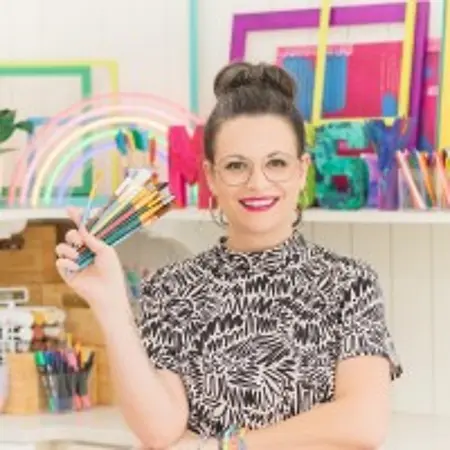
Laura Taylor
Founder and Creative Director/ Small Business Owner, Messy Craft, LLC
Orlando, FL 32814
Her Story
About Laura
Laura Taylor is a creative entrepreneur based in Orlando, Florida, and the founder of Messy Craft, a community-centered creative studio designed as a safe and inclusive space for people to explore art, connection, and self-expression. A graduate of the Rhode Island School of Design, where she studied Interior Architecture along with graphic design, drawing, and digital arts, Laura built a multidisciplinary foundation that continues to shape her approach to creativity and community building.
After years of exploring different creative disciplines, Laura eventually returned to her artistic roots following major personal experiences, including a breast cancer diagnosis that deeply shifted her perspective on life and purpose. That journey helped her reconnect with her creativity in a more authentic and fulfilling way, ultimately inspiring her to launch Messy Craft. What began as a personal calling evolved into a business rooted in the belief that creativity should be accessible, healing, and shared.
Through Messy Craft, Laura has built more than a studio—she has created a gathering place where imperfection is welcomed and self-expression is celebrated. Her philosophy centers on the idea that creativity thrives in community, not isolation, and that making space for “messiness” can foster joy, resilience, and connection. Laura’s work reflects her commitment to inclusivity, emotional openness, and helping others rediscover the freedom and confidence that comes from creating without fear of perfection.
Her Interview
Ten minutes with Laura
01What do you attribute your success to?
I attribute my success to the fact that my whole heart and soul is in this, and I think people can feel that. What I'm offering is not just a place to make something, it's more a place for community, it is a place of safety, it's a place for finding joy and support and inclusivity and a place where you are encouraged to screw up and not worry about getting things perfect. I work really hard with the kids to help them through their feelings of frustration when things don't come out of their hands the way that they thought they would, because that's an expectation everybody has and it's very frustrating for all of us. It turns out adults have an even harder time letting go of that control. I think I'm offering a chance for people to suspend their judgment of themselves in a way that they don't get to in their day-to-day life. My husband has been incredibly supportive, helping me figure out and juggle and carry so much of it, and still does. He's a professor in management, so he's able to do some research for me and help out that way. I'm scrappy, and I am able to, at this point in my life after everything I've been through, just kind of turn when the path turns instead of resisting it.
02What’s the best career advice you’ve ever received?
I can't think of anything specific that was said to me as advice, but what I've learned that's been profound is that I can trust my instincts and trust my gut. It's always, always right. My gut feeling, my instinct about something is always right. I think where women especially get it wrong is that we are taught not only to be quiet and small, but not to trust ourselves. That's messaging and conditioning we get from all angles, all the time, from a very young age. For me, it's been about unlearning that and listening, because we have all the answers, we just have to learn how to access them.
03What advice would you give to young women entering your industry?
The advice I would give is really to learn that you can trust your instincts and trust your gut. It's always, always right. Your gut feeling, your instinct about something is always right. I think where women especially get it wrong is that we are taught not only to be quiet and small, but not to trust ourselves. That's messaging and conditioning we get from all angles, all the time, from a very young age. So it's about unlearning that and listening, because we have all the answers, we just have to learn how to access them. I would also say that I've learned it's really important and necessary to embrace experimentation as part of the process of trying. You have to keep at it, and through that experimentation, you learn about yourself, you learn about the materials, you learn about all of it. But none of that can really develop unless you're willing to try and mess up and experiment and try different ways and different materials.
04What are the biggest challenges or opportunities in your field right now?
I think getting into and onto top of mind for potential customers is a huge challenge, because there's so much vying for our attention constantly. The marketing piece is really important, probably more important than I realized. I kind of went into it thinking, like, if you build it, they will come, but if they don't know about it, they won't come. So the marketing piece has been a challenge to really get it out there consistently enough. You have to get in front of people's face 100 times before it sticks, and I'm so distracted and spread so thin. In terms of opportunities, I've been working really hard this year to add more promotion for my adults-only workshops and offer more for adults and really kind of get this place out there and make it known that it has a place for adults to gather as well. I see significant opportunity in expanding into adult markets, particularly at the corporate level, because I believe offering these services to organizations presents strong potential for growth and long-term impact.
05What values are most important to you in your work and personal life?
Family is at the center of both my personal and professional life. I make a point that I do not work on Sundays or Mondays, and on Sundays I just am horizontal or sitting in a chair and play video games with my kids or watch dumb shows on TV, but just really check out of what's happening outside. Inclusivity is a core value for me, as I believe every person deserves to feel seen, heard, and welcomed. I'm creating a place of safety, a place for finding joy and support and inclusivity, a place where you are encouraged to screw up and not worry about getting things perfect. Community is essential to me, as I value creating spaces where people can connect and support one another on a deeper level. I'm deeply mindful of mental health and prioritize creating environments that promote emotional well-being and healing. I also believe that experimentation is really important and necessary as part of the process. You have to be willing to try and mess up and experiment and try different ways and different materials, because through that experimentation you learn about yourself and the materials and all of it. In a world where the pressure for perfection often leads to frustration, I encourage embracing imperfection as part of the human experience. I'm offering a chance for people to suspend their judgment of themselves in a way that they don't get to in their day-to-day life.
Join Influential Women and start making an impact. Register now.