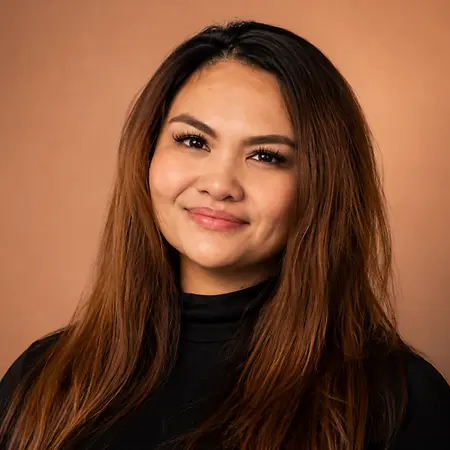
Her Story
About Laureen
I've been working in ABA for 15 years, and honestly, I didn't even know what this field was before I got into it. What inspired me to stay was the amount of change and impact I had on not only children with autism, but also their village - their families. The little wins that we all take for granted on a daily basis are big successes for these families, and those are what really drew me into this field. Before this, I had just graduated from UC Davis and wanted to become a nurse, so I was taking nursing classes when I moved back home. This job started as a part-time position to help me pay for classes, but it became my passion. I earned my bachelor's in Human Development and my master's in Professional Behavior Analysis, then became a board-certified behavior analyst and a licensed behavior analyst in Texas. To get my BCBA credential, I completed 1,500 hours of fieldwork, which I collected through my work in in-home service settings, clinics, and as a behavior specialist at a school district. My typical day involves checking messages from parents and my mentees, supervising therapy sessions either in person or by calling in, creating changes to programming, attending leadership meetings to address issues, and doing parent training with caregivers. One of my biggest challenges has been navigating situations where doing the right thing isn't always the easiest or most popular answer. In healthcare and human services, especially when working for for-profit companies, you face complex ethical decisions. I believe in always doing the right thing, even when no one's watching, which has meant advocating for my clients' quality of care and professional integrity, even when those conversations become uncomfortable. Outside of work, I'm a jiu-jitsu practitioner and help coach a women's class in martial arts and self-defense as another way I empower women. And of course, I spend time with my baby, who is [AGE] months old.
Her Interview
Ten minutes with Laureen
01What advice would you give to young women entering your industry?
My biggest advice is to always rely on self-growth. A lot of people just go to their bosses, and whatever their boss says, even though the answers may be uncomfortable, they just stop there. I really preach to my mentees to do the research. You know, you're an analyst, we do data, take the data. You could make changes in the company you work for by being prepared and doing that research. Don't underestimate your voice, because there will be moments when speaking up is scary and uncomfortable, especially when you're the only person who's asking those difficult questions. Don't be afraid, build confidence. The worst thing that could happen is that you'll realize it's not the place for you, and you could go somewhere else and build and be with an employer that aligns with you. A lot of times, women underestimate the impact that they could create, especially in fields where it's always a male CEO or a male superintendent. Don't be afraid to voice it if you don't agree with something.
02What are the biggest challenges or opportunities in your field right now?
One of the biggest challenges in my field has been navigating situations where doing the right thing isn't always the easiest or the most popular answer. In healthcare and human services, you are faced with a lot of complex ethical decisions, and especially when you work for for-profit companies, it could get a little dicey. I believe in always doing the right thing, even when no one's watching, even when you don't have to. There have been times I've had to advocate for my clients, for their quality of care, and advocate for professional integrity, and those conversations can become uncomfortable. For me, it's just really important to stick to your core values as a human being and just be very transparent. If you outgrow a place, not being afraid to move on or find spaces where your core values align. For example, when you work with insurance, you could provide services that don't really align with your ethical code as a BCBA. For me, it's important to say no, you're allowed to bill for those services, but you shouldn't.
03What values are most important to you in your work and personal life?
I believe in justice and just doing the right thing at all times for your kiddos, for your clients. Justice is a big thing for me. An example of that is when you work with insurance, you could provide services that don't really align with your ethical code as a BCBA, so for me it's important to say no, you're allowed to bill for those services but you shouldn't. I believe in integrity and advocating for ethical treatment. I believe in compassion, putting your client at the forefront and supporting not only your client but the families. I have a core value of advocacy. We work with a demographic that can't consent, so there's an alternative phrase called ascent, where their body language will tell you if they want to participate in their own treatment. I work on just making sure that my clients' voices are heard. And I have a core value of courage, being able to have those uncomfortable conversations and staying by my values.
Join Influential Women and start making an impact. Register now.