Her Story
About Laurel
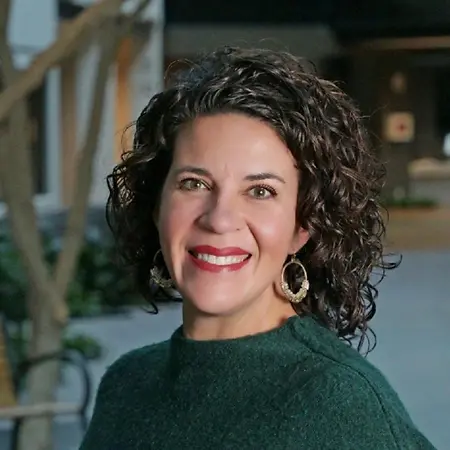
Laurel Buck, MPA, SHRM-CP, is a passionate disability inclusion advocate and workforce development professional dedicated to advancing equitable employment opportunities and community integration for individuals with disabilities. With a strong foundation in human resources, public administration, and behavioral health, she has built a career centered on empowering underserved populations through advocacy, education, and systems-level change. Laurel is recognized for her collaborative leadership style and her commitment to creating pathways for neurodivergent individuals and brain injury survivors to achieve meaningful employment, independence, and long-term quality of life.
Currently serving in Program Outreach and Partner Engagement with the Brain Injury Association of Michigan, Laurel works to connect survivors, families, providers, and community organizations with critical resources, education, and support services. Her professional journey spans leadership roles with the Center for Disability Inclusion and Autism Alliance of Michigan, where she led statewide employment initiatives, partnered with employers to advance disability-inclusive workforce practices, and co-led collaborative efforts to position Michigan as a model state for inclusive employment. She has also worked extensively in workforce development, helping individuals facing barriers such as mental health challenges, developmental disabilities, homelessness, and substance use disorders gain sustainable employment and community connection.
Laurel’s advocacy is deeply personal and rooted in lived experience following her brother’s traumatic brain injury more than two decades ago. That experience inspired her early work in neurorehabilitation direct care and continues to shape her mission-driven approach to leadership and service. Holding both a Bachelor of Science in Psychology and a Master of Public Administration with a healthcare administration concentration from Grand Valley State University, Laurel combines strategic insight with compassion to influence policy, educate employers, and elevate the voices of individuals with disabilities. Through every role, she remains committed to fostering collaboration, promoting accessibility, and driving lasting social impact.
Her Interview
Ten minutes with Laurel
01What do you attribute your success to?
I think for me, relationships are key, so my ability to create and foster relationships has been crucial to my success. Whether that's helping me get a job, like I got this current job because I had a relationship and I was able to foster that, or whether that's leading a statewide coalition and bringing people with opposing views or different views together for one cause, my ability to do that is because I can create relationships, I can create connection, and I can create an environment of trust. I also have a strength called the Arranger, which means I can take a lot of moving pieces and put them together in a way that makes sense. I'm kind of the conductor of sorts, and that's the way my brain works. In all my roles, being able to see the overall strategic vision or the strategic plan, and then throughout my connections, seeing how they can piece together to help us reach success or reach a milestone, that's really fun for me. Bringing all these relationships together to help meet a goal or meet a strategic direction is the way my brain works, and I think that's been a strength of mine in my roles, and it has helped me create some of the programs I created, or sustain, or help them succeed.
02What’s the best career advice you’ve ever received?
One of my mentors told me to stay true to my values, and if you make decisions through the scope of your values or the organization's values, even if that end result isn't what you wanted, you can stand strong knowing that you made that decision with your values in mind. And so, it still was probably the right decision, even though it didn't work, because you didn't compromise your values or the values of the organization. That's been very helpful as I'm making personal decisions throughout my everyday work, or I'm part of the conversation on making decisions for organizations I am a part of. I also think as a woman in life and in work, in all aspects of life, it's important to trust your gut. I myself make decisions based on intuition, and so listening to my intuition and having the confidence, even when it's hard to stick by that, is crucial. I think as women, we can second-guess ourselves a lot, and especially depending on the dynamics of your organization, we tend to not speak up, maybe, when we should. And so, listening to your intuition and having the courage to speak that is something I push myself every day to do. Another piece of advice that has been helpful for me as a leader, but also as a peer, is from Brene Brown: clear is kind, unclear is unkind. I use that a lot when I'm trying to give feedback or trying to mentor the people around me, because I am a very positive person and a very empathetic person, and so sometimes when it comes to giving feedback or helping somebody progress, being able to share that with them is hard sometimes. And so, I try to keep that really simple quote in my head, that being clear is kind. Giving them really clear, direct feedback through the scope of being respectful and knowing that you are wanting to help them better themselves, but being kind so that they can take the opportunity to use that feedback and then improve their performance or improve how they show up to work.
03What advice would you give to young women entering your industry?
I would say make sure that you support your peers, encourage them, but also get connected to different organizations or groups that you can find a community that also supports you, supports you professionally, but also supports your personal development. I think that's really important. Some of my best education has been through mentors and through mentorship, whether I was the mentee or the mentor. Especially in today's world, where so many of us work remotely, you can get isolated, and so being able to create that network around you that you can pour into, but that you can also lean on when you're having a challenge or when you need to work through something or when you're wanting advice on how to move forward, it's just really important to have that network. I would also say make sure that you find and can find balance. As women, in today's day and age, there's a lot that is on our shoulders, and taking care of yourself before you get to a place of burnout is crucial. I think so many of us function from that place, and in the end, something that you're trying to balance will suffer, whether that's your family, or whether that's your performance at work, or your extracurriculars. We try to do it all, and we try to hold everything on our shoulders. So within life and work, finding that balance, finding time to listen to yourself and your inner voice, and just pouring into yourself so that you can be a cup that pours into other people is essential. We are pouring into other people constantly, and we deplete ourselves, and then we just aren't any good to any aspect of our lives if we're completely depleted. Another thing I've learned, especially for young professionals, is that I came out of college into my professional career thinking that the title or position of leader meant that you had to have all the answers. As a young person, that was a really scary place to be, because I didn't have all the answers. The title of leader does not equate to you having all the answers. It's really knowing how to build a team around you and leaning on other people's strengths and their experience to help you find the answer or to help you come up with a solution. When I had a problem, I was able to go to the team around me and say, here's this issue, let's think in a solutions-based way and collaborate and figure out what the best solution to this problem is. That has gotten me far better results, but it's also offered a lot of buy-in for decisions I've been making if I bring other people in, and it's also allowed me to save a lot of time knowing that I don't have to dig and try to find the answer myself if I don't have it. And that's okay. I think it brings a piece of humility to your leadership if you can say, I've never been in this situation, I don't know what to do, what do you guys think? So again, it goes back to trust and into building teams, into leaning on other people, and collaborating to find the best solution.
04What are the biggest challenges or opportunities in your field right now?
In my roles, I have come up against some big challenges that I'm in my role to address, whether that's through advocacy at the state level or the federal level, representing the needs of people I'm serving, or if it's in an organization and trying to make a big change. I have faced some big entities, whether that's by title or by size of group, I have faced big voices and people who had power, and it's been a journey for me to find my voice in that. There's an element of intimidation, and when you're doing advocacy, it's a long road ahead. Sometimes it just feels like a constant fight, like I gotta keep fighting because I know that this is what needs to be done to create the change we want. The challenge for me along the way is gaining that confidence, being able to have the courage to speak up, but also just to show up every day and to keep fighting when you're competing against these big titles or these big organizations or these big perceptions in the community at large. When I say that, I mean employing people with disabilities. There are so many myths or apprehensions to that in our community at large, so that's a big thing that I, on a daily basis, am fighting against, saying you can do this, it can be done. Showing up and fighting for these causes against these big titles or big misconceptions can be very exhausting, and so finding the courage when you're going against the status quo, finding the courage to speak up and to push forward, but then to continue to show up can be challenging. Finding the self-motivation and the motivation from the people I'm serving to keep showing up and keep pushing forward against these institutions that are in place is an ongoing challenge. As a growing professional, the confidence piece and being able to show up respectfully and express your thoughts, especially when there's a lot of opposing thoughts, but being able to show up and do that respectfully and have the confidence in yourself to push forward for what you know is right is something I work on every day.
05What values are most important to you in your work and personal life?
I really value integrity. I think trust is the foundation of all relationships, and relationships are key to me and to my leadership and my success. And so, I really value integrity, making sure that I show up and I act within my values, I act within the values of the organization, and I really challenge my coworkers to do the same. I have seen what psychologically unsafe work environments can do and how it can hinder the progress of an organization. And so, from a macro perspective, being able to provide space where people feel safe and can trust me, but also creating teams where that is the same environment so that everybody feels psychologically safe and so you can perform your best and you can hopefully succeed as an organization. Another really important thing for me is authenticity. This word is so overused, but I want to be the same person, and I am the same person outside of work that I am inside of work. I bring my whole self to work, and I don't want to put on an act or put on a shield of armor when I'm at work. I want you to know me, and that's what you're going to get when I show up. I don't want to be two different people. Everything I value goes back to that. I value allowing for diverse voices, and you're not going to get that conversation unless somebody feels safe enough to speak. I value providing a respectful environment for everybody that you're interacting with. In my roles, I've interacted with people with significant disabilities, people who are facing really extreme challenges like a lack of a formal education, but I'm also sitting next to CEOs of organizations trying to advocate. And so, providing the same level of respect and the same ability to show up and to speak your mind and to give your thoughts and to have a spot at the table is the same across all the different populations I work with. That's really important to me, that everybody can be shown respect and kindness too. I don't think there's any need to show up in this world in any capacity without being kind. You can still get the work done, you can still let your voice be heard, but at the end of the day, I want people to feel respected, I want them to feel safe, I want them to feel cared for when they're working with me.
Join Influential Women and start making an impact. Register now.