Her Story
About Lauren
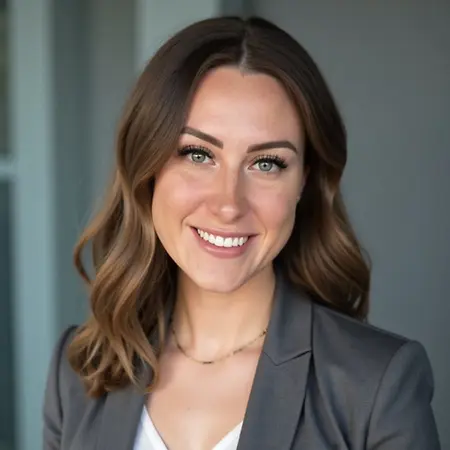
Lauren McCoy, MHA, is a Senior Associate in the Healthcare Industry Group at Alvarez & Marsal, based in Dallas, Texas. She is a healthcare consulting professional with extensive experience in analytics, project management, operational improvement, and strategic advisory work across health systems and health plans. Throughout her career, she has partnered with executive leadership teams to translate complex data into actionable insights, supporting initiatives that improve efficiency, reduce costs, and enhance both patient and provider experiences within the healthcare system.
Her path into healthcare consulting is rooted in deeply personal experiences that shaped her commitment to improving how care is delivered and accessed. Growing up, Lauren witnessed her mother’s battle with multiple sclerosis as a single parent, navigating significant challenges in obtaining a diagnosis, coordinating care across providers, accessing treatment, and later securing support when she was no longer able to work. That experience left a lasting impact and initially inspired Lauren to pursue medicine. While studying pre-med in college, she became increasingly drawn to the broader structural issues within healthcare, particularly disparities in access and outcomes influenced by socioeconomic status, race, and background. This realization led her to change her focus to public health. During her time at the University of Arkansas, she had formative academic and professional experiences, including working with a center supporting survivors of sexual assault, which further deepened her understanding of health equity and vulnerable populations.
After completing her undergraduate studies, Lauren explored different roles while clarifying her long-term direction. A pivotal moment came while working in an optometry practice, where she met a patient employed in healthcare consulting. That conversation led to an unexpected opportunity that launched her consulting career, as she transitioned directly into a full-time role. She later pursued her Master’s degree in Healthcare Administration at Metropolitan State University of Denver to strengthen her understanding of healthcare operations and system-level dynamics. Today, Lauren works closely with hospital systems and health plans, partnering with C-suite leaders to analyze claims data, identify root causes of operational and billing inefficiencies, and implement solutions that allow providers to focus more on delivering care and less on administrative burden.
Her Interview
Ten minutes with Lauren
01What do you attribute your success to?
I attribute my success to having a drive to continue to learn. In healthcare, things are always changing and always going to be different, so being open to just continuing to grow and learn is essential. I really enjoy learning, and I think maintaining that drive is what keeps me engaged. As soon as I feel like I might be stagnant or I've plateaued, if things become too redundant or I feel like I'm not learning, that's when I recognize in myself that I have to pivot. That's what keeps me engaged, keeps me wanting to be better and work harder, and it helps drive that momentum forward.
02What’s the best career advice you’ve ever received?
The best career advice I ever received was to really try to anticipate questions or how something is going to be received. This is something I think about almost every day in my work. Whether I'm putting together a slide deck or any kind of documentation that's going to be put in front of a client, I look at it and think, okay, it might look great based on my perspective and what I put together, but if I put myself in their shoes and I were to receive this, what questions would I have if roles were reversed? What would I want to see more detail on? Really trying to anticipate how the other person or group of people you're presenting to are going to receive something has made a pretty big difference in how I approach things.
03What advice would you give to young women entering your industry?
I would say it's tough out here for women. We all know it's difficult, especially in corporate environments where women don't see themselves in a lot of leadership positions. I'm lucky to be where I am, especially at A&M, where I have such incredible female leaders making a big impact. My advice is to really trust your gut and to be more assertive than you want to be, assertive to the point where it'll probably feel uncomfortable, but that means it's probably right. I've had to work a lot on that personally, feeling like I don't have as strong of a voice as some other people, but my approach to things is different. I'm a very thoughtful person in what I offer up. I'm not super talkative, but I'm not shy. I want what I say to have value, so I have to take a lot of things in first. That's just my personality. I've had to do a lot of work on trusting that my approach is different, and it doesn't mean it's better or worse than anybody, it's just how I function. To make sure my voice is heard in different environments with people who have strong personalities, you kind of have to push yourself to a point where it does feel uncomfortable. I think it's better to force that and be told to dial it back a little bit, but that's never the case. You have to go for it, push yourself, be uncomfortable, but you're probably doing the right thing. The amount of times I've been talked over, specifically by men, is frustrating. Sometimes you have to give that back to them. If you're going to talk over me, I might have to match that a little bit and talk over you until I'm heard. Unfortunately, standards are different for women, but women have so much to offer. It's unfortunate that we have to fight that much harder to get recognition and visibility, but as I've progressed in my career, this is what it takes. We have this drive and resilience, so lean into that and trust that you provide value, that you are where you're at because of the work you've done. Don't discount that. Try to push down that imposter syndrome as much as possible and lean into it. There are a lot of male leaders out here that are a little delusional, and it's like, where do these egos come from? Maybe I need to practice a little of that delusion and lean into it. If some delusion has to get you through the day, why not?
04What are the biggest challenges or opportunities in your field right now?
There are so many challenges right now. A lot of hospitals around the country are closing because of Medicaid and Medicare cuts. You can definitely feel that there has been a shift in the overall healthcare in the U.S. because there have been so many limitations put on access to care and coverage. Pharmaceutical costs are spiking, and all these things are really limiting care for people. We're feeling it on our end when we look at the financials of providers and health plans. A lot of them are really struggling and bleeding. You get an uptick in some types of projects we handle, but on the opposite side, there's work that's taking a hit because these healthcare organizations are very strapped for cash. A lot of times they can't bring in partners to help them. It's often a situation where they're on the verge of closing or bankruptcy and need to find dollars and need help. At the same time, there are opportunities. Because accessibility of healthcare has been cut back so much, there's a real need for trying to reduce costs across the board when people do come in. Unfortunately, a lot of that ends up in the emergency room or inpatient environments because access to preventative care and early treatments is going away or being very limited. By the time people make it in, it's a lot around emergency costs. A big area for opportunity is reducing length of stay in the ER, which costs so much money across the board. We need to help standardize what's being billed and avoid errors in how things are billed, because a lot of that trickles down to the patient. They'll get a letter saying they owe a certain amount when it goes back to billing errors. As much as we can do to support patients and healthcare workers so they don't have to be so concerned about the logistical, administrative paperwork side of things is important. We want to help healthcare providers deliver care and patients receive care. They shouldn't be concerned about paperwork when they're trying to save someone's life. That shouldn't even be part of the equation.
05What values are most important to you in your work and personal life?
I think it comes down to flexibility in how you approach things. The professional environment changes so much, and being able to adapt to those changes and being receptive to those changes is important. I really try to be a positive team member in whatever team that is, whether in personal relationships or in a professional environment. I think it does a lot for overall morale to just be a positive person. I really try to focus on making personal connections above anything else, and I think that goes a long way. Really focusing on empathy also goes a really long way. It seems so obvious, but based on my own experience and feedback, it's a little bit more rare in a lot of professional environments. I think meeting people where they're at and focusing not just on the work, but the people behind the work, goes a long way.
Join Influential Women and start making an impact. Register now.