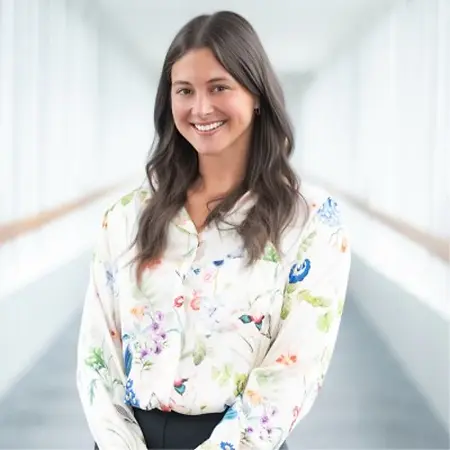
Her Story
About Lauren
My journey into criminal justice research began unexpectedly. I went to undergrad for my sport - I had a scholarship for water skiing and wasn't too interested in life after undergrad. I was very into my sport and wanted to be the best water skier in the world, that's all I really cared about. But I took a course called Decriminalization of Mental Illness during my psychology degree, and that course really inspired me to want to keep going to school for criminology and understand why the criminal justice system is the way it is, and why it treats people differently or disparately depending on whether they have a mental health issue, their race or gender. After completing my master's degree in criminal justice, I worked in a foster care home and juvenile justice facility out in Seattle, Washington, where I started seeing a lot of patterns with juvenile crime and kids involved in both systems. The crossover and the lack of services for those youth really bothered me, so I pursued my PhD at University of Missouri at St. Louis, which has a really great criminology program because of the disparities and disproportionalities in their criminal justice system there. I worked for 2 years in the jail doing research on initial appearances while completing my PhD. Throughout this time, I was also skiing professionally and working at the National Institute of Justice, managing multiple things at once. My water ski background has really helped me - my mentors and supervisors have told me it gives me the edge of just getting things done, taking initiative, being really good at talking to community partners for our research, and being very organized. I retired from professional water skiing in August and now work in a small research lab doing field research and working with people in the community, where I really feel like I'm making an impact.
Her Interview
Ten minutes with Lauren
01What do you attribute your success to?
I think my water ski background really has helped me, and I've been told that by several of my mentors and my supervisors. It gives me the edge of just getting things done. I don't need to be told what to do. I take initiative. I'm really good at talking to the community partners for our research, and I'm very organized. I have always had to manage a lot of things. When I was doing my PhD, I was skiing professionally and working at the National Institute of Justice, so I've always been able to manage multiple things at once. Just having my background in sports has really, really helped me. That structure has always been important to me.
02What are the biggest challenges or opportunities in your field right now?
The criminal justice system has a wealth of challenges. When I think about the foster care system and the juvenile justice system, we kind of think about these different systems in silos, and I'll add in mental health as well, and health. I now work in more of the public health field, but all of these systems - the problem that I see with all of this work is that it's very siloed. These different social determinants of health - having different socioeconomic backgrounds, race, your mental health, your housing, your criminal justice background - all these things are interconnected. When I did my work with juvenile justice and foster care, it was very clear to me that these systems were so siloed, and kids are kind of put in buckets and passed back and forth, rather than really focusing on what needed to be done. If the youth, for example, was in the foster care system and acted out, maybe we don't push them into juvenile justice because they acted out. Maybe we see what's going on from a mental health perspective. Maybe we see what happened in their family life. The systems don't talk, and that's what I see in academia as well - we don't talk amongst fields, and I think that's a huge problem.
Join Influential Women and start making an impact. Register now.