Her Story
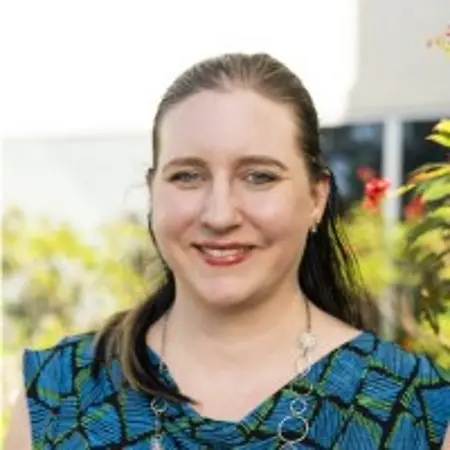
About Lauren
Lauren Peters is a dedicated environmental scientist with a strong focus on NEPA compliance, environmental permitting, and habitat conservation. She began her journey growing up in central Florida, where early exposure to local wildlife, including gopher tortoises, sparked her interest in environmental science. After earning a Bachelor of Science in Biological Sciences with a minor in Chemistry from Florida State University, Lauren completed internships with the Florida Fish and Wildlife Conservation Commission and Archbold Biological Station, gaining hands-on experience in wildlife conservation and wetlands ecology.
Lauren’s career path spans both the public and private sectors. She spent several years in private environmental consulting at Shada Ecological, developing practical mitigation strategies to preserve wildlife and habitats. Later, as an Environmental Project Manager at the Florida Department of Transportation, she led projects focused on wildlife corridors, living shorelines, and environmental justice, including work with the Black Bear Stakeholder Group and Panther Recovery Implementation Team. Her approach emphasizes balancing ecological protection with community needs, integrating science, empathy, and stakeholder engagement into every project.
Currently, Lauren serves as a Senior Environmental Scientist at Merrick & Company, where she applies her Florida-based expertise to federal and national projects. She continues to expand her work beyond natural resources to include historic preservation and environmental justice initiatives, leveraging her NEPA knowledge to guide sustainable solutions. Lauren is also deeply committed to community engagement and education, contributing to conservation programs and volunteering with organizations such as Archbold Biological Station and the Florida Fish and Wildlife Conservation Commission. Her philosophy combines rigorous science, practical problem-solving, and thoughtful collaboration to protect both wildlife and the communities that share their habitats.
Her Interview
Ten minutes with Lauren
01What do you attribute your success to?
I attribute my success to the incredible mentors who believed in me and showed me what was possible. My grandmother broke the glass ceiling as the breadwinner of her family, starting as a secretary at a bank and working her way up to Vice President before she retired. That example of perseverance stayed with me. Then there's Jennifer Marshall, who's Chief Engineer at FDOT and has encouraged me to be a better leader. Jess Rodriguez at FWC and Kristen Steele, who I worked with at Archbold on Buck Island Ranch, also really inspired me. Without these women, I don't think I would have had the strength to say, 'I am a better scientist than a secretary' after a male boss once told me I was a better secretary than scientist. That was one of the worst things anyone has ever said to me, and it still hurts to think about. But my mentors gave me the confidence to push past that and prove him wrong. I also believe in making my own destiny. When I wanted to work with gopher tortoises, I just cold-called Deborah Burr at FWC and asked if she wanted an intern. That initiative led to creating a new internship program that's still running today. I've learned that you have to advocate for yourself and take chances, because nobody else is going to do it for you.
02What’s the best career advice you’ve ever received?
The best career advice I’ve received is to value mentorship and learning from those who came before me—my grandmother showed me the power of persistence rising from secretary to VP, and mentors like Jennifer Marshall, Jess Rodriguez, and Kristen Steele continue to guide me to be a stronger, more effective leader.
03What advice would you give to young women entering your industry?
What I've come to recognize is that many young scientists aren't lacking passion, they're lacking access. Access to guidance, to professional development, to the unspoken knowledge that helps you navigate this field with confidence. I've had younger colleagues come to me for advice, and that's something I've grown to value deeply. Recently, a younger coworker asked me how to gently correct somebody when they're wrong, and I told her what works for me: I try to tell them about a time when I made a mistake, so they know I'm not infallible. I think it builds trust with people, and then you approach it as, 'Hey, I just want you to not make this mistake just like I did.' Mentorship isn't about presenting yourself as someone who has all the answers. It's about being honest in how you lead. When someone makes a mistake, I don't just correct it, I share my own. I talk about the times I got it wrong, what I learned, and how I moved forward. That openness creates something stronger than authority. It builds trust, camaraderie, and a space where growth feels possible. I want young women to know that there is a pathway for them, even when they face challenges. I've faced my own, including a boss who told me I was a better secretary than scientist. That still hurts to think about. But with the right mentors and the confidence to advocate for yourself, you can overcome those obstacles. Don't be afraid to reach out, ask questions, and make your own opportunities. I cold-called someone to create my first internship, and that program is still running today. You have to believe in yourself and take chances.
04What are the biggest challenges or opportunities in your field right now?
One of the biggest challenges in environmental science is public perception and understanding. A lot of people care about the environment and wildlife, but they don't know what's out there. They don't know how to protect it or support initiatives that will protect wildlife. They don't understand habitat loss and how to prevent it. Sometimes people in ecology love wildlife so much that they forget the needs of people. It's easy to feel like people are destroying the environment, but the truth is, most people care, they just don't have the knowledge or tools to make a difference. That's why I'm so passionate about finding practical solutions, ways to mitigate and minimize habitat loss while still meeting human needs. It's about balancing environmental protection with community development. Another challenge I've witnessed is the treatment of women in STEM fields. I've faced workplace sexism myself. A male boss once told me I was a better secretary than scientist, which was one of the worst things anyone has ever said to me. It still hurts to think about. That's why I want to be a role model for younger women in STEM, to show them there's a pathway forward despite these obstacles. On the opportunity side, I'm excited about expanding NEPA work to the national level. Florida is one of only eight states with NEPA assignment authority, and our environmental documentation is more rigorous than many other states. As I move into federal projects at Merrick, I can bring that high standard to projects across the country. There's also growing recognition of environmental justice as a critical component of environmental work, not just wildlife and wetlands, but ensuring that progress doesn't come at the expense of historically underserved communities. That's where I see the field heading, and I want to be part of that evolution.
05What values are most important to you in your work and personal life?
I have a strong sense of integrity, and I try to give people trust unless they've shown me a reason otherwise. I think trust is very important. Sometimes people lead with fear and a lack of trust, but I've found that generally when you give people trust, they want to follow you and work with you. They're willing to do more, help you more, support you, and match your energy. Leading from a place of trust creates better relationships and better outcomes. Beyond trust, I value empathy, communication, and accountability. One experience that reinforced this was working on an environmental justice project addressing a Title VI complaint from the NAACP. We had to do extensive public involvement to reassure the African American community that we weren't going to repeat historical mistakes where the government actively tried to destroy minority communities. We evaluated 11 different corridor alternatives to ensure we weren't disproportionately impacting historically underserved communities. It wasn't just about compliance, it was about listening, adjusting, and making sure that progress didn't come at the expense of people who have too often been overlooked. That experience taught me that science alone isn't enough. It has to be paired with empathy, communication, and accountability. It's about finding solutions that work for both wildlife conservation and community development. Those are the values I bring to every project.
Join Influential Women and start making an impact. Register now.