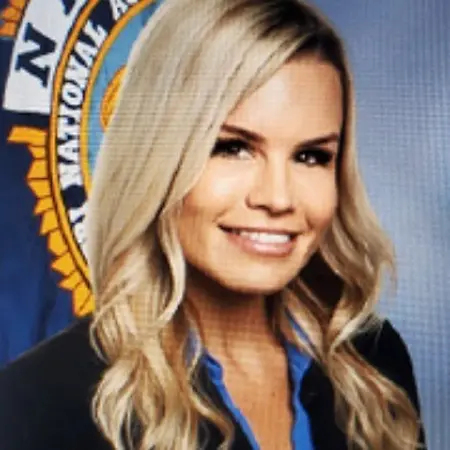
Her Story
About Lauren
I became interested in law enforcement when I was a sophomore in high school after reading a book in English class called 8 Ball Chicks by Gina Sykes about girl gang members. I realized that being in an office wasn't really for me - I enjoy being operational out in the field. I grew up playing sports, so I thought law enforcement would be really good for me, and it was. Ever since then, I knew this is what I wanted to do - be out with the people, talking with people, and just serving others. People typically call law enforcement when things are not going well, so I try to make them feel better when they have to have that interaction with us. I've been with the Tucson Police Department since January 2009, over 17 years now. As a Patrol Captain for the past 2 years, I supervise over 180 people including lieutenants, sergeants, officers, community service officers, professional staff investigators (our civilian detectives), and administrative staff. My patrol division also encompasses the entertainment district, which is downtown Tucson. Before this, I was a lieutenant for our Specialized Response Division for about 3 years, supervising several different units. I also worked as a detective sergeant for a while, focusing on child crimes and investigations where providing justice for victims was really important to me. In my current leadership role, I do detective assessment center preparation and sergeant assessment center preparation - it's really worthwhile to me to see those people score well in those processes and become leaders on the agency, working with them to build up their career goals. From 2017 to 2024, I was a skills instructor for our JTED program, which is a law and public safety program for high school kids. That was really rewarding, teaching high school kids for almost 7 years. I think it's really cool when you have kids that are interested in this field and they can see women in these professions. I've had a lot of young high school girls reach out to me and want to do interviews, and it's pretty cool to see. Some of them now I work with, which is pretty cool.
Her Interview
Ten minutes with Lauren
01What do you attribute your success to?
I would say I've had some really good mentors along the way that have helped guide my career with different assignments and promotional opportunities, so I've been very, very grateful for that. I've always surrounded myself with a good group of people that have been very supportive. One mentor I want to highlight is Kevin Hall, who is currently the Chief of Police for Spokane, Washington. I was lucky enough to work with him when I was a brand new sergeant and he was my captain, and then when I was a lieutenant, he was my assistant chief. He helped kind of navigate me in a leadership role, which I'm grateful for.
02What’s the best career advice you’ve ever received?
I don't know if I've received it, but it's kind of my mantra: be comfortable being uncomfortable. I always do things even when they make me nervous, because why not do it and get out of your comfort zone? That's how you learn, that's how you grow. The things that I have experienced in my career that make me the most nervous, that I had to prepare for and that scared me - anytime I am told to do something and I don't want to do it, I push myself to do it, because that's how you get better. A great case in point is when I was a lieutenant for Specialized Response Division, I had to do news interviews all the time, and that's not something that I was excited to be on camera for - it made me nervous. But the more I did it, the easier it got, and the better I got at it. You have to keep practicing, and those opportunities don't come very often, so I was grateful for the opportunity. Did I enjoy doing it at the time? No, but you learn and you grow from it.
03What advice would you give to young women entering your industry?
I think a lot of women are apprehensive for joining law enforcement because of either their gender, because they are smaller in stature, or because women tend to second-guess themselves a lot. If they don't feel like 100% ready, they don't feel like they want to test for the job. But the thing is, women can bring so much great things to law enforcement. We have the power to de-escalate, we work very well in a team environment, and we're empathetic, and we're good communicators. So don't think that just because you're a woman, you can't do this job. You can absolutely do it, and you will have women supporting you 100% of the way in it as well. Times have changed over the last 30 plus years in this profession, and we are a lot more supportive of women entering the field.
04What are the biggest challenges or opportunities in your field right now?
I think these are total law enforcement challenges right now, not specific just to me, but recruitment and retention right now in law enforcement is very difficult nationwide. It's a dangerous job, and I think when kids that get out of college have the opportunity to potentially work from home making decent money, or work doing shift work, dangerous shift work, it's hard to recruit that. But it's definitely a calling - you have to have the right kind of people that like it. Another big challenge recently has been budget concerns, which are nationwide problems too - doing more with less, not only with staffing, but also with budgetary restrictions.
05What values are most important to you in your work and personal life?
I think teamwork is extremely important. In this job, you can't do anything by yourself - everything involves being part of a team. Obviously, in this profession, integrity is very important. Doing the right thing when no one else is watching, you have to have integrity. It's a very important value. And then another thing that I would also say is resilience. That's extremely important because, obviously in this job and in life in general, you go through some serious hardships, and it's how you cope through those hardships which defines you as a person and learning and growing from those experiences. Our department actually all goes through a training called Struggle Well, so it's learning how to struggle and deal with some of the obstacles that we deal with, but taking them in a positive light, and learning from them and growing.
Join Influential Women and start making an impact. Register now.