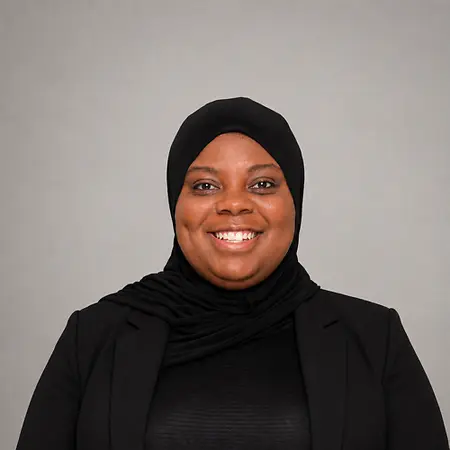
Her Story
About Lauren
Lauren Pointer is a dedicated social work leader with nearly nine years of experience supporting youth, families, and communities through trauma-responsive, equity-driven programming. She currently serves as Program Supervisor of the REUP215 (Redefining Excellence and Untapped Potential) Youth Diversion Program at Turning Points for Children, where she oversees multidisciplinary teams and collaborates with prosecutors, probation officers, schools, and community partners to reduce youth involvement in the justice system. Her professional focus centers on female juvenile justice, restorative justice practices, and strengthening family relationships, and she brings this same commitment to her roles as an Anger Management Facilitator and a Task Supervisor at Temple University, where she mentors Bachelor's- and Master 's-level social work interns. Pointer's academic foundation includes a Bachelor's of Social Work from Virginia Union University, earned in 2015, and a Master's of Social Work from Temple University, completed in 2017. She is currently advancing her expertise as a doctoral candidate in the Doctor of Social Work program at Delaware State University, where her dissertation explores communication gaps among service providers who share clients. She is an active member of the National Association of Black Social Workers' Philadelphia chapter and The National Society of Leadership and Success, and she holds a PA Pardon Coach certification through Philadelphia Lawyers for Social Equity. In recognition of her contributions to the field, she has been selected to be featured among Influential Women representing Philadelphia, Pennsylvania, for 2026. Beyond her clinical and supervisory work, Pointer is deeply invested in community service, volunteering as a Point-in-Time Count Counselor and with Project Homeless Connect through Homeward, where she has supported individuals experiencing homelessness in accessing critical services. She also conducts mock interviews with youth navigating the juvenile justice system, drawing inspiration from her mother's long-standing involvement with Big Brothers Big Sisters. Guided by the values of integrity, curiosity, and a belief that every client is the expert of their own life, Pointer approaches her work with a clear philosophy: that lasting impact comes not just from credentials, but from the intentional, sustained effort put in every day.
Her Interview
Ten minutes with Lauren
01What do you attribute your success to?
I attribute my success to my mother and the upbringing she gave me. She has always instilled in me the belief that I have the right to change my mind and that I should always lead with intention. She taught me to respect everyone equally, whether it's the janitor or the CEO, and she reminds me that while a degree can secure the salary you want, you still have to put in the work to earn it.
02What’s the best career advice you’ve ever received?
The best career advice I've received came from my mother, who taught me that I have the right to change my mind, that I should always lead with intention, and that everyone deserves equal respect, regardless of their position. She also reminded me that a degree opens the door to opportunity, but it's the work I put in afterward that truly defines my success.
03What advice would you give to young women entering your industry?
I would tell young women entering this field that it's okay to pivot. I encourage them to take a deep dive into social work to fully understand its breadth. I wish someone had told me earlier that social work isn't limited to children and youth services — it spans policy, hospice care, hospitals, travel social work, and facilitation. There are so many paths within this profession, and I want young women to know they can pivot into any of them.
04What are the biggest challenges or opportunities in your field right now?
One of the biggest challenges I see in working with children and families is the communication gap among multiple service providers who often serve the same client. Providers don't always have the conversations needed to truly serve that client well, which is the focus of my dissertation. At the same time, I see tremendous opportunity in this field — social work allows room for innovation through therapy, community-based work, and so much more. People often assume social workers don't make good money, but this field can be both financially rewarding and deeply meaningful.
05What values are most important to you in your work and personal life?
The values that matter most to me are integrity and leading with curiosity. I also strongly believe in letting people be the experts in their own lives.
Join Influential Women and start making an impact. Register now.