
Early childhood education is essential economic infrastructure that shapes brain development, supports family workforce participation, and determines long-term academic and life outcomes for children.
Her Story
About Laurie
Laurie McCracken is an early childhood education leader, founder, and Executive Director of Baby Fox Academy of Florida in Palmetto, Florida. With more than 30 years of experience in the field, she began her journey in early learning during high school preschool labs and went on to spend over two decades as a public school teacher. Starting with just four children in her home, she built Baby Fox Academy into two thriving early learning centers serving approximately 175 children. Today, she serves as both owner and director, overseeing programs that focus on high-quality care, early development, and strong family partnerships.
Beyond her work in the classroom, McCracken is a passionate advocate for early childhood education at the local, state, and federal levels. She regularly engages with business leaders and policymakers, including travel to Tallahassee and Washington, D.C., to support funding and legislation that strengthens early learning systems. Her advocacy emphasizes childcare as essential infrastructure, highlighting its role in workforce stability, economic development, and child development outcomes. She also collaborates with community partners, educators, and organizations to expand access to equitable, high-quality early learning experiences.
McCracken’s professional philosophy centers on the belief that early childhood is the foundation for lifelong learning and success. She prioritizes early literacy, brain development, and meaningful language interactions, while also supporting parents through developmental milestones and challenges. Her work extends into parent education and community engagement, helping families better understand child development and access needed resources. Through Baby Fox Academy, she continues to champion a vision of early education that is collaborative, research-informed, and deeply connected to community and policy impact.
Her Interview
Ten minutes with Laurie
01What do you attribute your success to?
I attribute my success to grit, grace, and a deep sense of purpose. Building a program from four children in my home to two thriving centers serving more than 175 children didn’t happen overnight—it required perseverance, adaptability, and a willingness to keep going, even when the path wasn’t clear.
Early childhood education is a field that operates on thin margins and constant challenges, which means success isn’t just about growth—it’s about sustainability, advocacy, and staying grounded in why the work matters. Over the years, I’ve learned that resilience alone isn’t enough. It takes relationships, a strong team, and the ability to bridge what’s happening in the classroom with what’s happening in policy conversations at the local, state, and federal levels.
At the core, my success is rooted in showing up—consistently—for children, for families, for educators, and for a system that too often depends on people who refuse to give up on it.
02What’s the best career advice you’ve ever received?
The best career advice I’ve come to live by—whether I heard it or had to learn it the hard way—is this: don’t wait for permission to lead.
In early childhood education, it’s easy to stay in your lane, keep your head down, and focus on your program. But real change happens when you step beyond your walls—when you use your voice, build relationships, and show up in spaces where decisions are being made.
I’ve also learned that you can be both heart-led and business-minded. For a long time, this field has made people feel like they have to choose one or the other. The truth is, sustainable, high-quality programs require both—and owning that balance is what allows you to grow your impact.
If I could go back, I’d tell myself to step into those spaces sooner, trust my perspective, and recognize that the work happening inside early learning programs belongs in every conversation about workforce, policy, and community.
03What advice would you give to young women entering your industry?
My advice to young women entering this field is simple: don’t give up—and don’t underestimate the impact of what you do.
Early childhood education is deeply meaningful work, but it is not easy. You will navigate tight budgets, workforce challenges, and moments where it can feel like your work is undervalued or unseen. In those moments, it’s critical to stay grounded in your purpose and remember that what you are doing matters—not just to the children in your care, but to families, communities, and the broader economy.
Always keep children at the center of your decisions, but don’t lose yourself in the process. Learn the business side of this work, build strong relationships, and use your voice. This field needs strong, informed leaders who are willing to advocate for themselves, their teams, and the families they serve.
And most importantly—stay in it. Because when you do, you’re not just shaping individual lives…you’re helping build the foundation for everything that comes next.
04What are the biggest challenges or opportunities in your field right now?
The biggest challenges in my field right now are the rising cost of operating high-quality childcare programs and the ongoing funding hurdles at the local, state, and federal levels. Early childhood providers are often operating on extremely thin margins, trying to balance staffing, quality, and compliance while keeping care accessible for families. It requires constant planning—sometimes months in advance—just to maintain stability. At the same time, compensation for educators remains low compared to the level of responsibility and impact they carry, which contributes to workforce shortages and turnover.
At the same time, there is a significant opportunity in front of us. There is growing recognition that early childhood education is not just a support for families—it is foundational to our economy. When childcare is stable and accessible, parents can work, businesses can retain employees, and communities can grow.
We also know that the early years are critical for development, with approximately 90% of brain development occurring by age five. That means the work happening in early learning environments has a direct and lasting impact on a child’s trajectory. If we can better align funding, policy, and practice with what we know about child development, we have an incredible opportunity to strengthen not just individual outcomes, but our future workforce and economic stability as a whole.
05What values are most important to you in your work and personal life?
The values most important to me in both my work and personal life are honesty, attention to detail, compassion, and understanding. In early childhood education, these are not just personal values—they are the foundation of quality care and strong relationships with children, families, and staff.
Honesty is essential in building trust with families and ensuring clear, open communication. Attention to detail matters in every part of this work, from observing children’s development to creating safe, responsive learning environments. Compassion guides how we show up for children and families, especially when they are navigating challenges or uncertainty. And understanding allows us to meet families where they are, without judgment, while recognizing the very real complexities of raising young children today.
At the core, these values shape how I lead, how I build programs, and how I advocate for children and families. They keep the work grounded in what matters most: relationships, trust, and doing what is right for children.
Her Content Hub
Articles by Laurie
The Workforce Behind the Workforce
Why Early Childhood Education Is Critical Infrastructure for Our Communities and Economy
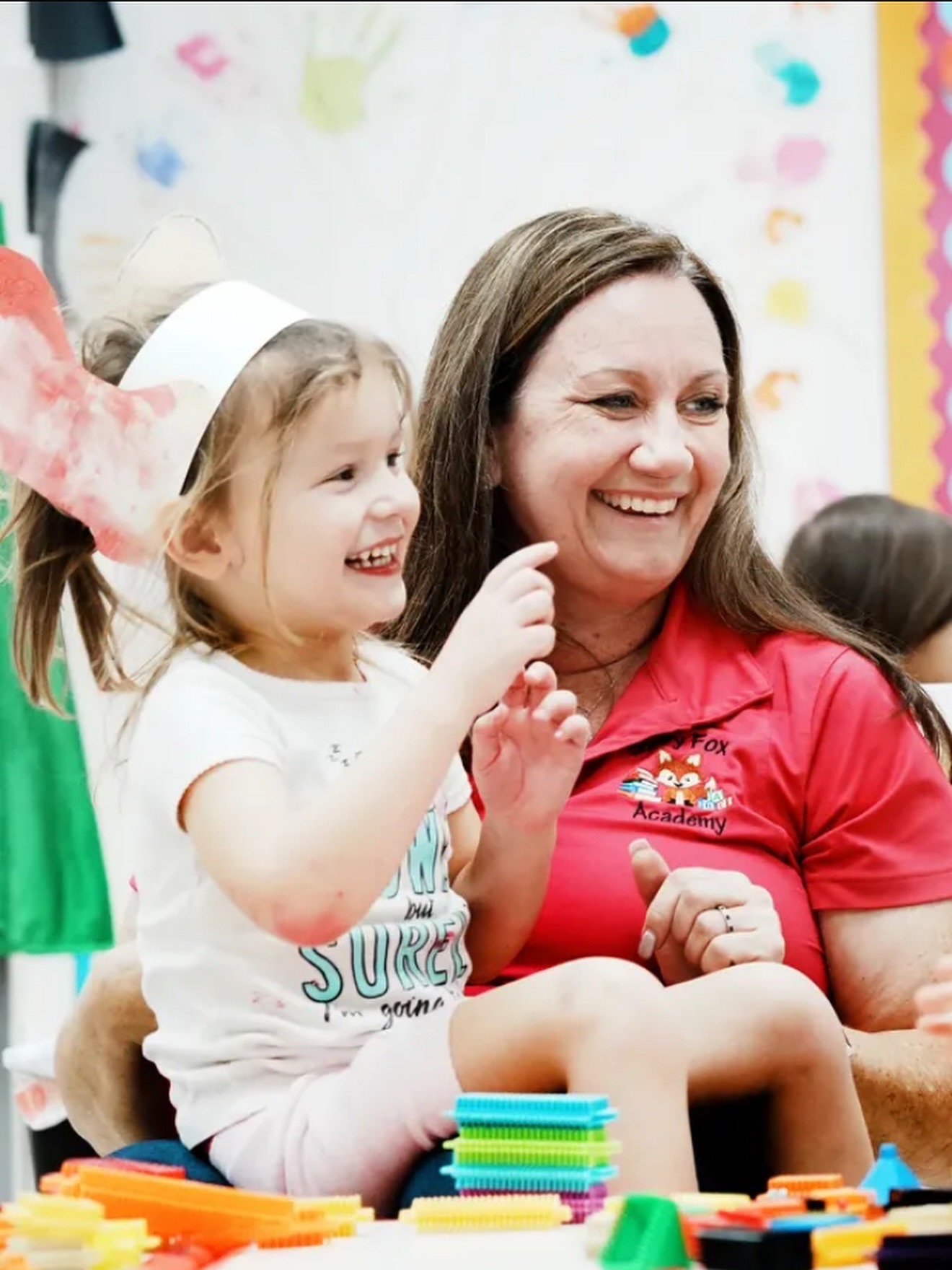
Every morning, before hospitals fully staff their shifts, before teachers enter classrooms, before businesses open their doors, and before countless professionals log into meetings, there is another workforce already at work: early childhood educators.
For far too long, childcare has been treated as a personal family issue instead of what it truly is—essential economic infrastructure. But finally, the conversation is beginning to shift. Business leaders, healthcare systems, policymakers, and community advocates are starting to recognize what those of us in early childhood education have known for years: when childcare systems struggle, entire communities and local economies struggle with them.
This conversation matters because the early years matter—profoundly.
Ninety percent of a child’s brain development occurs before the age of five, and nearly 70% is developed by the age of one. Those statistics alone should fundamentally change the way we view early learning and care. The first years of life are not simply preparation for school; they are the foundation for communication, emotional regulation, relationships, resilience, and lifelong learning.
And yet, many people still misunderstand what high-quality early childhood education actually is.
This work is not glorified babysitting. It is brain development. It is emotional development. It is relationship-building. It is identifying developmental concerns early. It is helping children learn how to regulate emotions, communicate needs, build confidence, problem-solve, and form secure attachments—all while their brains are developing at the most rapid rate they ever will.
One of the most staggering realities is this: approximately 75% of children who enter kindergarten without being developmentally ready—particularly in areas such as social-emotional development, self-regulation, communication, and fine and gross motor skills—will never fully catch up to their peers academically. That statistic should stop every community leader, policymaker, and employer in their tracks.
Kindergarten readiness is about far more than knowing letters, numbers, or colors. It is about whether a child has developed the foundational skills necessary to learn, build relationships, regulate emotions, follow directions, solve problems, and successfully engage in a classroom environment. These early developmental milestones are directly connected to long-term academic outcomes, workforce readiness, and overall lifelong well-being.
At the same time, families are under enormous pressure. Parents across the country are navigating impossible waitlists, rising tuition costs, staffing shortages, and limited access to quality care. Many are forced to reduce work hours, delay career advancement, or leave the workforce entirely because they cannot secure reliable childcare.
And while families struggle to afford care, early educators—the very people helping shape the next generation during the most critical years of development—often remain among the lowest-paid professionals in the workforce.
That contradiction is unsustainable.
As someone who works in this field every day, I believe we are approaching a turning point. More employers are beginning to understand that childcare access directly impacts recruitment, retention, productivity, and employee well-being. More healthcare organizations are exploring employer-supported childcare models. More community leaders are recognizing that workforce development conversations cannot happen without including early childhood education.
This is especially important for women. While caregiving impacts all families, women continue to disproportionately carry the burden when childcare systems fail. We cannot continue having conversations about women in leadership, economic mobility, entrepreneurship, and workforce participation without addressing the systems that make those opportunities possible in the first place.
The reality is simple: childcare is the workforce behind the workforce.
If we want strong communities, stable economies, healthy families, and prepared future generations, we must begin treating early childhood education as the critical infrastructure it truly is. That means investing in educators, supporting families, building sustainable systems, and creating partnerships among businesses, community organizations, and early learning providers.
Because when we invest in early childhood, we are not simply supporting children. We are investing in the long-term strength, stability, and future of our communities.
Join Influential Women and start making an impact. Register now.