Her Story
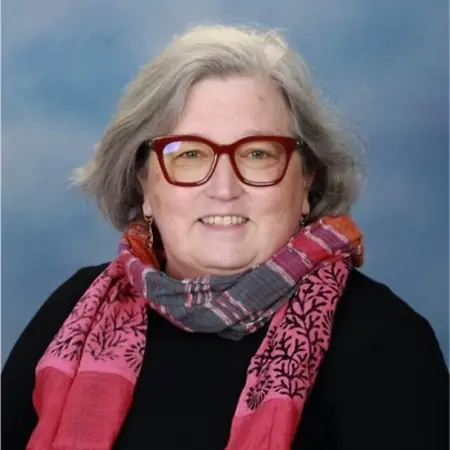
About LeAnn
LeAnn Murphy Cassidy, Ed.S., is a highly accomplished and dedicated education professional with over 38 years of experience in teaching, curriculum development, and instructional leadership. Currently serving as a Teacher Leader in Region 15 Schools in Middlebury, Connecticut, she specializes in middle school history education while also fulfilling administrative responsibilities. Throughout her career, she has demonstrated a strong commitment to fostering student growth, particularly among at-risk learners and those with learning differences, by creating inclusive, supportive, and academically rigorous environments that encourage both intellectual and personal development.
Cassidy’s academic background includes a Bachelor’s degree in Psychology with a minor concentration in Theater and Dance from Trinity College, a Master’s degree in Education from Central Connecticut State University, along with a Sixth Year Certification in Administration and Supervision from the University. of Bridgeport. Certified across multiple subject areas, including history, mathematics, English, special education, and theater, she brings a multidisciplinary and creative approach to education. Her career began in the arts as a lighting designer and production manager, experiences that continue to inform her emphasis on arts integration and student engagement.
In addition to her classroom work, she is a former lighting designer and production manager, as well as a published author and poet, with her first historical fiction book released in 2025. Recognized nationally and at the state level, Cassidy has received numerous honors, including the 2023 National VFW History and Civics Education Teacher of the Year Award for Connecticut, the 2018 Gilder Lehrman Institute of American History Teacher of the Year Award for Connecticut, and she was named a finalist for Connecticut Teacher of the Year in 2018. Beyond her professional achievements, she is deeply committed to community service and mentorship, supporting early career educators, as well as organizations such as the Scouts, local historical societies, town committees, and National History Day. Known for her authenticity, passion, and student-centered philosophy, Cassidy continues to shape future generations by empowering students and educators alike to find their voice, embrace diverse perspectives, and realize their full potential. Her impact extends far beyond the classroom, reflecting a lifelong dedication to education, creativity, and service.
Her Interview
Ten minutes with LeAnn
01What do you attribute your success to?
My path and success are deeply rooted in the example set by remarkable role models, especially my father, who remains my greatest inspiration. He rose from very humble beginnings, growing up just outside of Boston, losing his father at a young age, and then becoming the first in his family to attend college. Despite the challenges he faced, he was unwavering in his commitment to others, consistently giving his time to civic efforts and modeling a life of service. That sense of responsibility to contribute meaningfully and support those around us was instilled in me early and has guided my life’s work.
I was also profoundly influenced by my middle school music teacher, Mike Casella, who created a space where I felt seen and valued. That experience shifted how I understood both myself and the role education could play in a young person’s life. It was a turning point that ultimately led me into education, driven by a desire to ensure that every student feels accepted, supported, and empowered, particularly those who may struggle to find their place. My early experiences working with youth, including time as a camp counselor and involvement in multiple youth organizations, further solidified my commitment to service and mentorship.
Over time, this dedication has extended into my own family. I have sought to instill these same values in my children, all of whom have pursued careers centered on service to others, including nursing, physician assistance, engineering for the military, college counseling, and government work. They all continue to remain actively engaged in civic life both in their career choices and in their personal lives. For me, this commitment to service has never felt like an obligation, but rather a calling, a place where my values, experiences, and passions naturally align.
02What’s the best career advice you’ve ever received?
One lesson that has stayed with me throughout my life is the importance of not taking oneself too seriously. It is a value I learned from my father, who balanced a highly respected 36-year career as a finance director with a genuine sense of humor and humility. He believed that laughter and joy were essential, no matter how demanding the work, and he lived that belief fully; whether participating in the annual Kiwanis Club show or simply being willing to laugh at himself. In honoring him, I even wore sparkly combat boots at his funeral, a small but meaningful reflection of the spirit he carried. He taught us that professionalism and levity are not mutually exclusive, and that perspective has shaped how I approach both life and work. While I tend to be more serious by nature, perhaps influenced by being the oldest child and growing up at a time when women were still working to secure equal footing, that balance of dedication and lightness has served me well in education. I have always believed that success is collective, not individual. The accomplishments I am most proud of have come through collaboration, and I have made it a point to recognize and support those around me. Whether through small, thoughtful gestures or simply showing up for colleagues, I have tried to foster a sense of appreciation and community. Educators, like students, need to feel valued and uplifted, and I have always believed that when we take care of one another, we are better able to care for the students we serve every day.
03What advice would you give to young women entering your industry?
I believe deeply that the work we do in education is meaningful in itself; that making a difference in the life of even one child is enough, and it matters profoundly. Education is the foundation upon which every profession and every field is built; the experiences students have from their earliest years through high school shape who they become and how they contribute to the world. For me, the goal has always been to help students see beyond their current circumstances and begin to imagine what is possible for their future. For those considering entering the field, especially young women, there is no denying that the work can be challenging, but the rewards are lasting and deeply meaningful. Some of the most powerful moments come long after a student has left your classroom. It can be in the form of a letter received years later that simply says, “you saw me.” I have kept every one of those letters, because they serve as enduring reminders of why this work matters. We may not be able to solve every problem or reach every outcome we hope for, but what we can do is create a safe, supportive space where students feel valued, where they can explore who they are, and where they are encouraged to pursue their potential. Teaching is not a profession one enters for financial gain, but for purpose. It is about helping young people find their voice, recognize their worth, build their capacities as life-long learners, and believe strongly in their ability to shape their own future. At some point, each of us was seen by someone who made a difference in our lives. Education is, at its heart, about offering that same gift to the next generations.
04What are the biggest challenges or opportunities in your field right now?
The role of technology in students’ lives has become complex, and while it offers many benefits, it has also introduced real challenges in the classroom. One of the most noticeable shifts is in students’ ability to sustain attention. Many struggle with extended reading and writing, and it has become increasingly difficult for them to engage deeply with longer texts or persist through more demanding tasks. This is not simply a matter of preference, it reflects a broader change in how students interact with information, often in shorter, faster-paced formats. The impact of the COVID-19 pandemic accelerated this shift. The move to one-to-one devices, while necessary at the time, has had lasting effects. As schools and educators have noted declines in certain academic measures, particularly in reading, it raises important questions about how often students are being asked to read deeply and consistently. At the same time, many students’ schedules outside of school are highly structured and busy, leaving less room for quiet, sustained activities like reading for pleasure. There are also important developmental considerations. Increasingly, educators are observing that some students find it more challenging to navigate discomfort, engage in respectful disagreement, or persist through difficulty. This can be connected to a range of factors, including shifts in social dynamics, increased pressures by both peers and parents, influences via social media, and the growing prevalence of anxiety among young people. Building resilience and independence has become an even more essential part of education. Within schools, the presence of smartphones and the reliance on screen-based assessments have added additional layers of complexity. While these tools can offer convenience and efficiency, they can also contribute to distraction and may not always support the kind of deep thinking and focus that students need to develop. Encouragingly, the field of education is beginning to reflect more critically on these trends, though meaningful change will take time. Ultimately, the challenge is not to reject technology, but to find a healthier balance; one that supports sustained attention, meaningful engagement, and the development of skills students need to navigate both academic and real-world challenges.
05What values are most important to you in your work and personal life?
Authenticity has always been at the center of who I am as an educator and a person. I believe in being straightforward and genuine. Students and colleagues always know where they stand with me. Alongside that, I’ve long carried two guiding principles: to live with no regrets, and to remain flexible, because flexibility allows us to adapt without losing our sense of purpose. My life-long mantra has been “Blessed are the flexible, for they shall not be bent out of shape.” Those values and my mantra have become even more important in education in recent years, as classrooms and student needs have evolved significantly, particularly in the wake of COVID. In my teaching, I place a strong emphasis on helping students understand multiple perspectives. I am committed to presenting history in a way that reflects its complexity, because I believe that is how students develop empathy. If students leave my classroom with a greater ability to understand others and consider viewpoints beyond their own, then I know I have done something meaningful. In today’s world, that capacity for empathy and perspective-taking is essential. That same sense of responsibility extends beyond the classroom. The importance of contributing to others is something I learned from my parents, and it continues to guide me. I have always believed in recognizing and supporting my colleagues, just as we do our students. Education is a collective effort, and fostering a culture of appreciation and respect matters. The small acts, whether seen or unseen, are never about recognition, but about affirming the value of the people who do this work every day.
Join Influential Women and start making an impact. Register now.