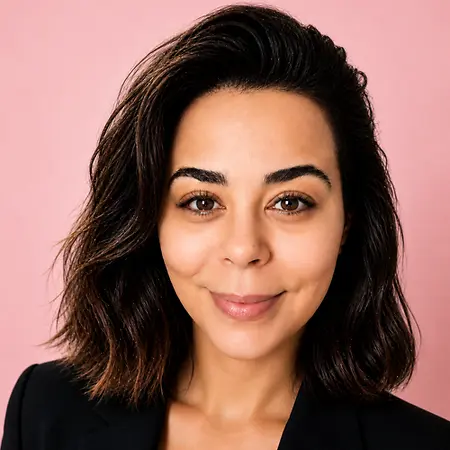
A powerful exploration of how Arab women navigate professional spaces, examining the hidden costs of assimilation, workplace discrimination disguised as professionalism, and the need for systemic change rather than individual adaptation.
Her Story
About Ilhem,
I have been in real estate for more than 5 years, starting from February 2021. I am currently a senior portfolio manager and executive member, a position I have held for 3 years. I oversee a portfolio of 126 units across residential, luxury, and short-term rental segments. My responsibilities span the entire real estate operation - from marketing properties and negotiating with clients to showing properties, preparing contracts, and facilitating move-ins. My current key role involves serving as the middleman between property owners and short-term business partners, as I specialize in long-term residentials but help clients who are looking for short-term managers for Airbnb or short-term business. Before real estate, I worked as an administrative assistant in a different industry. My path was not traditional - I started with zero experience but had my certificates. I was confused and afraid at first, but as soon as I started, I excelled. The turning point in my career came when I realized that real estate is not only about the properties or operations, but actually about people. Every transaction represents not just an asset, but a decision that impacts someone's life, security, or future. I learned that long-term success doesn't come from closing deals, but from building lasting relationships and credibility. I now lead a team of 15 people, and I have clients who have become my friends. This work is a passion for me - I enjoy it to the bones.
Her Interview
Ten minutes with Ilhem,
01What do you attribute your success to?
I attribute my success to a combination of education, but most importantly, continuous learning and consistent hard work. I am someone who believes in continuous self-learning - when I face challenges, I take action to solve. The turning point in my career was realizing that real estate is not just about operations or closing deals, but about people. Every transaction represents a decision that impacts someone's life, security, or future. I learned that long-term success doesn't come from closing deals, but from building lasting relationships and credibility. This shift in perspective, combined with my commitment to ongoing learning and hard work, has been the foundation of my success.
02What’s the best career advice you’ve ever received?
The best career advice I have received came from my team members, who really push me to be my best. They told me: just do your part, but be honest, be spontaneous with people, and look for their best interest, and everything will go along with you. I am very grateful to them because they are the kind of people that help me grow. This advice has shaped how I approach my work - focusing on honesty, authenticity, and putting my clients' best interests first.
03What advice would you give to young women entering your industry?
If I can give advice to any women, I would say: don't wait for permission or for perfect readiness. Step forward. Leadership isn't built in comfort. It is built through action and experience, and confidence follows competence, not the other way around. Most importantly, courage isn't the absence of fear, it is the discipline to move forward despite it. I think the women who lead are the ones who choose to take space, use their voice, and grow into it. I want women to understand and realize that they can be in leadership, they can be successful, and they can overcome anything that was hard in their lives.
04What are the biggest challenges or opportunities in your field right now?
I see major opportunities in leveraging technology to optimize operations and improve tenant experience. I'm a little bit old school, so I was not very familiar with using technologies in everything, but I recognize this as a significant area for growth. There is also significant potential in portfolio expansion and better contribution in management strategies. These are the areas where I see the most opportunity for advancement in the field right now.
05What values are most important to you in your work and personal life?
Honesty is the most important value to me in both my personal and professional life. For me, telling the truth as it is and letting people know the truth as it is are core values. Some people sometimes say you have to close your eyes about something or just play nice, but for me, no. I prefer being honest. Definitely don't be rude, but being honest and telling people the truth as it is - that is the most important value in both professional and personal aspects. Beyond just closing deals, I believe that integrity is not optional in real estate. It is essential for building the lasting relationships and credibility that lead to long-term success.
Her Content Hub
Articles by Ilhem,
Lee became my professional lifeline. But Ilhem was the woman who had earned the right to be there.
How Arab women navigate identity, belonging, and professional authenticity in a capitalist system designed for assimilation.
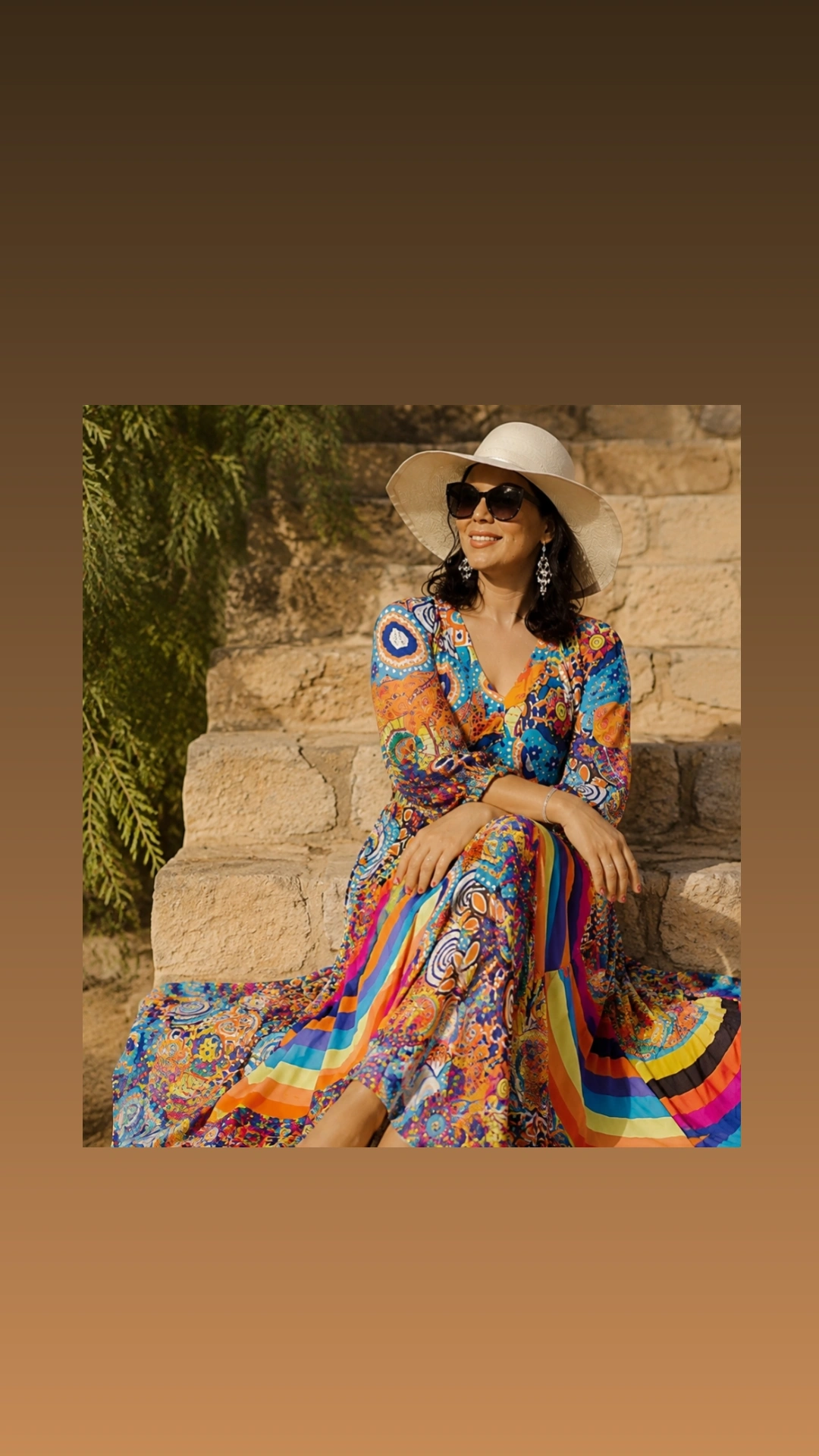
Arab Women, Othered Identities, and the Capitalist Workplace
My name is Ilhem. In Arabic, it means inspiration.
It is not an unusual name where I come from. It is a name I grew up hearing, a name that belonged naturally to the language, culture, and world that shaped me. It was never difficult to pronounce where I came from.
Then I entered professional spaces where it was.
At first, people hesitated.
They would look at my name, pause, try to pronounce it, apologize, and try again. Sometimes they would laugh awkwardly. Sometimes I would help them. Eventually, I learned to help them before they had to ask.
Then I became Lee.
Lee was easier.
Lee did not require an explanation. Lee did not make people pause before speaking to me. Lee fit more comfortably into emails, meetings, introductions, and professional conversations.
And, in ways I did not fully understand at the time, Lee became my professional lifeline.
But there was something I could not ignore:
Lee had not earned that place. Ilhem had.
Ilhem was the woman who had studied, worked, learned, failed, tried again, built experience, developed expertise, and earned every professional opportunity that came her way.
Lee was simply easier for other people to process.
That distinction has stayed with me.
Because we often talk about women in the workplace as though the greatest obstacle were simply getting through the door.
For many women, especially women from immigrant and ethnic minority backgrounds, the more complicated question is what happens after the door opens.
Who gets to belong without explanation?
Who gets to sound professional without modifying her voice?
Whose name is considered easy? Whose accent is considered polished? Whose confidence is considered leadership, and whose confidence is considered aggression?
These questions are not merely about manners. They are about power.
The Woman Who Was Already There
There is a particular story that Western societies sometimes tell about Arab women.
It is a story in which the Arab woman is waiting to be liberated.
She is imagined as someone who must leave her culture, her family, or her country before she can discover education, ambition, independence, or professional identity.
I reject that story.
I did not need to cross a cultural border to become a woman.
I did not arrive in a professional environment carrying an empty résumé and waiting for someone else to define my potential. I arrived with an education, experience, ambitions, values, and a history of my own.
I had already learned.
I had already worked.
I had already succeeded.
My Arab identity was not an obstacle I had overcome before entering the professional world. It was part of the person who entered it.
This distinction matters because representation can become another form of simplification. We celebrate the woman who has supposedly escaped her background rather than recognizing the woman who carries her background with pride while building something new.
The Arab woman does not need to become less Arab to become more professional.
And she does not need to be rescued from her identity in order to participate in the modern economy.
She needs to be evaluated for what she actually brings to the table.
When an Accent Enters the Room Before You Do
A woman can walk into a room with years of experience and still discover that her accent arrived first.
An accent can become a shortcut through which people make assumptions about intelligence, competence, education, confidence, or belonging.
This is not uniquely Arab.
It happens to women with African accents, Asian accents, Latin American accents, Eastern European accents, and to anyone whose voice does not immediately resemble the dominant professional norm.
The problem is not that workplaces have no standards.
The problem is that we often mistake familiarity for professionalism.
What sounds "professional" is frequently nothing more than what those with institutional power have become accustomed to hearing.
And the same thing happens with names.
A difficult-to-pronounce name is not evidence of a difficult person.
An unfamiliar accent is not evidence of poor communication.
A foreign-sounding name is not evidence of foreign competence.
Yet women learn quickly.
- We learn which parts of ourselves make other people comfortable.
- We learn which details to explain.
- We learn how to make our names easier.
- We learn when to soften an accent.
- We learn which cultural references need translating.
And sometimes we do these things willingly. Sometimes they genuinely help us navigate a complicated world.
That is what makes the issue so difficult.
Adaptation can be empowering and exhausting at the same time.
The Capitalist Workplace and the Price of Being Legible
This is where the conversation about women, identity, and capitalism becomes more complicated.
Capitalism promises something deeply attractive: that ability can become opportunity.
Work hard. Develop your skills. Produce value. Build a career. Become financially independent.
For women, this promise has had enormous emancipatory power.
Economic independence can mean freedom from dependence. A salary can mean the ability to leave an unsafe relationship, support a family, pursue education, own property, make choices, and build a life according to one's own terms.
The solution is not to push women out of the workplace.
Quite the opposite.
Women's access to paid work has been one of the most important transformations in modern gender relations.
But there is a question we should ask alongside that progress:
What happens when the market does not evaluate everyone from the same starting line?
Capitalism often presents itself as meritocratic. But merit is never evaluated in a vacuum.
Skills matter.
Experience matters.
Hard work matters.
But so do perceptions.
So does familiarity.
So does social capital.
So does the ability to fit comfortably into an environment designed around someone else's cultural expectations.
The market does not always have to explicitly discriminate against you.
Sometimes it simply rewards what already feels familiar.
And when that happens, the burden of adaptation quietly moves onto the individual.
Change your name.
Change your accent.
Change your clothes.
Change the way you express disagreement.
Learn how to make your difference less visible.
Then call the result "professionalism."
Diversity Without Discomfort
Modern workplaces have become much better at speaking the language of diversity.
Companies celebrate multicultural teams. They publish inclusion statements. They highlight women in leadership. They tell employees that they should bring their authentic selves to work.
These are meaningful changes.
But diversity becomes shallow when organizations want the appearance of difference without the inconvenience of confronting their own definitions of normal.
It is easy to celebrate a woman who is different when her difference is packaged neatly into a corporate diversity initiative.
It is harder to ask whether the workplace itself needs to change.
Can professionalism accommodate an accent?
Can leadership sound different?
Can competence have a name that requires practice?
Can a woman disagree without being told she is too emotional, too aggressive, too difficult, or insufficiently polished?
Can an Arab woman enter a room without feeling that she has to prove that she belongs there before anyone has even heard what she has to say?
These questions matter because inclusion is not simply about allowing different people into the room.
It is about questioning who designed the room.
The Double Shift
There is another contradiction that capitalism has not solved for women.
Women entered paid employment in greater numbers and rightly demanded the economic independence that came with it.
But paid work did not make unpaid work disappear.
Women still disproportionately perform caregiving, household management, emotional labor, and the invisible administrative work that keeps families functioning.
The modern woman can therefore find herself celebrated for having "it all" while quietly being expected to carry all of it.
- A career.
- A home.
- Children.
- Parents.
- Relationships.
- Appearance.
- Emotional stability.
- Personal development.
And somehow, she is supposed to experience the exhaustion as empowerment.
I do not want to return to a world in which women are excluded from economic life.
I want to question a world in which women's liberation is sometimes measured by how much more they can carry.
If empowerment means becoming capable of doing two jobs instead of one, perhaps we need a more ambitious definition of empowerment.
The Women Behind the Woman Who Succeeds
There is another layer we should not ignore.
Not all women experience professional freedom in the same way.
A woman with enough money can outsource domestic labor. She can hire childcare. She can pay someone to clean her home. She can purchase time.
And often, the people providing that labor are other women - women who may be poorer, immigrants, racial minorities, or otherwise economically vulnerable.
This does not invalidate the achievements of women who use those services.
But it reveals something uncomfortable about the economy:
Sometimes one woman's professional freedom is partially made possible by another woman's invisible labor.
So the feminist question cannot simply be:
How do we get more women into positions of power?
It must also be:
What kind of economy makes that power possible, and who pays the hidden cost?
I Am Not Interested in Becoming Less of Myself
My story began with a name.
Ilhem became Lee.
And I cannot pretend that Lee did not help me.
She did.
Lee made introductions easier. Lee made professional interactions smoother. Lee helped me move through spaces where Ilhem required explanation.
I am grateful for what Lee gave me.
But I refuse to believe that this means Ilhem was the problem.
The problem was never that my name was too foreign.
The problem was the assumption that unfamiliarity made something less professional.
There is a difference.
And that difference matters far beyond one woman's name.
It matters to every woman who has ever shortened her name because people could not pronounce it.
To every woman who has softened her accent because she was tired of being asked where she was "really" from.
To every woman who learned to make herself smaller, quieter, more familiar, or more easily digestible in order to advance.
And it matters to every woman who refuses to do so.
A Different Promise
Perhaps the future of women's equality should not be about teaching women how to adapt perfectly to existing systems.
Perhaps it should be about changing the systems themselves.
Not a workplace where everyone learns to sound the same.
Not a version of empowerment that celebrates exhaustion.
Not diversity that asks women to bring their identities to work only after making those identities comfortable for everyone else.
A better workplace would recognize that competence has no accent.
Ambition has no ethnicity.
Leadership does not have one voice.
And a woman's professional worth should not depend on how easily other people can pronounce her name.
My name is Ilhem.
Lee helped me survive the professional world.
But Ilhem was the woman who studied, worked, persisted, and earned the right to be there.
The goal was never to make Ilhem disappear.
The goal should have been to make room for her.
Explore how women are reshaping Florida's dynamic real estate market as influential decision-makers, driving investment strategies, community development, and wealth creation while redefining leadership in the industry.
Florida Real Estate and the Rise of Women Decision-Makers: Shaping Markets, Communities, and Wealth
How women leaders are driving innovation, wealth creation, and sustainable growth in Florida's dynamic real estate market.
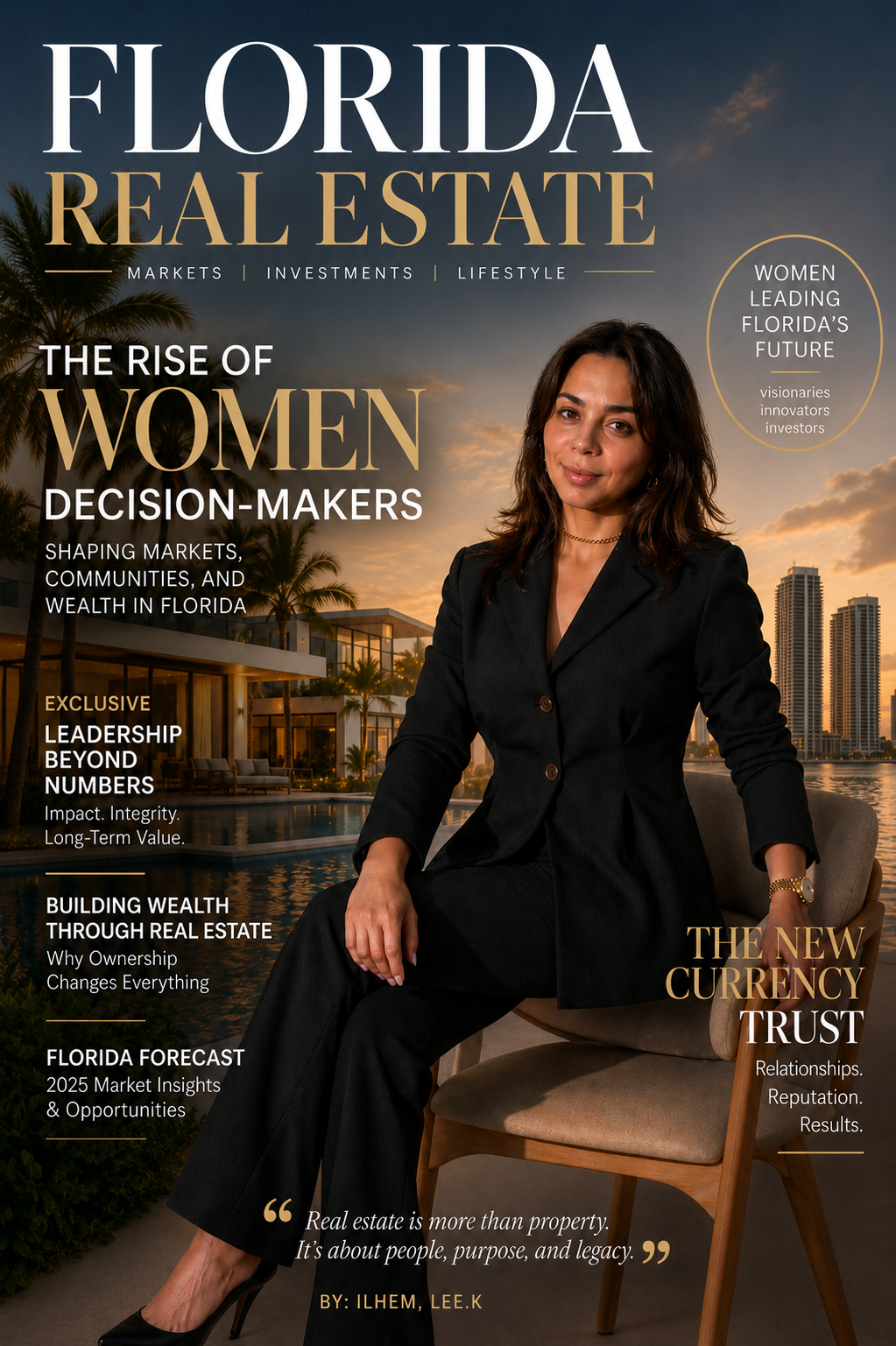
Florida Real Estate: Women Shaping the Future of an Evolving Market
For decades, Florida has occupied a unique position within the American real estate landscape. It is a state where demographic trends, migration patterns, economic development, and lifestyle aspirations converge to create one of the nation's most dynamic property markets. Yet beyond the headlines about home prices, inventory levels, and population growth lies a deeper transformation—one increasingly driven by women who are influencing not only transactions, but also investment strategies, community development, and long-term wealth creation.
The conversation around women in real estate has evolved. It is no longer merely about participation or representation. Today, women are emerging as key decision-makers whose influence extends across the entire real estate ecosystem, from investment and finance to development, brokerage leadership, and urban planning.
A Market Defined by Movement
Florida's real estate market reflects broader economic and social shifts occurring across the United States. Population migration from high-tax states, remote work flexibility, and changing lifestyle priorities have altered demand patterns in ways few analysts could have predicted a decade ago.
The result is a market that rewards adaptability. Investors, developers, and real estate professionals can no longer rely solely on historical performance metrics. Success increasingly depends on understanding demographic behavior, consumer expectations, and long-term community needs.
This environment has created opportunities for leaders who combine analytical thinking with relationship-driven leadership—qualities that many successful women in the industry have leveraged to build influential careers and businesses.
Real Estate as a Vehicle for Economic Influence
One of the most significant yet underappreciated aspects of real estate is its role in wealth creation. Unlike many industries in which value is measured primarily through income generation, real estate offers the ability to build equity, leverage assets, generate cash flow, and create intergenerational wealth.
For women, this distinction is particularly important.
Historically, discussions surrounding financial empowerment often focused solely on career advancement. Today, a growing number of women recognize that ownership—not merely participation—is often the defining factor in achieving long-term financial security.
Whether through residential investments, commercial acquisitions, development partnerships, or entrepreneurial ventures, women are increasingly using real estate as a strategic asset class rather than simply viewing it as a profession.
This shift represents a broader change in mindset: moving from earning wealth to building wealth.
Leadership Beyond Traditional Metrics
The most influential leaders in real estate are rarely defined solely by transaction volume or portfolio size. Their impact is measured by the environments they create, the opportunities they generate, and the communities they help shape.
Florida's growth has brought both opportunity and responsibility. Questions surrounding affordability, infrastructure, sustainability, and community preservation require leaders who can balance economic objectives with social impact.
Many women across the industry have distinguished themselves by embracing this broader perspective. Their leadership often emphasizes long-term value creation rather than short-term gains, recognizing that thriving communities ultimately support thriving markets.
In an era when stakeholders increasingly expect businesses to demonstrate purpose alongside profitability, this approach has become a competitive advantage rather than merely a philosophical preference.
The New Currency: Trust
Technology has transformed how real estate is marketed, analyzed, and transacted. Artificial intelligence, predictive analytics, virtual tours, and digital platforms continue to reshape the industry.
Yet despite these innovations, one factor remains irreplaceable: trust.
Real estate transactions involve some of the most significant financial decisions individuals and organizations will ever make. Clients seek advisors who can navigate uncertainty, interpret market conditions, and provide sound judgment during periods of volatility.
As information becomes more accessible, expertise alone is no longer enough. The ability to build credibility, communicate effectively, and foster lasting relationships has become one of the industry's most valuable currencies.
This reality has created opportunities for leaders who understand that influence is built not through visibility alone, but through consistency, integrity, and results.
Why Visibility Matters
Although women continue to make significant contributions across the real estate sector, visibility remains a critical issue. Recognition is not merely about celebration; it is about creating models of success that inspire future leaders.
Platforms dedicated to highlighting influential women play an essential role in shaping industry narratives. They provide spaces where expertise, innovation, and leadership can be showcased, allowing emerging professionals to see what is possible and learn from those who have successfully navigated complex careers.
Visibility also has practical implications. It expands professional networks, creates mentorship opportunities, attracts investment, and encourages broader participation in leadership roles.
When accomplished women are recognized for their contributions, the impact extends far beyond individual achievement; it strengthens the industry as a whole.
Looking Forward
The future of Florida real estate will be shaped by more than market cycles and economic indicators. It will be shaped by leaders who identify opportunities amid uncertainty, balance growth with responsibility, and recognize that lasting success is measured over decades rather than quarters.
Women are increasingly among those leaders.
Their growing influence reflects not a temporary trend, but a structural evolution within one of America's most important industries. As investors, entrepreneurs, executives, and community builders, women are helping redefine what leadership looks like in real estate while creating new pathways for wealth, innovation, and impact.
In Florida's rapidly evolving market, the question is no longer whether women will influence the future of real estate. The evidence suggests they already are. The more relevant question is how the industry will continue to benefit from their leadership in the years ahead.
By: Ilhem Lee, K.
An exploration of authentic leadership through portfolio management and executive support, revealing how quiet strength, consistency, and human-centered decision-making define real impact across industries—especially for women shaping modern professional landscapes.
Leadership Is Not Always Loud — And Growth Rarely Feels Comfortable
Leadership is not about visibility—it's about the quiet impact you create and the clarity you bring to complexity.

For a long time, I believed leadership had a specific appearance.
It was visible, confident, and effortless. It belonged to the people who spoke first, decided quickly, and seemed completely certain of their direction. But over the years, working as both a Portfolio Manager and Executive Assistant, I learned that real leadership is far less performative—and far more human.
Some of the most impactful professionals I have worked with are not the loudest in the room. They are the ones who carry responsibility quietly, stabilize pressure in real time, anticipate problems before they surface, and make decisions that others rarely see but always feel.
My work in portfolio management taught me that every decision carries weight. It is not only about numbers or performance metrics; it is about trust. Clients are not just entrusting capital—they are entrusting confidence, stability, and long-term vision. That responsibility demands discipline, emotional control, and the ability to think clearly even in uncertainty.
At the same time, my experience as an Executive Assistant shaped a different dimension of leadership—one that operates behind structure rather than in the spotlight.
Executive support roles are often misunderstood as purely administrative. In reality, they require strategic thinking, discretion, emotional intelligence, and the ability to manage complexity across people, priorities, and time. You are constantly translating communication, anticipating needs, protecting focus, and absorbing pressure so that systems and leadership can function seamlessly.
Over time, I realized something important: leadership is not defined by title or visibility. It is defined by impact, consistency, and the ability to bring clarity into complexity.
One of the most important lessons I learned across both roles is that growth does not wait for readiness.
In fact, readiness is rarely something we fully feel before stepping into new responsibility. Many of the most defining moments in my career began with uncertainty—moments where I accepted responsibility before I felt entirely prepared. And yet, those experiences became the foundation of confidence itself.
Confidence is not a prerequisite for growth. It is often its result.
This truth becomes even more visible in industries where precision, timing, and adaptability define outcomes—including finance, executive operations, and real estate.
In fast-moving environments such as the Florida real estate market, conditions evolve constantly. Interest rates shift, insurance structures change, inventory moves, and buyer expectations continue to adapt. Yet within this movement, one constant remains: every transaction represents a deeply human decision about home, security, and future.
In that space, professionalism is not only technical—it is relational, strategic, and deeply composed.
Across industries, I have learned that success is built on the ability to remain steady in motion: to process complexity without noise, to communicate with clarity under pressure, and to make decisions without waiting for perfect conditions.
Many opportunities are not missed due to a lack of ability, but due to waiting for a feeling of complete readiness. Yet readiness is not a fixed point—it is something that develops through engagement, responsibility, and experience.
You do not arrive ready. You become ready through action.
For women in leadership today, this reality is especially meaningful. Leadership is no longer defined by fitting into existing structures—it is defined by shaping them. Women are leading portfolios, managing negotiations, building businesses, directing operations, and influencing industries with precision and presence.
And this presence carries its own language—one that is both composed and decisive, both strategic and expressive, both elegant and powerful.
There is something distinctly modern about walking into a room fully aligned with your role, your knowledge, and your standards—and owning that space with calm authority. Sometimes that looks like closing deals in high heels, not as a symbol of appearance, but as a reflection of presence, confidence, and professionalism that does not separate identity from excellence.
Across every industry I have worked in, I have come to value a definition of strength that is not loud, but consistent: the ability to stay composed under pressure, to think clearly when circumstances shift, and to remain human in environments that demand precision.
Because ultimately, leadership is not always about being seen.
Sometimes it is about ensuring everything else can stand.
Join Influential Women and start making an impact. Register now.