A reflective exploration of how redefining success from task completion to continuous growth transforms leadership effectiveness and personal well-being through empowerment, balance, and intentional focus.
Her Story
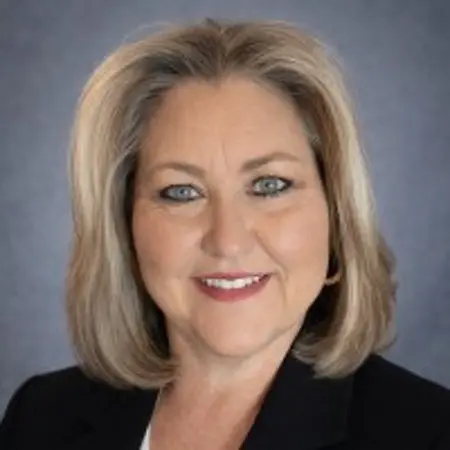
About Lee
With more than 25 years of experience in the healthcare industry, Lee Boatman‑Alexander brings a rare, full‑circle perspective shaped by leadership roles on both the hospital and healthcare staffing sides of the business.She began her career inside hospital operations, serving as a Director of Workforce Planning, where she was responsible for balancing patient care demands, budget constraints, and persistent staffing shortages. In that role, she experienced firsthand the frustration of managing multiple staffing agencies, navigating inconsistent contingent labor rates, and making critical decisions without clear visibility into true workforce costs.Lee later transitioned into the healthcare staffing and workforce solutions sector, where she built deep expertise in strategic growth and client partnerships. Most recently, she served as Vice President of Business Development at Cross Country Locums, focusing on expanding workforce solutions and supporting healthcare systems nationwide.Today, Lee serves as Director of Enterprise Sales at Ringo, a healthcare technology company specializing in workforce optimization for hospitals. In this role, she partners with health systems to address one of healthcare’s most urgent challenges—the unsustainable reliance on locums, travel nurses, and other contingent staffing models. Through Ringo’s true vendor‑neutral platform, she helps hospitals centralize vendor management, standardize rates, improve fill predictability, and gain real‑time visibility into workforce performance and spend.
What distinguishes Lee’s approach is her deep empathy for hospital leaders and her credibility rooted in lived experience. Having sat in the seat herself, she understands the pressure of making workforce decisions when patient care is on the line. She engages healthcare leaders beyond traditional sales conversations, drawing on long‑standing relationships and a strong belief in solutions that drive real operational and financial impact.Ultimately, Lee is driven by helping hospitals build more sustainable, data‑driven workforce models that reduce costs, increase transparency, and support long‑term financial stability—without compromising the quality of patient care.
Her Interview
Ten minutes with Lee
01What do you attribute your success to?
I have been fortunate throughout my career to work under exceptionally strong leaders who invested time in coaching and mentoring me. I can genuinely say that I have not held a role in which I reported to ineffective leadership, and I recognize that this is not a universal experience. Those leaders played a critical role in shaping my understanding of what true leadership looks like—something I did not fully grasp early in my career. In hindsight, I was likely placed in leadership roles before I was fully prepared, a common outcome when high performers are promoted before they have developed the necessary leadership skills. Fortunately, I benefited from leaders who believed in my potential, provided guidance, and supported my growth along the way. That trust and mentorship have been instrumental in my professional success.
02What’s the best career advice you’ve ever received?
Early in my career I had a leader who believed in worklife balance as much as she believed in hard work. I had tendency to allow my daily tasks and responsibilities to consume my time and energy, largely because I had not yet learned how to disengage. Today, that challenge is even more pronounced. With constant connectivity through smartphones and social media, it has become increasingly difficult to step away from work and truly unplug.
This reality makes it even more critical—particularly for executives and leaders—to prioritize well-being and model the behaviors we encourage in our employees. We must take care of our people, but we must also speak the same language through our actions. Stepping away, setting boundaries, and caring for our own well-being are not optional; they are essential.
It is easy to become overwhelmed by the day‑to‑day demands of leadership. Without intentionally taking time to pause, reflect, and recharge, the pressures of daily work can quietly erode both performance and personal fulfillment. As leaders, we must practice what we preach: step away when needed, take a breath, focus on what we can control, and avoid allowing constant demands to dictate every moment.
Ultimately, our well‑being and our time with family are irreplaceable. Those moments cannot be recovered. In my view, protecting that balance is one of the most important responsibilities—and one of the most impactful examples—an executive can demonstrate today.
03What advice would you give to young women entering your industry?
I would emphasize the importance of staying connected and continuing to build your professional network. Never burn bridges—regardless of the industry, the professional world is remarkably interconnected, and actions can have lasting consequences. Above all, remain true to yourself. Never try to be someone you’re not. Authenticity is critical and should guide everything you do in your professional life.
04What are the biggest challenges or opportunities in your field right now?
One of the most significant challenges today is operating in an increasingly remote work environment. Building meaningful connections and maintaining strong collaboration can be difficult when teams are not physically together. At the same time, there are considerable opportunities emerging. Rapid advancements in technology—particularly in areas such as artificial intelligence—are transforming how we work and communicate. While innovation continues to accelerate, it is easy for the landscape to become oversaturated with new tools and platforms. Amid this evolution, it is critical not to lose sight of the importance of the human element. The personal touch and genuine connection remain essential, regardless of technological progress. This presents both an opportunity and a challenge, especially for leaders who are tasked with effectively managing and engaging a remote workforce.
05What values are most important to you in your work and personal life?
Above all, I value a strong work ethic. I believe in working hard and approaching both my personal and professional life with dedication and integrity. This commitment has shaped my career and has been something I have intentionally modeled and instilled in my daughter. I am highly independent and driven, motivated by professional growth and inspired by the influential women who have helped shape my journey. Maintaining strong relationships and networks—both professionally and personally—is important to me, as meaningful progress is built through connection and collaboration. I firmly believe that success is earned; the more effort you invest, the greater the reward and the deeper the appreciation for your work. Throughout my career, I have been known for maintaining an open-door policy and leading by example. I never ask my team to take on a task I am not willing to do myself, and I have consistently demonstrated this commitment by working alongside my employees and supporting them every step of the way.
Her Content Hub
Articles by Lee
My Leadership Journey
From Task Completion to Continuous Growth: Redefining Leadership Through Balance and Empowerment

Early in my career, a colleague once shared that they enjoyed working in their yard on weekends because it was one of the few tasks they could fully complete and derive a true sense of accomplishment from. At the time, I related deeply to that perspective. I, too, found satisfaction in those moments of visible progress—perhaps because, professionally, the work never seemed to end.
In those early years, the constant pace was exhausting. My days were filled with back-to-back meetings, followed by long evenings spent catching up on emails and unfinished tasks. Despite the effort, it often felt as though I was never truly “done.”
As I’ve grown in my leadership journey, I’ve come to realize that my perspective was somewhat misaligned. The reality is that the work is never finished—and that is not a flaw, but rather a reflection of continuous growth. Leadership is not about completion; it is about progress and improvement—striving each day to be better than the last.
Over time, my priorities began to shift. I placed greater emphasis on personal wellness and family, recognizing that sustainable leadership requires balance. I also redefined how I viewed my team. Rather than seeing individuals as employees to manage, I came to view them as colleagues and partners. I focused on hiring talented individuals who did not require micromanagement—and, just as importantly, I learned to step back and trust them.
My approach evolved from managing tasks to inspiring people. Effective leadership is not about doing everything yourself, but about empowering others to contribute their strengths. While outcomes may not always look exactly as I would have executed them, that diversity of thought often leads to stronger results. When individuals feel valued and understand that their work matters, they become more engaged and motivated.
I’ve also learned that each person is motivated by different factors. What inspires me may not inspire others—and that is not a challenge, but an opportunity. The key is alignment around a shared goal, allowing each team member to contribute in their own unique way. That is what truly creates a cohesive and high-performing team.
I recall another defining moment early in my career when a mentor approached me late one evening and asked why I was still working. My response was simple: I wasn’t finished. She smiled and said, “You never will be. Go home.” At the time, that advice felt counterintuitive. I believed there had to be a point of completion—a way to measure accomplishment in a finite sense.
What I’ve learned since is that accomplishment comes not from finishing everything, but from focusing on what matters most. Setting clear goals, establishing key performance indicators, and maintaining perspective are essential. Just as important is learning to pause—to spend time with family, to rest, and to recharge. Personally, I’ve had to work on disconnecting and quieting my mind, even in the early hours of the morning—a challenge I still navigate today. However, I now recognize that prioritizing personal well-being is not optional; it is fundamental to effective leadership.
Approaching each day with clarity and focus makes a significant difference. Even small actions—such as stepping away for a walk during lunch—can improve energy, focus, and overall effectiveness. Leaders set the tone, and teams naturally draw from that energy. Ultimately, leadership is not about doing more; it is about doing what matters—intentionally, sustainably, and with purpose.
Join Influential Women and start making an impact. Register now.