Strength and wisdom are shaped by navigating uncertainty. Trust your values, take the best next step, and allow clarity to unfold along the way.
Staying Hopeful Through Uncertainty
Explore moreStanding up to a bully changed my life and helped me find my voice, strengthening my commitment to ensuring others feel valued, respected, and never alone.
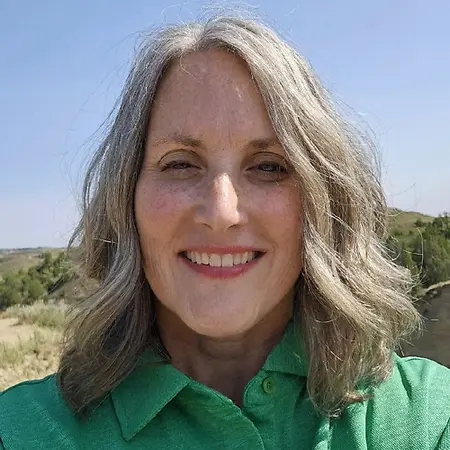
Lee Ann Rawlins Williams · In Her Own Words
Strength and wisdom are shaped by navigating uncertainty. Trust your values, take the best next step, and allow clarity to unfold along the way.
Staying Hopeful Through Uncertainty
Explore moreFeedback is information, not identity. Separating who I am from what I do gave me space to grow, and being intentional about whose voices I valued made all the difference.
How She Learned to Navigate Criticism
Explore moreHer Story
Lee Ann Rawlins Williams is a seasoned professional in the fields of disability, rehabilitation, and education, bringing more than 25 years of combined experience across practice, research, and academia. She currently serves as a Clinical Assistant Professor and Program Director at the University of North Dakota, where she focuses on advancing inclusive systems, educator support, and accessibility. Her work is grounded in a collaborative, global perspective, partnering across disciplines to promote equity, innovation, and meaningful change for individuals with disabilities and the professionals who serve them.
Williams began her career as a counselor with the state of Tennessee, working closely with individuals with both physical and mental health disabilities, including those with traumatic brain injury, blindness, and low vision. After earning her doctorate from the University of Tennessee, Knoxville, she transitioned into academia to support and mentor future professionals in rehabilitation and human services. Throughout her career, she has contributed to training initiatives and grant-funded programs across the United States and internationally, while also serving in consulting roles such as her recent work with the United Nations Library & Archives Geneva, where she advanced accessibility in global information resources.
Her current work centers on bridging the gap between mental health and education systems, with a particular emphasis on educator well-being and retention in the post-pandemic era. Williams is deeply committed to trauma-informed practices, disaster preparedness, and strengthening both educational and workforce systems through inclusive, human-centered approaches. A recognized thought leader, she has contributed to national conversations on teacher shortages and professional sustainability, including widely read publications with The Conversation. Through her teaching, research, and global engagement, she continues to advocate for systems that prioritize dignity, access, and long-term impact for diverse and vulnerable populations.
Her Interview
01What do you attribute your success to?
I attribute my success to an unwavering commitment to my values, a dedication to giving back, and extensive hands-on experience working with individuals with disabilities, supporting students, and training educators to effectively promote mental health and well-being.
02What’s the best career advice you’ve ever received?
The best career advice I’ve received is to stay true to who I am as a person and to my values. A mentor shared this with me early in my career, and it has guided me ever since. I’ve learned that authenticity and a strong commitment to giving back are central to my purpose, and when I stay grounded in those values, my work is most impactful, and when I don’t, it no longer aligns with who I am.
03What advice would you give to young women entering your industry?
I would encourage young women entering this field to remain grounded in who they are and guided by their values. It’s easy to feel pressure to meet external expectations, but maintaining a strong sense of self is key to long-term fulfillment and impact. I also believe it’s important to stay committed to your purpose, especially in a field like education where passion and dedication are essential. At the same time, make space for self-care and take care of yourself throughout the process. This work is meaningful, but it can also be demanding, and sustaining your well-being is critical to sustaining your impact. Despite the challenges, there is meaningful opportunity to make a difference, so remain focused, resilient, and driven by what inspires you, and always remember why you chose your profession.
04What are the biggest challenges or opportunities in your field right now?
One of the most pressing challenges in my field is the growing teacher shortage. We are losing experienced educators and facing increasing difficulty attracting new ones, with many students expressing less interest in entering the profession. Addressing this requires a shift in focus to support and retain current teachers by providing the resources, conditions, and support necessary for success. When we prioritize students without equally supporting educators, we risk further weakening the profession. At the same time, we must continue to elevate and demonstrate the value of teaching to future generations who are watching and shaping the future of this profession.
05What values are most important to you in your work and personal life?
The values most important to me in both my work and personal life are compassion, authenticity, and a strong commitment to service. My experiences working with individuals with disabilities and supporting educators have reinforced the importance of empathy and understanding, particularly as mental health challenges have become more prominent. I also value staying grounded in my purpose, helping others and giving back, while advocating for stronger support systems for educators so they can thrive both personally and professionally.
Her Content Hub
An exploration of how systems inadvertently overlook the people most essential to their function, with particular focus on teacher well-being and the structural changes needed to ensure sustainability and meaningful support.
Recognizing the overlooked: Why teacher well-being is essential to systemic sustainability

There is a pattern that becomes visible only when you begin to look for it. Across systems, the people most essential to their function are often the ones most overlooked. These are not always the individuals we immediately identify as vulnerable, but rather those quietly carrying the weight of stability, continuity, and care.
Throughout my work in rehabilitation, mental health, and education, I have seen this pattern emerge repeatedly. Early in my career, I was drawn to individuals navigating barriers within these systems, but over time I began to recognize something broader. The issue was not only who was being left out, but how systems were structured in ways that made that outcome predictable.
This realization pushed me to look beyond individual experiences and toward the systems themselves. Systems are often built with clear intentions, yet they do not always account for the people who must sustain them over time. As demands increase and resources tighten, certain groups are consistently pushed to the margins. Their needs become secondary—not because they are unimportant, but because they are assumed to endure.
Recognizing this pattern challenged me to rethink my own role—not only as a practitioner, but as someone responsible for influencing how systems respond.
Among these groups, teachers stand out.
Teachers are often described as the backbone of educational systems, particularly during times of disruption and recovery. They are expected to provide instruction, emotional support, and a sense of stability for students navigating uncertainty. In post-pandemic classrooms, disaster-affected communities, and increasingly complex educational environments, their role has only expanded.
Yet, despite this reliance, their own mental health and well-being are frequently overlooked. This disconnect reveals something deeper about how systems function. The issue is not a lack of commitment from educators, but a lack of intentional design that supports the people doing the work.
When systems depend heavily on individuals without providing the structures needed to sustain them, strain becomes inevitable. For teachers, this often shows up as burnout, overload, and quiet attrition. For systems, it results in instability that affects student outcomes, school culture, and long-term effectiveness.
Understanding this has shaped both my perspective and my practice. It has required me to move from focusing solely on individual outcomes to examining the conditions that produce them. It has also strengthened my commitment to advocating for approaches that prioritize sustainability, not just performance. This shift has influenced how I teach, how I lead, and how I engage in research—always with an emphasis on the people who make systems function.
Leadership, then, is not only about improving outcomes or increasing efficiency. It is about recognizing who is carrying the system and whether they are being supported in ways that are sustainable. It requires asking difficult questions about who is holding the system together and what we are asking of them.
For teachers, the answers often reveal a clear imbalance. We ask them to be educators, counselors, crisis responders, and anchors of stability. At the same time, we fail to build systems that prioritize their mental health, create manageable workloads, or allow space for recovery.
This is not simply a matter of individual resilience. It is a structural issue that requires intentional change.
Addressing this challenge requires a shift in perspective. Well-being cannot be treated as an added benefit or a secondary concern. It must be recognized as essential to the sustainability of any system. When the people at the center of a system are unsupported, the system itself becomes fragile, regardless of how well it performs on the surface.
Meaningful change begins with visibility. Over time, I have realized that leadership is shaped by what we are willing to see and confront, and that insight continues to guide my work.
When we begin to recognize what has been normalized—including burnout, overload, and the steady loss of experienced professionals—we create the opportunity to respond differently and to focus on the people our systems depend on most.
In the end, the question is not only who gets left behind, but whether we are willing to recognize it in time to create meaningful change.
Join Influential Women and start making an impact. Register now.