Influential Woman · Education, Health Education
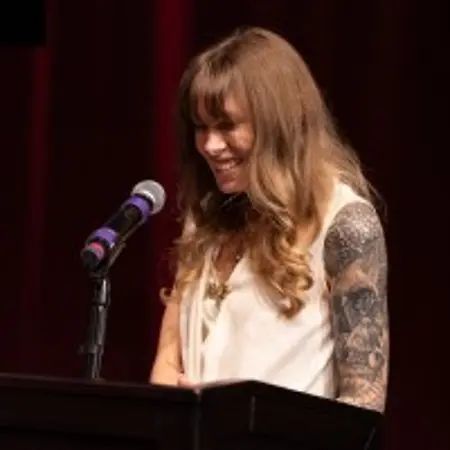
Leigh Clayton
Program Director, City University of New York-Herbert H. Lehman College
The Bronx, NY 10458
Her Story
About Leigh
Leigh Clayton is a health educator, doctoral lecturer, and author specializing in human sexuality education with a focus on consent, consent education, and equitable access to health knowledge. Her work is grounded in strengthening how sensitive and often complex health topics are taught, with a particular emphasis on curriculum diffusion, implementation, and making health literacy more engaging, accessible, and relevant for diverse student populations. She is committed to removing barriers to health education and ensuring students are equipped with accurate, practical, and usable information.
She currently serves as the Program Director for the Health Education Program at Lehman College, a role she has held for the past year. In this position, she maintains a highly student-centered approach—beginning each day by engaging with students, responding to program needs, and ensuring consistent communication and support across the community. A significant portion of her time is dedicated to direct student and community engagement, as well as ongoing collaboration with adjunct faculty to ensure alignment and support across courses. She also leads curriculum development efforts, including writing instructional materials and creating innovative approaches to traditional health education content, with a focus on making learning more dynamic, relevant, and engaging for students.
Previously and concurrently as a doctoral scholar at Columbia University in the City of New York, Leigh’s research explores emerging trends in health education, including neurodiversity, consent education, HealthTech integration, data privacy literacy, and the use of AI in qualitative research. Her work bridges research and practice, with a forward-looking focus on preparing students to think critically and adapt within an evolving health landscape. She finds deep fulfillment in mentoring students at the beginning of their professional journeys, supporting them as they discover their interests and place within the field of health education, and views this work as both meaningful and energizing.
Her Interview
Ten minutes with Leigh
01What do you attribute your success to?
My mom and dad, and my husband, and my friends. I have an incredible support network. I'm genuinely unfairly blessed to know the people I know, no exaggeration. My parents are the most giving and wonderful people in the world. They'll drop everything they're doing just to help me sort something as simple as, like, how do I answer this email. And then my husband's been just supportive beyond measure. Anything he needs to do to help me succeed, he picks up any slack, he moves anything he needs to, and the same for my friends. I have just been so lucky to have the people around me. It doesn't matter how talented, creative, smart, whatever I am on my own, without that support system, it wouldn't have been able to go anywhere. I really credit any success I have to those who help bolster. It takes a village. We can't stand by ourselves. It's really them. It's impossible to do anything without them.
02What’s the best career advice you’ve ever received?
The worst they can say is no. Which sounds not like solid advice, right? That's not something you would want to put on a t-shirt or scream from the rooftops, but for me, it really helped to make it more encouraging to share big ideas. I find that everybody wants to do well, and everybody wants to improve the community, their school, the position. The best that can happen is you get a team behind you, and you get to make changes, and the worst I've found so far is somebody says, no, not now. Not yet. It's never been a direct no if you're really trying to make things better. I think, for me, that was what I needed to hear, is that the worst is no, and then we're in the same spot, but the best is, what's the best that can happen? And it's we get a team, we get movement, we have people who organize and help. It's an incredibly useful mantra to fall back on.
03What advice would you give to young women entering your industry?
Find something you love and chase it. It's a big field. There's so much we don't know. Your voice and lens that you bring to it are so, so important. They change the way we look at the world. When we're talking especially to young women going into education, going into specifically health education, if you're seeing a problem, it's real, and don't let anybody tell you otherwise. Oftentimes, women, specifically in science-adjacent or education-adjacent fields, are asked to quiet their voice, or to go with the status quo, just to keep things easy. Although that can sometimes be rewarded, it's so much better to move the system when you see a problem. One person can make a huge difference. If you see a problem, it's real. Voice it. And who knows, maybe you end up getting a doctorate in health education and teaching about consent education. I saw something, and I followed it, and it's worked really well. Not just for me, but anybody I see who's successful in this field, in any field, have addressed a problem, followed it, and been confident that they were seeing something that really did need addressing. Follow that intuition, follow that instinct. If you see it, it's probably real. We often ask young women specifically in these helping fields to ignore that feeling, in the guise of it's helpful to ignore, and it's not. It's just not. I think it's better to disrupt a system that's actively harming people. That's more helpful than continuing on like nothing's happening.
04What are the biggest challenges or opportunities in your field right now?
In terms of challenges, education specifically is always going through changes, there's always too many hands in the pot, too many cooks in the kitchen with education, always, just because of the way it's funded. Specifically in health education, there's a lot of not just cooks in the kitchen, but there's a lot of voices that might not have the highest level of expertise that speak very loudly. It can be difficult to navigate the line between what needs to be done for your community, like what health topics are currently facing young people, and making sure that parents, the community, are comfortable and in the know about what's happening with their young people, the community's young people. The moments of pushback have been difficult in that sense. On a personal obstacle, I can get very frustrated and not speak out or not seek the support I need to. Even though I have this wonderful support network, it's been very difficult to reach out to them at times. In terms of opportunities, one of the things I'm very excited about is continuing to get to do research. I got my doctorate so I could be the best possible educator. I love teaching, so I never want to move away from that. But it is exciting to have the option to get to move into new and exciting research, getting to continue my work in consent education. Right now I'm working on a little bit of work on things like neurodiverse populations and consent, so how do we work with people with autism, ADHD, OCD, and their consent, not just for sex, but every interaction is the navigation. How do we use this as a skills training, or a life skills kind of access point for people who have neurodiversity, who have diverse needs. Even something like disability and consent, how do we discuss bodily consent with people who might have caretakers that take care of physical needs, like hygiene. Genuinely, my goal is to work on a team to write a K-12, kindergarten through 12th grade consent education program that can be distributed for free to interested school districts across the United States, and I really want to make sure that it's written by professionals and child development professionals so that it's appropriate for each district, for each student, for each teacher, so that everybody feels safe and comfortable.
05What values are most important to you in your work and personal life?
I'm really big on integrity and ethics. I think, especially in something like health education, it can get really easy to see positions where people are acting without integrity, or they're acting in ways that are unethical, because it is hard work. It's much harder than just putting a piece of paper in front of somebody. There's a lot of one-on-one work, it's a lot of grind. Making sure that you hold yourself to ethical standards of never doing harm. Do no harm. Having integrity on the beliefs, standing to our core health education, we have a list of ethics that we have to uphold, and they're just good ethics for life. Benevolence, not harming anybody, doing the morally right thing, even if it's difficult, doing the ethical thing, even if it's uncomfortable, making sure that you hold to high standards of values. I also like to operate from what's called a radical sense of empathy, or like, the most empathy you can operate off of. Obviously, I can never know what it's like to stand in somebody's shoes, but we can always kind of look at everybody, everybody's just doing their best. Nobody's doing things to harm others purposely. They're doing what they think is right in that scenario, and if we approach the world through the lens of everybody's just doing their best, it makes it a lot kinder of a world.
Join Influential Women and start making an impact. Register now.