Her Story
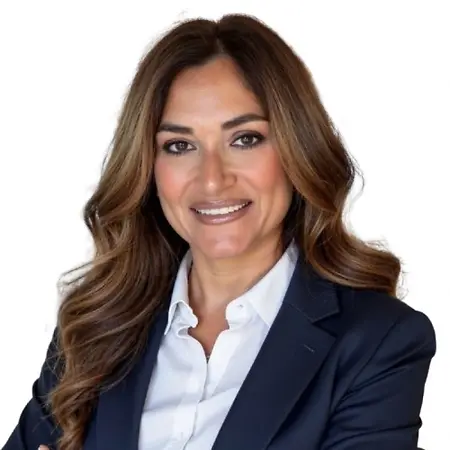
About Leila
I'm able to come into organizations with empathy and understanding of our employees, but also with strong business acumen to align closely with executive teams. I think the key with HR is being able to translate business goals and understand them well enough as a business executive that you can create and design HR initiatives that support those goals and are meaningful to the organization's growth and development, while still maintaining and growing and purposefully pulling forward an employee-driven culture. I bring all those parts together and lead companies through very challenging times, through change management, through growth, through downsizing, and through periods of significant change. The desire to allow the mission to speak for itself is important to me - if you're curing cancer every day, you really don't have to reinvent the wheel when it comes to culture. People know what they're there to do, and they resonate with that mission, and they want to do what's best for the cause. I think getting out of their way and allowing them to do that is the best way to approach allowing an employee-driven culture. I'm a problem solver, and that's what I've been my whole career - figuring out how to solve problems, whatever they might be, in order for a company to get to that next inflection point.
Her Interview
Ten minutes with Leila
01What do you attribute your success to?
I attribute my success to a lot of hard work and not giving up. It was taking roles I really didn't feel ready for and ignoring that fear, saying to myself, I'm a smart person, I'm a business-minded executive, and I'm going to let my business-minded frame get me through areas that I feel I'm not as skilled in as an HR practitioner. Because of that, it eased my fear, and then I was able to get into these roles and have mentors around me that helped me through and worked with me to find solutions, and colleagues who shared their wealth of knowledge with me. I've been fearless in reaching beyond my comfort zone and saying, I have enough within me, the knowledge and the preparedness, that I will be able to do this role and do it well. I have an incredible work ethic, knowing that if I need to research something and take more time on my own time to get through a project, I'm going to do that so I can give a quality result at the end. I'm not afraid to do that work on my own and figure it out on my own. I'm a problem solver, and that's what I've been my whole career - figuring out how to solve problems, whatever they might be, in order for a company to get to that next inflection point.
02What’s the best career advice you’ve ever received?
The best career advice I've ever received is to be prepared for the opportunities that will come your way, because when they do, that's when you'll be able and ready to accept them. I always thought I had to create the opportunities, but if you focus on being prepared for them, the opportunities will come. I've always experienced that in life. I always thought to myself, well, I want to be in consulting, but will I be able to do it? Am I ready? Do I have imposter syndrome? So I took time to get myself ready and prepared for that, and I got my certificate in HR, and I did the work that I needed to do, and then the opportunity came to me to be able to do that, and I was prepared to do it. So I think the best advice I would give is focus on the preparedness, and be prepared, and the opportunities will come to you. It's so hard to do when you're in a state of flux, and I think that's why it's so easily said, but to actually implement it can be pretty difficult, especially when you're younger in your career and you haven't seen things work out yet.
03What advice would you give to young women entering your industry?
I'll be honest here - there is discrimination within our business, sadly, and a lot of times I've gone out for roles and someone younger or a man has got a role over me. I think that we have to support each other, and we have to create a seat at the table for other women to be successful alongside of you. For me, that's nurturing my number two all the time. If I have a team, they will be nurtured, and I will create the seat at the table so that they can be alongside me, and I always say to them, my role is to give you my job. I don't want to be in this job forever. I want you to be trained, and I want you to have enough knowledge that I can mentor you, and you can sit, and you can take my seat. But for now, I'm going to create one for you. Women helping women is so incredibly powerful in our industry, and we can't ever let that go. We have to advocate for each other. We have to help each other, for instance, when we're looking for our next roles, when we're interviewing, when we're giving references for each other. We have to build each other up, and we have to create seats for other women at the table, no matter what. And we have to have more women in leadership roles in HR. They have to sit at the board level, and they have to sit on the executive team. So when we get in those roles, we have to be mindful of who we're recruiting for, and that we are representing women within the industry and within the executive team.
04What are the biggest challenges or opportunities in your field right now?
The biggest challenge right now is interpreting AI for everyone, because a lot of companies are hiding behind AI as an excuse because they really don't understand how it's going to play out yet. I think AI is not a technology problem, it's a leadership concern. AI technically should be about the technology, but what companies are most concerned about is the leadership side of it, and we have to define that in HR, and we have to take it. Because anytime there's fallout within AI, they're not going to go to the technology team and talk about the fallout. They're going to come to HR when their jobs are replaced by AI, or they're fearful that their jobs are going to be replaced. We are the ones that need to be the gatekeepers of those systems in order to ensure our employees don't have retention issues on the other side. I do feel that we will lose our high performers over this because they are too anxious about their jobs being overtaken, and in order to do that, we have to be leaders in our field to wrap our arms around AI and take control over those leadership issues so that we can support our teams and the executive team through this transition of implementing AI throughout the workforce. That means either it reports in directly to HR, or whoever is brought in to implement AI is a direct ally to HR, and there's joint responsibilities there, because that's the only way we're going to overcome this giant challenge. AI is going to affect every role within business, within organizations, and we have to stand up and say we're okay with this, we manage change, and we manage retention, and we can help employees through this process.
05What values are most important to you in your work and personal life?
I would say the first one is honesty. Honesty is pivotal for any sort of relationship within your personal life and within business. I always say to my CEO, if we don't have honesty, we don't have anything at all, because we can't go anywhere without that, because honesty leads to trust, and once trust is built, that's when you have the ability to show empathy, and you have the ability to show vulnerability, especially as an executive. That's when you can start admitting that you've made mistakes, and you can admit those mistakes and show that you're able to correct them quickly, and you can go through that lessons learned process and become better at what you're doing as an executive. So I think the three top ones I would say are honesty, trust, and vulnerability. Those are the three areas that truly help you grow as an executive and help you learn. And then I think, ultimately, focusing on your communication and listening will always get you far. Those skills, if you can master those two skills, specifically in HR, most of the time you'll be able to find solutions and help folks if you're able to listen and you're able to communicate effectively.
Join Influential Women and start making an impact. Register now.