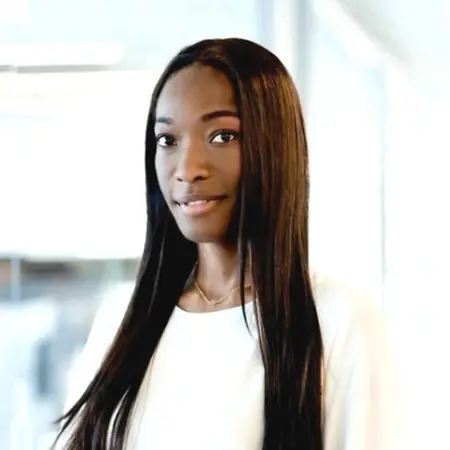
Her Story
About Leila
My professional journey began with a strong foundation in engineering, earning my Bachelor’s degree in Mining Engineering from Colorado School of Mines. As my interests evolved, I recognized the importance of combining technical expertise with a deeper understanding of economics and business. I went on to earn a Master’s degree in Mineral and Energy Economics from Colorado School of Mines, followed by a second Master’s degree in Petroleum Economics and Management from IFP in France.
After completing my education, I transitioned from engineering into energy commodities trading, where I have spent the past four years working in Houston, Texas. Today, my work sits at the intersection of quantitative analysis, risk management, and global energy markets.
My role involves developing quantitative and analytical reports that measure and communicate risk across different time horizons and seasonal periods. I closely monitor global economic conditions, geopolitical developments, and market dynamics to understand how they may impact our portfolio, trades, and strategies. Working directly from the trading floor, I collaborate with traders and counterparties across the United States and Europe, particularly as energy markets and assets increasingly operate across international boundaries.
What I find most interesting about my work is the challenge of translating complex and constantly changing market dynamics into clear, quantitative insights. The environment is fastpaced and requires both precision and adaptability, often with very short turnaround times. In energy markets, conditions can change quickly, and decisions have real financial consequences.
My background in engineering, economics, and energy trading has given me a multidisciplinary perspective that allows me to approach problems analytically while also considering the broader economic and market context. I’m continuously driven by curiosity, learning, and the opportunity to understand how global events translate into real world impacts across energy markets.
Her Interview
Ten minutes with Leila
01What do you attribute your success to?
I attribute a great deal of my success to my mom. She has been my biggest role model and has taught me, through her actions, what resilience and adaptability really look like.
Growing up, I watched her face challenges without allowing them to define her. She might have a difficult day or a moment when she feels discouraged, but she always finds a way to get back up, move forward, and keep going. That ability to adapt and persevere has had a profound influence on the way I approach challenges in my own life.
My mom is a doctor in Angola, and her work is incredibly demanding. She has spent her career caring for patients in an environment where the healthcare challenges are significant, yet she continues to show up every day, listen to her patients, and do everything she can to help them. Even now, as she gets closer to retirement, she remains deeply committed to her work and to the people she serves.
Whenever I face a situation that makes me question whether I can keep going, I think about her example. Sometimes I call her, listen to her perspective, and remind myself that difficult moments are temporary. Her example has taught me that success isn't about never facing setbacks. It's about having the resilience to adapt, learn from them, and keep moving forward.
I think that mindset has shaped many of the decisions I've made throughout my life and has given me the confidence to take on challenges that once seemed beyond my reach
02What’s the best career advice you’ve ever received?
One of the best pieces of career advice I’ve received from a previous manager was very simple: “Every day, ask yourself, what did you learn today?”
That question has stayed with me because it completely changed the way I think about growth. It reminds me that not every day has to come with a major achievement or a big milestone. Sometimes the most important progress comes from learning something small, a new way of looking at a problem, understanding a different perspective, making a mistake and learning from it, or simply becoming better at something I already know.
I try to ask myself that question at the end of each day, especially when the day has been challenging. If I can identify something I learned, then I know the day was valuable.
I think that mindset has helped me stay curious and open to new experiences throughout my career. My background has taken me from engineering to economics and eventually into energy trading, and each transition required me to be willing to learn something completely new. For me, continuous learning is one of the most important parts of both professional and personal growth.
03What advice would you give to young women entering your industry?
I would encourage women to be confident in their ability to contribute. You don't have to know everything when you walk through the door. Be curious, ask questions, listen, and learn from the people around you. At the same time, don't be afraid to speak up and share your perspective.
What I love about this industry is how much you can learn. Every day, you are exposed not only to commodities and energy markets, but also to economics, geopolitics, finance, risk management, and how global events translate into real market movements.
So my advice would be: Don't disqualify yourself before you even give yourself the opportunity to try. The industry is challenging, but it can also be incredibly rewarding, and I would encourage more women to explore the opportunities that are available.
04What are the biggest challenges or opportunities in your field right now?
I would actually say that the biggest opportunity and the biggest challenge in the industry right now are the same thing, artificial intelligence.
AI has enormous potential in energy and commodities because so much of our work involves data, calculations, modeling, and analyzing large amounts of information. It can help us work more efficiently, automate certain processes, and explore ideas or scenarios much faster than we could before.
At the same time, I think one of the biggest challenges is knowing when to trust the output. AI can produce an answer that looks very sophisticated and convincing but may contain an incorrect assumption, calculation, or interpretation. In an industry where decisions can have significant financial consequences, you can't simply assume that an AI generated answer is correct.
For me, the key is learning how to use AI as a tool that enhances your expertise rather than replacing it. You still need to understand the fundamentals well enough to question the output, identify inconsistencies, and know when something doesn't make sense.
I think the professionals who will benefit the most from AI will be the ones who combine strong industry knowledge with the ability to use these tools effectively. AI can make you faster, but you still need the expertise to know whether you're moving in the right direction.
05What values are most important to you in your work and personal life?
The two values that are most important to me, both personally and professionally, are honesty and humility.
I believe honesty is the foundation of any strong relationship, whether it’s with colleagues, clients, or people in your personal life. Being honest creates trust, and I think trust is essential, especially in an environment where people have to rely on each other and communicate openly.
I also strongly value humility because I believe there is always something new to learn. No matter how much experience or knowledge you have, there is always another perspective, another way of doing something, or an opportunity to improve. I try to approach people with an open mind, listen carefully, and genuinely understand what they are trying to tell me before forming my own conclusions.
There’s a saying that we have two ears and one mouth for a reason. We should listen twice as much as we speak. I think that’s especially true in a professional environment. Some of the most valuable things I’ve learned have come from simply listening to people, asking questions, and being open to different perspectives.
For me, humility doesn’t mean lacking confidence. It means being confident enough to recognize that you don’t have all the answers, and being willing to learn from the people around you.
Join Influential Women and start making an impact. Register now.