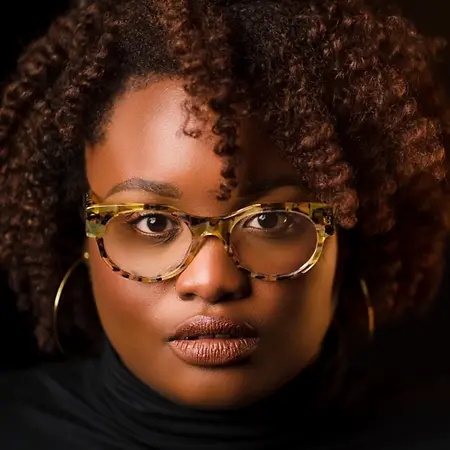
Her Story
About Lexi
I've been in the tech industry since July 2011, right after college graduation. Two and a half years ago, I joined AI when I got an opportunity to lead a team in AI safety and security for Microsoft. I've worked across different companies including Facebook and Airbnb, and across different themes. What I recognized very early in my career is what I like to do and what I'm good at. I like to solve really hard problems, the hot problems right now that we've never solved before. I call it the Olivia Pope approach to things, coming to organizations and saying, okay, this is the hard thing that hasn't been solved, and how do we build a strategy? How do I bring all different types of people to the table from all different teams like engineering, policy, trust and safety, and we create a solvable solution that we can iterate on and execute and deploy, and then get feedback and do it again. That's what I love to do. My job in the room is to think about the customer and what is best for the customer. As a Black woman, usually the only Black woman in these rooms, I'm not just thinking about the larger customer, but also about the most minority, disprivileged, disenfranchised woman who's the possible customer, because if I can find a solution for her, then I can find a solution for everyone. That's very much in the center of my heart and mind. I want to make sure that I am making decisions as a leader that help uplift the global majority, and that people know I am a safe space.
Her Interview
Ten minutes with Lexi
01What do you attribute your success to?
I've been blessed and very privileged that very early in my career, I recognized what I like to do and what I'm good at. The more therapy that I did in my 20s, I started really activating and asking myself, who am I? What do I value? What does integrity look like to me? What do I want my life to look like in 10, 20, 30 years? Not what do I want to do in 10, 20, and 30 years as far as labor, but what do I want my life to look like. When I could start actually understanding who I was as a valuable human to this planet without labor, labor became a lot easier to navigate, because then when I had to make decisions to make money so I could exist, those decisions were really rooted in, well, this is who you are. It just made my career path more clear. If who I am is, I want XYZ by the time I'm a certain age, then I can't take that job. It's not because the job isn't bad or good, it does not align foundationally with what I want. I really want people to go to therapy and figure out what you want, and not just your job. I want you to define your life without labor. If you did not need to labor for somebody, what would your life look like? If you actually want a fulfilling career that brings you peace, peace does not come in labor. Peace comes in identifying, this is who I am, this is what I want, and I'm going to strategically and actively build a career around that plan. The career just sprinkles in, instead of the other way around.
02What advice would you give to young women entering your industry?
First and foremost, your career and your personal life go together. If you really build a career that is aligned to your personal life as much as possible, it's going to make things better. When it comes to my career, my personal life comes first. I believed that before I had a kid, and now that I have a kid and I'm a mom, I'm 10 toes down deep into this. Every decision that I make in my career is based on my personal life. How I negotiate is based on my personal life, what are my personal goals, that's how we negotiate. Do I want to live somewhere, that's how we figure out a job. As a Black woman from St. Louis, Missouri, who's both sides of my family are literally descendants of the enslavement of West Africans, I'm not going to work for you, I work for me. My personal life drives my high-level career decisions of where I work, how much I get paid, and who I work with. The second thing is that you have to actually do your own work. Happy people who have careers, peaceful people who have careers, they're not built on the backs of people who don't know who they are. I really want people, especially people who are disenfranchised and part of the global majority, to stop asking that white man for what he wants. I need you to go to therapy and figure out what you want, and not just your job. I want you to define your life without labor. If you did not need to labor for somebody, what would your life look like? That type of dreaming, we do not do enough in groups of women, in groups of the global majority, because dreaming was kidnapped from us. If you actually want a fulfilling career that brings you peace, you need to identify this is who I am, this is what I want, and I'm going to strategically and actively build a career around that plan. The career just sprinkles in, instead of the other way around.
03What are the biggest challenges or opportunities in your field right now?
I frankly believe that right now, AI is that hot topic. I like to solve really hard problems, and that's what I've been doing my whole career. Regardless if it's AI safety and security or other things that I've done, it's always been, how do we solve the problems that are hot problems right now that we've never solved before. AI is like the internet in the 70s, but there will be another one, and another one, and another one. I like to come to organizations and say, okay, this is the hard thing that hasn't been solved, and how do we build a strategy? How do I bring all different types of people to the table, from all different teams, like engineering, policy, trust and safety, and we create a solvable solution that we can iterate on and execute and deploy, and then get feedback and do it again.
04What values are most important to you in your work and personal life?
I would like to continue partnering with very, very strong leaders, leaders who believe in leadership through humanity first. My job in the room is to think about the customer and what is best for the customer. As a Black woman, usually the only Black woman in these rooms, I'm not just thinking about the larger customer, but also about the most minority, disprivileged, disenfranchised woman who's the possible customer, because if I can find a solution for her, then I can find a solution for everyone. That's very much in the center of my heart and of my mind. How does this help or hurt disenfranchised communities? How does this help uplift or hurt the global majority? I take that very seriously, as a person who's part of the global majority, of making sure that I am making decisions as a leader. People know that I am a safe space. That's very important to me. I'm trying to navigate and learn how to be at my best, career-wise, while also being a fantastic mom. I'm actively trying to sustain a certain level of excellence, and now it's really kind of rewiring my brain of what does that excellence look like, and what is the new evolved definition of that excellence. I'm very vocal about that, but that doesn't mean that I'm not excellent. I'm actively trying to redefine what that looks like for me in my new lifestyle. It's my job as her mother to get to know her. I really do believe that her soul came on this planet whole and human, and it's my job to just figure out what it is and support that and encourage that, whatever it is. The definition of her worth is because she is, and not because of what she does.
Join Influential Women and start making an impact. Register now.