Her Story
About Lili
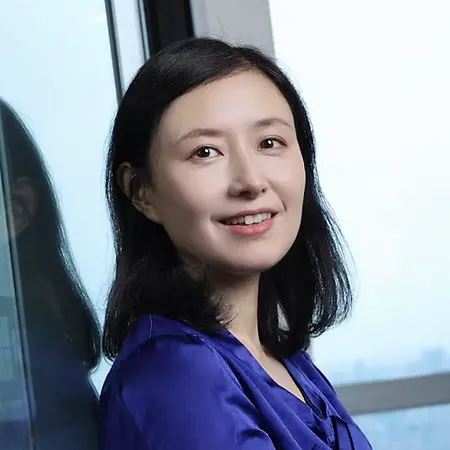
Lili Qiu, PhD, is a Professor of Computer Science at the University of Texas at Austin and a leading researcher in wireless systems, artificial intelligence, and next-generation sensing technologies. Her work spans wireless communication and sensing, machine learning systems, and healthcare technologies with real-world impact. Her work reimagines everyday environments and devices as intelligent sensing systems, enabling continuous, contactless health monitoring.
Professor Qiu has built an internationally recognized research career spanning academia and industry. She joined the faculty at The University of Texas at Austin in 2005, progressing from Assistant Professor to Associate Professor before becoming a full Professor in 2015. In addition to her academic leadership, she has played an important role in industry research, including serving as Assistant Managing Director at Microsoft Research Asia from 2022 to 2025. Throughout her career, she has led cross-disciplinary collaborations in wireless networking, wearable sensing, AI infrastructure, and machine learning applications for healthcare.
Professor Qiu earned her PhD in Computer Science from Cornell University and has contributed extensively to influential research in mobile computing, AI systems, and wireless technologies. Her work frequently bridges foundational research with practical applications, including partnerships with hospitals and major technology companies to translate innovation into real-world solutions. Recognized for both her technical depth and mentorship, she continues to guide groundbreaking research, publish award-winning work, and support emerging scholars in the rapidly evolving fields of AI, systems, and wireless technology.
Her Interview
Ten minutes with Lili
01What do you attribute your success to?
If I had to name one thing, it would be perseverance.
Research is full of uncertainty: ideas don’t work, experiments fail, progress can feel painfully slow. But I’ve learned that breakthroughs rarely come from a single moment of brilliance. They come from showing up, again and again, especially when things aren’t working.
Over time, that quiet persistence adds up. And sometimes, it leads you somewhere meaningful.
02What’s the best career advice you’ve ever received?
The best advice I’ve received is to find your purpose and hold onto it.
In a long career, there will be many moments of uncertainty. Results don’t come when you expect them to. Directions change. Sometimes, you even begin to question whether you’re on the right path.
What sustains you through all of that is purpose. When you have a clear sense of why you’re doing something and when it connects to something deeply meaningful, it becomes much easier to keep going. Purpose gives you direction when the path is unclear, and strength when things are difficult. For me, that sense of purpose has been a guiding force.
03What advice would you give to young women entering your industry?
I would say: be confident in who you are and what you can do.
For a long time, there has been a perception that fields like technology belong more to men. But talent, creativity, and determination are not defined by gender.
Don’t let anyone else define your limits. You are capable of far more than you think.
04What are the biggest challenges or opportunities in your field right now?
One of the biggest challenges and also one of the greatest opportunities is translating technology into real-world impact.
It’s not enough to create something that works in a lab or performs well on paper. The real question is: can it truly integrate into people’s everyday lives? Can it be used easily, understood intuitively, and trusted widely?
The future of technology isn’t just about making systems more powerful, but it’s about making them more human-centered. More accessible. More inclusive.
For me, the ultimate test is simple: does this technology make someone’s life meaningfully better?
If the answer is yes, then we’re moving in the right direction.
05What values are most important to you in your work and personal life?
Kindness is at the center of everything I do.
In academia, we often measure success through ideas, papers, and results. But every idea comes from a person—someone with their own stories, ambitions, and hopes.
As a professor, I try to see my students not only for what they produce, but for who they are becoming. Because at different moments, what people need most is belief—someone who sees their potential, especially when they are uncertain themselves.
What we build matters. But how we treat people shapes what that work ultimately becomes.
In the end, what we leave behind is not only the systems or technologies we create, but the people we have supported, the trust we have built, and the sense of purpose we have helped others discover.
Join Influential Women and start making an impact. Register now.