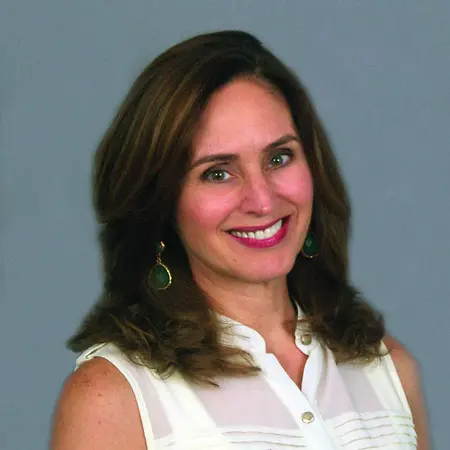
Influential Woman · Language Access and Disability Rights
Lilly Abreu
Director of Vendor Management, Global Wordsmiths
Pittsburgh, PA
Her Story
About Lilly
My career has been shaped by two lifelong passions: languages and music. I was born in Portland, Maine, but raised in Brazil, and I moved back to the United States to pursue my Master of Music in Voice Performance at Carnegie Mellon University, graduating in 1998. Right after graduation in 1999, I started teaching voice at Carnegie Mellon, and I've been there for 27-28 years now, teaching both graduate and undergraduate students with and without disabilities. I also perform as an opera soprano, singing at jazz clubs and with symphony orchestras, and I maintain my own website at lilyabreu.com. On the language access side, I've been in the field for over 30 years since my undergraduate degree in languages. In the early 2000s, the University of Pittsburgh hired me to teach Portuguese, and I ended up staying for 10 years, teaching Portuguese for business, Portuguese for engineers, and other specialized courses as Brazil was booming economically. During that time, I gained extensive experience in translation and interpretation. I also completed a mini-MBA at the University of Pittsburgh and worked for about 8 years in international business doing export relationship management. For the past 3 years, I've been the Director of Vendor Management at Global Wordsmiths, a woman-owned language access company here in Pittsburgh. I oversee a roster of over 250 interpreters working in 30-plus languages including Spanish, Arabic, Nepali, Haitian Creole, Korean, Vietnamese, and Portuguese, as well as rare languages like Tagalog and American Sign Language. My role involves recruiting, interviewing, onboarding, training, and monitoring interpreters, and I conduct quality assurance and offer ongoing professional development through workshops and webinars. I focus on training community members to become interpreters because they understand their community's needs and can provide more empowering service. Five years ago, I founded Self-Advocacy Voices (SAV), a nonprofit program that helps adults with disabilities build confidence in public speaking. Participants work with mentors to prepare PowerPoint presentations on topics they love, then present them on Zoom to audiences from across the country and world. We have a lead team of 5 people and sometimes 30 participants at our Saturday meetings. The program empowers people with disabilities to talk not just about what they need, but what they want, whether that's finding volunteer work or sharing their daily life experiences. I've worked with participants who have Down syndrome, developmental disabilities, and speech challenges, bringing in specialists like speech therapists when needed to ensure everyone can share their story.
Her Interview
Ten minutes with Lilly
01What do you attribute your success to?
I attribute my success to hard work, strong work ethics, determination, and the confidence that I'll be able to accomplish what I need to do. I don't give up early, especially in the field of advocacy for people with disabilities where things can seem impossible. For example, we had someone with Down syndrome who also stuttered, and people wondered how she could possibly do a presentation. We brought in three specialists to work with her, not just a mentor but a speech therapist too, and I had the determination and confidence that we would get this work accomplished. The presentation was beautiful and she barely stuttered. She was so proud because she wanted to talk about her own life and share that she has her own apartment. She called it 'A Home of My Own' and took pictures of her daily activities like getting the mail, taking out the trash, and watching the weather. It was so empowering. Another example is when a law firm needed a Slovak interpreter last week and I didn't have any in our roster. Other people would just say we don't have any and move on, but I immediately started calling people I know from my 30 years in Pittsburgh. Through my network, I connected with the daughter of the Slovak consul, and within a day I was able to bring a Slovak interpreter on board, prepare a contract, complete the assignment, and get all the paperwork done. So I think determination, working hard, and believing that I can do it are all part of my success.
02What’s the best career advice you’ve ever received?
The best career advice I've received is to listen to what people's needs are first. In language access, when a client calls us, they need to tell us exactly what it is that they need in terms of the language. In disability access, it's about listening not just for what their needs are, but what their wants are. The need is already there and they already know what they need and are given what they need. However, a lot of people don't listen to what they want. For example, someone might say, okay, I have food on the table, but I really want to find a volunteer job. I don't need a volunteer job, but I'd like to do that. So we focus on that too and see how we can enable them to have a voice and speak up about what they want, and how we can help them achieve those goals.
03What advice would you give to young women entering your industry?
First, believe in yourselves. Second, be prepared and trained. You don't want to just believe in yourself and not get the training, so it's important to be prepared. Be confident that you can do the job, but also seek education. Be prepared and never stop learning. It's a challenge because it's still a male world out there, though things have been changing a lot. Some women don't feel that they are competent and then they put themselves down, so self-confidence is important. Believe in yourself, because we bring a set of skills that men don't have. We bring adaptability, we bring thinking outside the box, and we bring skills that we learn every day, and we find solutions in a creative way. Don't let anybody put you down. Just keep going, keep moving forward.
04What are the biggest challenges or opportunities in your field right now?
In terms of opportunities, I have a mindset that I am a go-getter type of person, so that's part of my opportunities because I know I can work hard and find solutions for things I'm looking for. I don't give up. I understand my strengths and I understand my weaknesses, and when I understand the weakness, it means that I need to seek help when I need it. So I call my friends, I go back to school for my master's, I'll take another certificate, I'll learn a new skill. I'm not afraid of learning new things. As for challenges, it's still a male world out there, though things have been changing. Some women don't feel that they are competent and then they put themselves down, so self-confidence is important. Another challenge, especially for people who speak different languages, is that it could be a tool for success, but if you don't know how to use it, it could be a tool for discrimination. For example, when I was in school for my master's, I was very successful because I got into school a little older than most of the other kids. The other kids finished their undergraduate program and went straight to the master's program, but I worked in the field for 7 years then went back to school. My teacher at CMU recognized the value in me and my experience teaching already, and asked me to take on a student who wasn't getting along with their teacher. I accepted because I trusted myself, and it's been 28 years and they keep calling me back every fall and spring.
05What values are most important to you in your work and personal life?
The values most important to me are honesty, empathy, and discipline.
Join Influential Women and start making an impact. Register now.