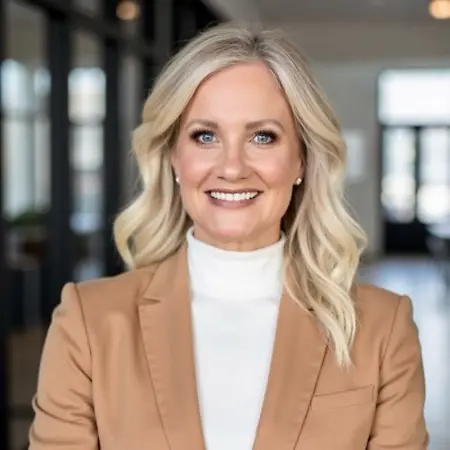
Her Story
About Lindsay
I am a clinical social worker with 19 years of experience in the field. I own my own private practice called Integrative Therapy, where I specialize in trauma-informed care and somatic experiencing. I help clients reconnect to their bodies and process stored trauma and anxiety using evidence-based practices like CBT and DBT, combined with a holistic, body-centered perspective. In addition to my private practice, I serve as a clinical director for a substance abuse outpatient treatment center, where I supervise and support other mental health professionals. I'm passionate about helping people build confidence, reduce anxiety, and create lasting positive change in their lives. I'm also deeply committed to advocacy for oppressed individuals and people who are voiceless. My next career goal is to continue building my practice while focusing on leadership, which has become a recent passion of mine since taking on the clinical director role.
Her Interview
Ten minutes with Lindsay
01What do you attribute your success to?
I would say my overall passion for people and the human experience. I'm very intrigued by it, and everybody is unique. I'm passionate about others and about helping people and learning about them. I also attribute my success to determination. It took me a long time, you know, when my first son was born and he had three open-heart surgeries, I was in the middle of my master's program and I had to quit for a while. But not giving up, no matter what, that's been key to my success.
02What advice would you give to young women entering your industry?
Never stop learning. There's always more to discover, and it's never about thinking 'oh, I've got this, and I've mastered this.' It's a journey, and you need to continue to educate yourself and reach as many people as you can. Try to help make lasting change individually, and for ourselves as well. This work helps us cope and navigate life's challenges. It's definitely been a way to help personally when you encounter difficulties and trials and tribulations. It's definitely helped improve my own emotional well-being.
03What are the biggest challenges or opportunities in your field right now?
One of the biggest challenges in behavioral health is balancing the emotional toll of the work. It can be very emotional at times, and it's hard sometimes to shut that off, especially if you're hearing tragedy and such difficult times that people are going through. It's hard not to absorb it. The key is self-care, scheduling in daily time for self-care and self-compassion, and not shying away from what you're feeling. Allowing yourself to feel all the emotions helps you move through them, and I think it helps build on your empathy towards others. But empathy is so important in this field, and empathy without boundaries is really self-abandonment. You need to know what clients you maybe can't work with, or what things will be too difficult. Being able to have the courage to say 'you know what, I have to refer this out, or I'm not able to navigate this' is crucial.
Join Influential Women and start making an impact. Register now.