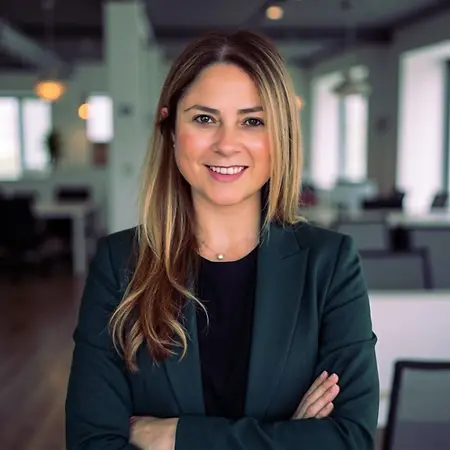
Her Story
About Lindsey
Lindsey Casole is a healthcare leader and neuroscience specialist with extensive experience developing and leading high-reliability neuroscience programs. As Director of Neuroscience Services at RWJBarnabas Health Community Medical Center, she oversees the daily clinical operations, growth, and strategic advancement of stroke, neurointervention, neurocritical care, neurosurgery, neurodiagnostic, and sleep medicine service lines. Known for her collaborative leadership style and operational expertise, Lindsey is passionate about building high-performing multidisciplinary teams that deliver timely, evidence-based, and lifesaving care to the communities they serve. Lindsey began her nursing career in neuroscience care after joining a neurology unit early in her professional journey, where she discovered a passion for caring for stroke and epilepsy patients. She went on to serve as Stroke Program Coordinator, leading multidisciplinary initiatives that strengthened stroke systems of care and regulatory compliance. Her leadership played a pivotal role in the development and expansion of comprehensive stroke and thrombectomy programs, helping transform Community Medical Center into a leading neuroscience destination in the region. Throughout her career, she has worked closely with EMS providers, emergency departments, physicians, and hospital leadership to improve patient outcomes and advance clinical quality standards. A lifelong learner and advocate for healthcare innovation, Lindsey earned her Master of Science in Nursing with a concentration in Healthcare Administration and Management from Walden University and her BSN from New Jersey City University. She holds advanced certifications including SCRN and Lean Six Sigma Green Belt and has been recognized with honors such as the 2024 Nurse Excellence in Transformational Leadership Award and the 2019 RWJBH Neuroscience Nurse Excellence Award. Currently pursuing her MBA, Lindsey remains committed to advancing neuroscience service lines, strengthening healthcare strategy and operations, and creating systems of care that improve patient outcomes and community health.
Her Interview
Ten minutes with Lindsey
01What do you attribute your success to?
I attribute much of my success to determination and the belief that it can be done. As a first-generation college student, I didn’t have anyone to guide me through higher education or serve as a roadmap for what success in college and leadership looked like. No one in my family had gone to college, so I had to create the blueprint for myself—learning, navigating, and figuring things out along the way.
Although I didn’t have someone to help me understand the process of schooling or career advancement, I was never alone. My family has always been my biggest support system and my number one fans. Their encouragement gave me the confidence to keep pushing forward, even when the path felt uncertain. Today, my husband continues to be one of my greatest sources of strength. His love and support make so much of what I do possible. He understands the demands of leadership and healthcare, and when work calls, he steps in at home without hesitation. I truly would not be able to do what I do without the support system I have behind me.
Professionally, I’ve been fortunate to work alongside exceptional leaders and mentors throughout my career. I believe I’ve taken pieces of each of their leadership styles and shaped them into my own. My leadership approach is rooted in compassion and empathy, but also accountability and firmness when needed. I strive to lead with both heart and purpose—supporting people while holding high standards. Much of my professional growth and success is a reflection of the incredible leaders who invested in me along the way.
It’s a reminder that success is rarely achieved alone—it takes resilience, mentorship, and a village that believes in you.
02What’s the best career advice you’ve ever received?
The best career advice I’ve ever received is to never say no to an opportunity and to always bet on yourself. More often than not, you’ll never feel fully ready—but growth happens when you step outside of your comfort zone. You never truly know what you’re capable of until you try.
Some of the greatest opportunities in my career came at times when I questioned whether I was ready, but I learned that sometimes you grow into the role. If you succeed, you gain confidence and experience. If you struggle, you still gain valuable lessons. Either way, you grow.
My advice is to always take the opportunity that comes your way. The worst-case scenario is that you learn, adapt, and become stronger because of it.
03What advice would you give to young women entering your industry?
The advice I would give to young women entering healthcare or any industry is to believe that anything is possible. Never let someone else define your limits or tell you what you can’t achieve. There is almost always another way to accomplish something, and persistence matters.
My biggest advice is to just go for it, even when it feels uncomfortable or overwhelming. Whether it’s pursuing a degree, stepping into leadership, or taking on a new project, time will pass regardless. Two years from now, would you rather look back and say, “I wish I started,” or be proud that you took the leap and are already closer to your goals?
Success doesn’t happen overnight, and the path is rarely perfect, but growth comes from taking chances and believing in yourself. Have confidence in your abilities, work hard, stay resilient, and never be afraid to take up space at the table. You are more capable than you think.
04What are the biggest challenges or opportunities in your field right now?
One of the biggest challenges in healthcare right now is the pace of change. Healthcare is constantly evolving through new evidence-based practices, technology, regulations, and patient needs. As leaders, we not only have to keep up with change—we have to grow with it.
One of the greatest opportunities in healthcare is the ability to innovate and improve how we care for patients and support our teams. But meaningful change takes time. I often think of the saying, “Rome wasn’t built in a day,” and healthcare is no different. Progress requires patience, persistence, and the ability to remain flexible when plans shift—which they often do.
To be successful in this field, leaders must be adaptable, open-minded, and willing to pivot when needed. Sometimes what you envisioned doesn’t happen exactly as planned, and you have to adjust course quickly. I believe the most successful healthcare teams foster a culture of accountability, collaboration, and resilience—leaning into challenges rather than avoiding them. When you embrace change instead of fear it, that’s where real growth and innovation happen.
05What values are most important to you in your work and personal life?
The values I try to live by—both personally and professionally—are love, empathy, compassion, and humility. I truly believe that everyone has a story, and everyone goes home to something. Because of that, I try to lead with understanding and kindness, whether I’m navigating personal relationships, mentoring staff, or having one-on-one conversations with employees.
As a leader, I always try to remember that the people I work with are human first. They have lives, challenges, and responsibilities outside of work, and I feel fortunate that they choose to come to work and be part of my team. I often say that I work for them—they don’t work for me. My role as a leader is to support them, remove barriers, and ask, “How can I help you succeed? What can I do to make things easier, not harder?” I believe that when people feel supported, valued, and understood, they thrive.
Much of my perspective comes from my own personal experiences. I was raised by my grandparents, and unfortunately, they both passed away at a young age, so I never had the opportunity to care for them the way I would have wanted to. I poured much of that love and loss into caring for my patients. When I worked at the bedside, I always treated patients as though they were my own family member—asking myself, “If this were my grandmother, grandfather, or mother, how would I want them to be treated?”
That mindset has kept me grounded throughout my nursing career. It has helped me maintain compassion and never lose sight of why I entered healthcare in the first place. During some of the most vulnerable and frightening moments of a person’s life, healthcare providers have the privilege and responsibility to care not only for the patient, but for the person behind the diagnosis.
Join Influential Women and start making an impact. Register now.