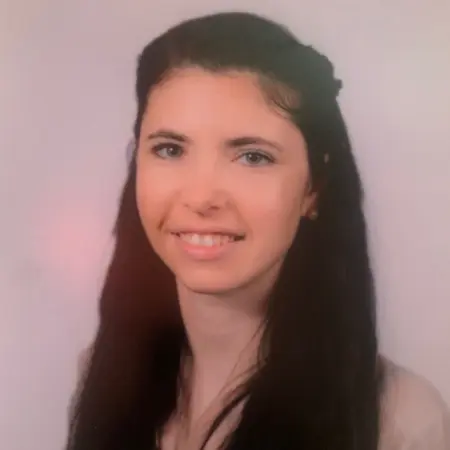
Her Story
About Lindsey
Lindsey Phelan is an operations and project management professional known for her ability to improve processes, develop teams, and lead through change with empathy and accountability. Based in Sanford, she currently serves as an Imaging Analyst Manager at Property Insight, where she applies her operational expertise and project management skills to lead cross-functional teams focused on workflow improvement, efficiency, and employee development.
Throughout her career, Lindsey has built a reputation for identifying operational challenges, creating practical solutions, and empowering teams to perform at their highest level. Since beginning her operations career in 2019, she has held roles at BNY and Nuview IRA, where she developed expertise in process improvement, data quality, performance tracking, training development, and team leadership. At BNY, she created productivity and accuracy metrics that helped reduce errors while supporting onboarding initiatives and collaboration across global teams. At Nuview IRA, she managed daily operations for a 25-person team, overseeing escalations, approvals, and performance initiatives. Earlier in her career, Lindsey taught English to children overseas through EF English First, an experience that strengthened her communication skills, adaptability, and passion for helping others grow. This foundation continues to influence her leadership approach today, where she prioritizes listening, understanding different perspectives, and creating environments where people feel supported and empowered.
A certified Project Management Professional (PMP) with a background in psychology from Southern Connecticut State University, Lindsey combines structured execution with a deep understanding of communication, motivation, and team dynamics. She believes the best leaders create clarity during times of change, encourage continuous improvement, and help people recognize their own potential.
Adaptable, analytical, and collaborative, Lindsey thrives in fast-paced environments where solving complex challenges and building strong relationships go hand in hand. She is passionate about creating growth-focused workplace cultures where teams can succeed, innovate, and confidently navigate change.
Her Interview
Ten minutes with Lindsey
01What do you attribute your success to?
One of the biggest contributors to my success has been my agile mindset. I've always been someone who embraces change rather than resists it, and I think that's been a real advantage throughout my career. Because I'm adaptable, I can pivot quickly when circumstances change, identify new opportunities, and find solutions instead of getting stuck on obstacles.
I also genuinely enjoy working in fast-paced, high-energy environments. Staying busy motivates me, and I thrive when I'm juggling multiple priorities and making decisions in real time. That combination of flexibility, resilience, and a willingness to evolve has allowed me to grow, take on new challenges with confidence, and continue moving forward even when the path isn't exactly what I originally envisioned.
02What’s the best career advice you’ve ever received?
The best career advice I ever received came from one of my directors, who also became an incredible mentor. He introduced me to the power of positive thinking and gave me a copy of The Key to Living the Law of Attraction. At the time, I didn't fully understand why he thought it was the right book for me, but looking back, I realize he was helping me recognize the influence leaders have—not just through their decisions, but through their energy, attitude, and even something as simple as their tone of voice.
That lesson has stayed with me throughout my career. As leaders, people often look to us for reassurance, perspective, and confidence, especially during challenging times. I make a conscious effort every day to lead with optimism, encourage those around me, and focus on possibilities rather than limitations. The principles from that book have become part of how I approach leadership, and I've seen firsthand how a positive mindset can inspire others, strengthen teams, and create a more resilient culture.
03What advice would you give to young women entering your industry?
One piece of advice I'd give to young women entering this industry is not to let someone else's perception of you define your potential. Early in my career, I was told I was "too emotional" to be a leader. At first, those comments made me question myself, but over time I realized that what some people viewed as being emotional was actually empathy. I care deeply about my team, I listen, and I invest in people—and I've come to see those qualities as strengths, not weaknesses.
Leadership doesn't require you to change who you are to fit someone else's idea of what a leader should look like. The best leaders bring authenticity, resilience, and the ability to connect with people. Those are qualities that build trust and create strong teams.
My advice is to stay focused on your growth, continue saying yes to opportunities that challenge you, and don't let labels or stereotypes hold you back. There will always be people who underestimate you, but don't let their opinions become your inner voice. Believe in your abilities, keep delivering results, and let your leadership speak for itself. Often, the qualities that others initially see as limitations become the very things that set you apart.
04What are the biggest challenges or opportunities in your field right now?
One of the biggest challenges in our field right now is helping people feel confident navigating change. I've worked in both smaller organizations and large corporate environments, and regardless of the setting, change can create uncertainty. With technology evolving so quickly and businesses constantly adapting, it's natural for people to feel anxious about what those changes mean for their roles and their future.
I've seen firsthand how uncertainty can lead to frustration or resistance when people don't understand the "why" behind a decision. That's why I believe communication is one of the most important responsibilities of a leader. I like to bring data and facts to the conversation to provide clarity, but I also believe listening is just as important. People want to feel heard before they can fully embrace change, so I make it a priority to create space for questions, concerns, and honest conversations rather than simply expecting everyone to get on board.
Training and support are also essential. Change isn't just about implementing a new process or technology—it's about helping people build the confidence to succeed in a new environment. When leaders communicate transparently, provide the right resources, and lead with empathy, change becomes less intimidating and more of an opportunity for growth. I think that's one of the greatest opportunities in our industry today: helping people see change not as something to fear, but as something that can move both individuals and organizations forward.
05What values are most important to you in your work and personal life?
Integrity is the value that guides me more than anything else, both professionally and personally. I believe in doing the right thing, even when it's difficult and even when no one is watching. Throughout my career, there have been moments when taking the easier path may have been tempting, but I've learned that your reputation is built on the choices you make when your values are tested. Staying true to your principles requires courage, and I believe authenticity and integrity are the foundation of effective leadership.
Accountability is another value that's incredibly important to me. Early in my career, I thought being a leader meant being perfect and always having the right answers. Over time, I realized that great leaders aren't defined by perfection—they're defined by how they respond when things don't go as planned. Owning your mistakes, learning from them, and being willing to say, "I could have handled that better," builds trust and credibility with your team.
I've found that when leaders model accountability, they create an environment where people feel safe to learn, grow, and take ownership of their work instead of fearing failure. Mistakes become opportunities to improve rather than reasons to assign blame. That's the kind of culture I strive to create—one built on trust, transparency, continuous learning, and mutual respect. I believe people do their best work when they know they're supported, held accountable fairly, and led by someone who is willing to hold themselves to the same standards they expect of others.
Join Influential Women and start making an impact. Register now.