Her Story
About Lisa
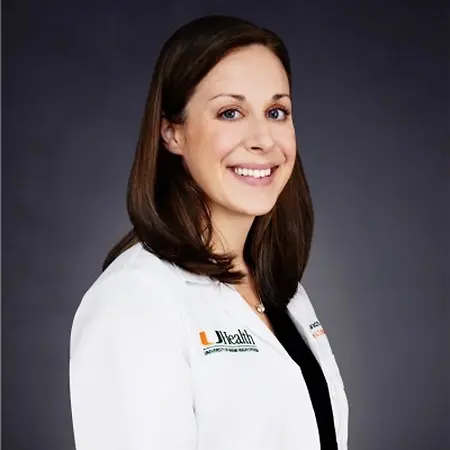
I am a pulmonary critical care physician at University of Miami Jackson, where I have been practicing for 6 years since completing my fellowship. My clinical focus is on cystic fibrosis, bronchiectasis, and non-tuberculous mycobacterium. I started our bronchiectasis and non-tuberculous mycobacterial clinic from scratch and have built it up to almost 400 patients, earning recognition as a center of excellence. Recently, I received a $1 million endowment from a patient who valued the care he received here. In addition to my clinical work, I serve as the associate program director for our fellowship program, which is one of the largest in the country with 27 fellows. In this role, I mentor fellows through their training, supporting them not only medically but also personally through the difficult times, long hours, and life events that happen during training. Last week, I was honored to receive the Mentor of the Year award from our fellowship program, which was incredibly meaningful to me. My typical day involves seeing outpatients in the clinic, managing critically ill patients in the intensive care unit, giving educational lectures to fellows, and guiding families through end-of-life discussions. I take great pride in showing that you can be a woman with kids and excel in medicine. My husband and I both work as physicians here at University of Miami, and we prioritize spending quality time with our two young children while balancing the demands of our careers. I believe strongly in compartmentalizing work and family time, being fully present with my kids when I am home, and then picking up work again after they go to sleep. For me, the most rewarding part of medicine is building long-term relationships with my patients, especially my cystic fibrosis patients who I care for throughout their lives, and being a trusted mentor to the next generation of physicians.
Her Interview
Ten minutes with Lisa
01What do you attribute your success to?
I attribute my success to being a mentor and guide for the next generation of physicians, not just on the medical side but on the personal side of training. Being the associate program director for our fellowship and really guiding fellows through the non-medical part of being in medicine and growing up means a lot to me. Most of us go from college to medical school to residency to fellowship, and this is really the last step before you're a true adult and grown-up, and it can be very overwhelming. Being able to be that trusted person for the trainees, showing them that you can be a woman with kids and do a great job and have it all if you work for it, is incredibly important to me. On the clinical side, I started the bronchiectasis and non-tuberculous mycobacterial clinic here at University of Miami from scratch and built it up to almost 400 patients. We got recognition as a center of excellence, and I just received a $1 million endowment from a patient who appreciated the care he received here. All of that reinforces that the hard work and long hours are worth it. It's about positive reinforcement that we all need somewhere on the inside, that we're doing a good job.
02What advice would you give to young women entering your industry?
Coming into medicine, it is important to study and do well on your exams and know all of the scientific things so that you can be a good doctor for your patient. But it's also really important to remember that your patients are humans, that your patients are moms, that your patients are daughters, and to keep that empathy. I think COVID taught us a lot, and we all got very calloused in medicine. As we've emerged from that, I've learned that I need to compartmentalize things. All day I might see several patients die, and that is not nice, but it is part of life. Really just remembering that, and bringing your own personal experiences and how it feels to be on the other side into medicine when you're dealing with difficult patients and difficult families, is crucial. Staying kind, staying humble, and staying human are important. It's very easy to just become like this is a job, and I saved your life, and move on. But there are a lot of other pieces to it, and that's usually what the patient remembers. They don't remember how smart you are or what you got on a test score. They remember that you smiled and held their hand and said, I'm here to help. Those are the most important things for me, and that's what I remember from my medical experiences with family members when I was younger. I don't know who went to Harvard and who was the top of their class. I remember who was nice to my family and who was kind to us.
03What values are most important to you in your work and personal life?
The most important values to me are spending quality time with my family and being present with my children. My husband and I both really pride ourselves on doing our best to get home at the earliest hour we can and spend as much time as we can with the kids as a family. Then when the kids go to sleep, we pick up those extra hours of work. Medicine can be an all-consuming field, and it's not that you forget about your kids, but you are just constantly connected to your phone and computer. I try to do a good job of really compartmentalizing. When I'm home from work, it's time to be with the kids, and I turn all these things off. I'm not on call, there's not an emergency, I don't need to have my phone with me. I do work nights sometimes and weekends sometimes, so I do spend a lot of time away from them, but you can have it all, you just have to put the pieces together and have a supportive partner. Spending time with my kids is my priority. On the professional side, I value building long-term relationships with my patients. My cystic fibrosis patients are my patients for life, and that's a really good relationship to have. They know me, they rely on me, they trust me, their families trust me, and that's one of the things I enjoy most about medicine.
Join Influential Women and start making an impact. Register now.