Her Story
About Lisa
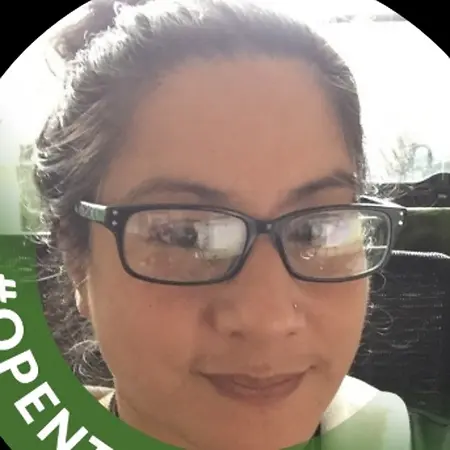
Lisa Ganser, Ph.D., is a dedicated public health professional and scientific communicator currently serving as the Public Health Emergency Preparedness (PHEP) Coordinator for Mower County Public Health in Austin, Minnesota. In this role, she focuses on community-focused emergency planning, translating complex public health information into actionable guidance, and engaging local leaders to ensure culturally tailored messaging reaches all members of the community. Lisa’s work emphasizes inclusivity, lifelong learning, and advocacy for historically marginalized and Indigenous populations.
With a robust background as a subject matter expert for the Alaka’ina Foundation Family of Companies, Lisa has specialized in laboratory systems, global health initiatives, and translating scientific research into practical applications. Her experience spans both the Centers for Disease Control and Prevention and freelance grant- and manuscript-writing for medical research laboratories, including the University of Miami School of Medicine. She brings a unique combination of expertise in ecological physiology, neuroscience, and comparative endocrinology to her public health practice, bridging scientific research and community health education.
Lisa’s academic journey includes a Ph.D. in Ecological Physiology from the University of Miami, a master’s in Biology (Comparative Endocrinology) from Northern Arizona University, and a B.S. in Biology with a concentration in Physiology from St. Mary’s College, Notre Dame. She previously served as an assistant professor at Kennesaw State University, mentoring first-generation and historically marginalized students while conducting research on the effects of environmental chemicals and substances on neurological and reproductive development. Today, she leverages her research, teaching, and scientific communication experience to develop community-based public health solutions, mentor emerging professionals, and advance global health initiatives.
Her Interview
Ten minutes with Lisa
01What do you attribute your success to?
I would say I attribute my success to my parents, who were the most tenacious, resilient people I can imagine. And the stuff they went through just still gets me today. My parents came from very, very humble beginnings in the Pacific Islands, and were native Hawaiian and Chamoru, which is Indigenous people of Guam. Both of my parents grew up as part of their childhood in concentration camps, war camps. So, the push to assimilate to white Americanism as well as to just kind of make the most of everything we had was pushed so hard. Also, my daughters, because of the same reason. They are amazing people who are advocates for Indigenous people and people of color having water, having their artifacts returned to them. That's what they do.
02What advice would you give to young women entering your industry?
Oh my gosh, don't be afraid to fail. And look at failure as an opportunity for growth. And you are where you belong. Understanding that, and having the attitude of having to fight for that forever is not - doesn't always fit, and it's hard to let that go. But the growth and learning part, and not being afraid to fail, is so important, because there's so much pressure that we give ourselves, especially young women. Those failures, I came to realize, weren't just failures, really. They were such great opportunities to learn. And so, that transition and understanding - it took a long time for me to realize what a, you know, like, what, how special that was of an opportunity.
03What are the biggest challenges or opportunities in your field right now?
One of the biggest challenges in my field right now is the loss of funding for local public-health positions, which creates uncertainty around staffing and job stability. At the same time, there is a significant opportunity to engage diverse, multilingual communities by creating tailored public-health messaging and empowering local leaders to promote health and safety.
04What values are most important to you in your work and personal life?
The values most important to me are tenacity, resilience, and lifelong learning, along with a strong commitment to community advocacy, especially in supporting Indigenous students and other historically marginalized groups. These principles guide both my professional work and personal life.
Join Influential Women and start making an impact. Register now.