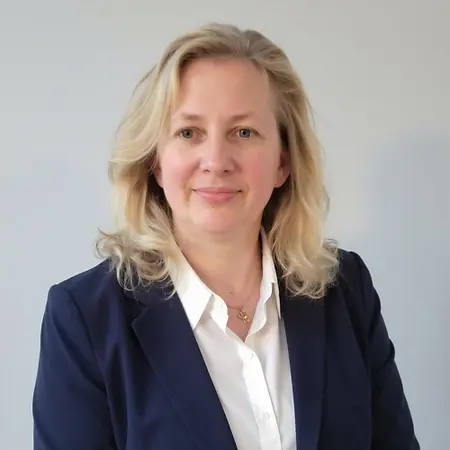
Her Story
About Lisa
Lisa Nunez has spent more than three decades in social services, building a career defined by compassion, advocacy, and an unwavering belief in the potential of every family she serves. She currently works as a Family Coach with the Oregon Department of Human Services in Grants Pass, where she guides families through programs such as Temporary Assistance for Needy Families, food assistance, and Medicaid, while also offering support around housing, employment, budgeting, and parenting. Her career began unexpectedly at age 21, when a temporary staffing placement led to a role at a local nonprofit administering HUD Section 8 rental assistance — an opportunity that grew into a lifelong calling. Over the years, she has worked as an Occupancy Specialist, a Case Manager with the Oregon Department of Justice, and now as a Family Coach, steadily deepening her expertise in case management and family stability services.
A hallmark of Nunez's career has been her ability to build partnerships across agencies. Her collaborative work with the Department of Child Welfare produced a program designed to help families achieve lasting stability, one that proved successful enough to be adopted and expanded in other Oregon counties. Grounded in a strengths-based, trauma-informed philosophy, she approaches every family not by their circumstances but by their capacity for growth, encouraging them to recognize their own resilience and potential. That same drive to grow has carried into her own life: despite starting her higher education later than most, with only a high school diploma with honors, she is now completing a bachelor's degree in psychology at Walden University, with plans to pursue a master's in clinical mental health counseling and become a licensed therapist — a goal she funded in part by working extra hours during the COVID-19 pandemic.
Beyond her professional responsibilities, Nunez serves on the board of the Mid-Rogue Foundation, contributing to initiatives that address homelessness in her community, including a veteran-focused apartment complex and a tiny homes village that provides case management, job-skills training, and rental education. She balances this demanding work with intentional self-care, restoring her energy through hiking, kayaking, and time spent along the Oregon coast. For Nunez, every aspect of her life — professional and personal — is anchored in the same conviction: that every person has value, every family has strengths, and the right support at the right moment can help someone see possibilities they never thought were within reach.
Her Interview
Ten minutes with Lisa
01What do you attribute your success to?
I attribute my success to compassion, resilience, patience, and the ability to truly listen. After more than thirty years of working with families facing difficult circumstances, I've learned that people rarely come to social services with just one problem — housing, employment, finances, health, family relationships, and trauma often intersect. My approach is to listen without judgment, understand the full picture, and help families find practical resources and solutions. I also credit my success to staying resourceful and committed to continuous learning; throughout my career I've researched programs, developed new tools, and collaborated with other agencies to better serve families, which led to a program I helped build with Child Welfare that was later expanded to other counties. Above all, I believe success comes from never losing sight of why you serve — my work isn't just about connecting someone to a program, it's about helping people see their own value and potential, a philosophy that now guides my journey toward becoming a therapist.
02What’s the best career advice you’ve ever received?
One of the most important lessons I've learned is not to take a family's decisions personally. The families I work with are often navigating trauma, instability, financial hardship, or several crises at once, and their choices are shaped by circumstances that aren't always visible to me. I believe my responsibility is to offer grace, support, resources, and encouragement, regardless of the outcome — I can't control every decision a family makes, but I can control how I show up for them. Sometimes the most meaningful thing I can do is simply be the person who listens, stays patient, and reminds someone they're not alone. I've also learned that helping others requires boundaries and self-care; because this work involves regular exposure to trauma, I intentionally make time for hiking, kayaking, and trips to the coast so I can keep serving others without carrying every family's burden as my own.
03What advice would you give to young women entering your industry?
Don't take anything personally. When you're working with families, their choices are their choices — we can offer suggestions, but ultimately the decision is theirs. Our role is to keep lifting them up regardless of what they choose, without taking it personally, whether the outcome is good or bad.
04What are the biggest challenges or opportunities in your field right now?
I see both significant challenges and opportunities in social services as communities continue to address homelessness, housing instability, poverty, family trauma, and the complex needs of vulnerable populations. I believe collaboration among government agencies, nonprofits, community organizations, and service providers is essential to creating solutions that go beyond meeting someone's immediate needs. My volunteer work with the Mid-Rogue Foundation reflects this belief, through efforts to provide housing, case management, life-skills training, and support for veterans and individuals transitioning from homelessness to independent living.
05What values are most important to you in your work and personal life?
Compassion, integrity, empathy, respect, and service are at the heart of both my professional and personal life. I believe in treating people with dignity, listening without judgment, protecting confidentiality, and empowering individuals and families to recognize their own strengths and value. I also hold resilience, accountability, lifelong learning, collaboration, and community engagement close — values I try to live out every day, whether through more than thirty years of serving families, pursuing my psychology degree later in life, or volunteering to help address homelessness in my community.
Join Influential Women and start making an impact. Register now.