Her Story
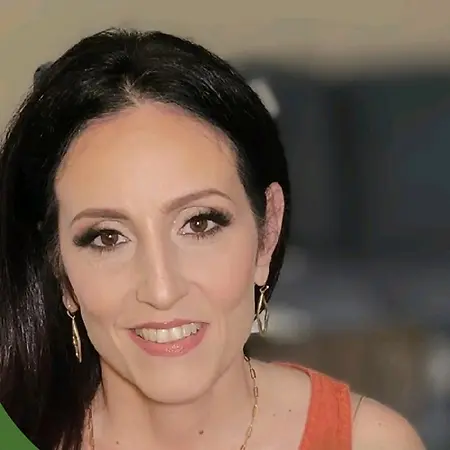
About Lisa
As a child, I've always wanted to be a teacher. My earliest days, I can remember playing teacher with my cousins and sister. I've just always loved children and helping children reach their goals. As a special education teacher, I have to modify and differentiate instruction in order to allow them to access the curriculum, and I feel like every child can learn if you do that. I currently teach in a second grade integrated co-teaching setting with another co-teacher and two paraprofessionals. We work with children with autism, speech and language deficits, and one child with muscular dystrophy. We're all a team that works together with occupational therapy, physical therapy, adaptive physical ed, and speech providers, which makes the job flow so much easier. I handle everything as an elementary teacher - we teach reading, writing, math, social studies, and social-emotional learning, as well as providing assessments for them. We just started a whole brand new reading program called HMH, the Sciences of Reading, which was pre-piloted last year and fully implemented this year. It's been a little challenging, but we've definitely seen growth over the years. I would say my most notable achievement is getting those students to shine in whatever area they're capable of. We progress monitor them all year, and you really don't see the results until the end of the year, so it's not one of those instant gratification type of positions. You always see some growth at the end of the year, and that's what keeps me going.
Her Interview
Ten minutes with Lisa
01What do you attribute your success to?
I would say patience. In a special education classroom, there's a lot happening at once. There are phones ringing, providers coming in, just a ton of things happening at the same time. The needs are intense at times, so I think just to have a lot of patience and to breathe. My wonderful mother always read to me as a child, and I had such a love for school early on. I loved going to school, I loved learning, I loved reading, I loved doing homework. So my mom definitely, as a stay-at-home mom, fostered that learning, always helping her in the kitchen, whether it was a recipe or just an activity, so she was very hands-on. I would also say integrity - I think that's the most important value in your personal life. I just think honesty and integrity are most important.
02What’s the best career advice you’ve ever received?
I would say just to really just do your best every day. The best advice was just to know that not to burn out, because this is the type of profession where you could burn out very easily. So just to do your job to the best of your ability. And I guess work smarter, not harder, is what I've learned as I've gotten older. I've learned to put certain practices in place, and I have my binders with all my materials, so that you're kind of not reinventing the wheel every year, because that causes teacher burnout. So as a seasoned teacher now, I think I'm able to do that.
03What advice would you give to young women entering your industry?
I would tell her not to sweat the small stuff. It all works out by June. The kids remember the time spent, you know, don't sweat the small stuff. I think as a teacher, sometimes you just don't understand how you're going to fit everything in and get all this paperwork done and report cards and everything else that they throw at you every week, but it really does get done somehow. So, just to know that.
04What are the biggest challenges or opportunities in your field right now?
The biggest challenge I would say is that sometimes there's no consequences for student behavior. We have something called MTSS, which is basically modifying behavior, understanding where it comes from, what's the antecedent. We call it an ABC chart - what's the antecedent, what's the behavior, and how are we going to chart it or deal with it. And it's a lot of extra paperwork for the teachers today because of that. I think maybe most teachers would probably say that that's a struggle, just to monitor and modify the behavior. We have a lot of extra incentives in place, like dojo points that we give the kids every day, they get very excited, and then if they get a certain amount of points, like 25, then they get a prize, or they get to sit next to their best friends for the day, or an extra 5 minutes of recess. As for opportunities, I would say that the professional development that we've received every year is excellent. Every Monday, we have professional development. We have access to many different websites, many different programs. We just learned a new phonics program, and they offered me access to watch 5 demo lessons to see it in action. So we really do receive a lot of training.
05What values are most important to you in your work and personal life?
I would say integrity. I think that's the most important value in your personal life. I just think honesty and integrity are most important.
Join Influential Women and start making an impact. Register now.