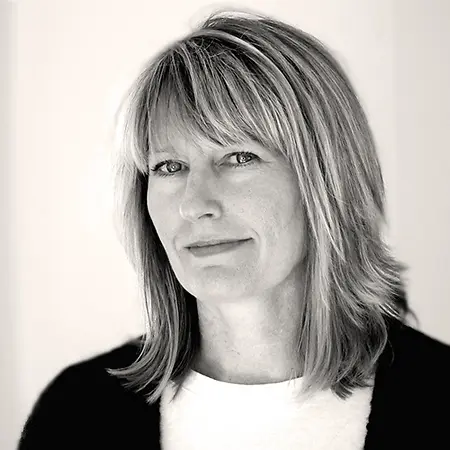
Her Story
About Lisa
My day involves teaching three classes that rotate a couple of times a week along with administrative work and mentoring. I also have to be flexible because I work with students from all different backgrounds - from art history and museum studies students to studio art and graphic design students as well as students from other disciplines who might be taking my classes for general education requirements. I try to teach them the foundations of art history while helping them become confident to talk about art themselves. I have to constantly adapt to students with different skill levels and experience levels. Beyond teaching, I do a lot of administrative work including assessment, curriculum and program development, course development, and internship advisement. Right now there's a lot of changes in higher education and specifically in the fields my discipline overlaps with, so I always look at how these fields are developing in terms of the future marketplace and what students need in terms of skill sets. Employers expect students to be good at working collaboratively and in a global community, to be effective communicators and critical thinkers. I focus on how to build those skills in my students even if the specific content may not be something they need for a future job. I also have my own scholarly research that I work on, which is always something I really enjoy.
Her Interview
Ten minutes with Lisa
01What do you attribute your success to?
I think I am fortunate because I've had a lot of positive experiences and been surrounded by supportive people throughout my career, from when I started out as a student to now as a professor. I've always tried to be clear and straightforward about what I'm willing to do and my expectations of other people. I try to tell my students this too - that this is your job, your business - so you need to be good at your job first. Being personable and being considerate of other people is also really important. At work you need to make intellectual decisions for your job, your company, your career -- while also understanding people and their needs. It's a delicate balance between these two, but I think I've done very well because I've maintained that balance. I also think it's important to try as many things as possible while you're young and more mobile. Don't be afraid to take chances or to change career paths to try something new. Take time to learn about yourself. While thinking about future jobs also think about what kind of lifestyle you want in the future like where do you want to live or what do you want your daily or yearly schedule to look like.
02What’s the best career advice you’ve ever received?
I think it's important to have a plan or a direction, but we should remain completely open to new possibilities or opportunities; we can't be so focused on the end goal that we miss unexpected prospects. We all have an idea of what we want to do at a certain point in our lives as we're trying to figure out our career paths. The best career advice I would give, and have received myself, is to start to go for that dream job, but when a door opens that seems like a tangent or wrong direction, take a moment to actually think about what you might learn and gain from that opportunity. Everything we do provides us with experiences that offer some important skills or knowledge in general, so don't be afraid to take chances.
03What advice would you give to young women entering your industry?
The frustrating thing about my industry is that when you look at academia and the art world in general, women are underrepresented and underpaid. For instance, there are fewer female artists in museum collections than male artists, and yet the field is dominated by women. So there is this clear disproportionate representation of women. My recommendation to women in my field would be to know your worth and to clearly, whether this is verbally or just through the decisions you make, insist upon this value. Know your worth and demand appropriate compensation. I've learned that women are not always good negotiators when it comes to all sorts of things, whether that's salaries, workload, or benefits. One piece of advice I would have for younger women in my field is to know your worth, know your value, and know what the market demands or is willing to pay for your skill sets and experience, and don't settle for less. You have to be confident and you have to be assertive and straightforward about your expectations. No one is going to give you things. At the same time you have realize that how you present yourself will be much more highly scrutinized than your male counterparts, so you have a fine line that you have to walk.
04What are the biggest challenges or opportunities in your field right now?
The big challenge in my industry is juggling the expectations for publishing along with increasing teaching loads and administrative work. Publishing has become more difficult because of the cost and the drop in the need for print publications. I don't work at an institution that is ranked as a research institution - mine is technically focused on education, not research - but I still have a lot of research expectations and publishing expectations. Jobs are also becoming more competitive. The opportunities are that you can work with people from other disciplines and you have the opportunity to wear different hats. I have been able to curate and consult on exhibitions, work with artists, publish my scholarship, mentor and teach students as well as work with colleagues from a range of disciplines like anthropology, arts education, digital humanities, film, gender and women studies, and museum studies-- and that's kind of exciting.
05What values are most important to you in your work and personal life?
I think in both my work and personal life, the things that are most important to me are curiosity, creativity and dependability. I think it's important that people can count on me, and that has borne out in both my career and my life in general. You need to surround yourself with people who are dedicated and dependable, who you can turn to and work with, but who you can also have fun with-- who love the job as much as you do. This ability to work collaboratively with people who make the work enjoyable and who you can also trust and rely on is really important. You also have to remember not to neglect your personal life to achieve professional success or accomplishments.
Join Influential Women and start making an impact. Register now.