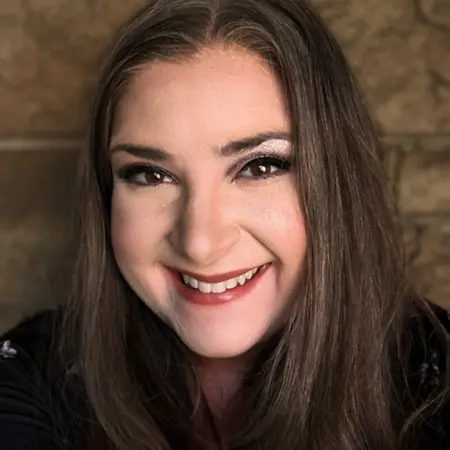
Her Story
About Lisa
I've been working in the nonprofit sector for over 17 years, and it's always been my thought process that you owe more to your community than just paying taxes. There's so much more to give back, and each of us have different gifts and different talents that are needed in every facet of our communities. For me, it was an opportunity to live out my personal belief system of caring for others and showing kindness and compassion to others, and it was an opportunity to merge both my personal belief as well as diving into a professional career in this. My journey started in an unexpected place - I have an undergraduate degree in musical theater and was part of the Pittsburgh Civic Light Opera Academy where dance was my focus. After a career-ending injury, I felt like something was missing, which drove me into asking how do I give back, how do I care about my community. I worked managing a social enterprise for individuals with intellectual disabilities and became certified through ACRE (Association of Community Rehabilitation Educators) as an employment specialist. I saw so many opportunities where there are places to serve, and I realized there are differences and nuances in the nonprofit sector that you have to know in order to be successful. That's why I went back to school for my Master's in Nonprofit Leadership and Management at Arizona State University, and I'm now looking at a doctoral program in community engagement. I currently work at Point Park University, where I also did my undergrad studies, and I'm a member of the Pi Lambda Theta Honor Society.
Her Interview
Ten minutes with Lisa
01What’s the best career advice you’ve ever received?
The best career advice I've ever received is to never stop learning. Always be a student, and make sure there's always more to learn. There's always more to understand. And the world is so much bigger, and yet so much smaller, but there's always more to learn.
02What are the biggest challenges or opportunities in your field right now?
I would say some of the challenges that I face in the social sector is consistently being required to solve some of the world's greatest problems with fewer and fewer funds diverted toward solving those things. That's probably the biggest challenge that we encounter. Additionally, I think that we have a lot of individuals who had opportunities to either found an organization or start an organization and grow with the organization, and they've been in executive positions for 20, 30, 40 years. And as they are nearing retirement, we now see a whole generation of individuals coming into this leadership position with backgrounds in the for-profit world kind of coming into these management positions. But it's not a direct correlation from for-profit to nonprofit. The lack of data and knowledge in the social sector, or this lack of seeking after it from executive level, is challenging in many capacities. It's what spurred me to get my master's in nonprofit leadership and management, and I'm also looking at a doctoral program in community engagement. Inevitably, that mindset, that thought process of a lot of our leaders are leaving and they're taking the institutional knowledge with them, and those who are coming in may not have the nonprofit background to understand the unique nuances and challenges that you learn, either while going through the social sector and working in every facet of it, or going back for education. As well as that aspect of making decisions based off of real, factual data as opposed to your gut reaction. You actually have to take a look at what is proven as opposed to what you think is best.
03What values are most important to you in your work and personal life?
Integrity is very important to me, making sure that you are operating with integrity. You are also seeing people for who they are, and making sure that you understand that each person brings value, each person is a whole person. They are more than the work that they are doing on a day-to-day. They are whole people. It reminds me of just the importance of making sure you are showing love and compassion and kindness. We don't know what everyone is going through, and we have to make sure that we are operating from a place of compassion. So I think there's also patience in that. Not everybody's at the place where they could, should, would be to get there. I've had a wonderful opportunity - my one friend calls it my superpower - I see the people. And I believe that they are, you know, I'm putting them into places where they can have the opportunity to live up to their potential. And we have to show patience in that, too, because they may not see it yet. But my job is to see it, and encourage them in that. And it's up to them to do the rest of the work to get there.
Join Influential Women and start making an impact. Register now.