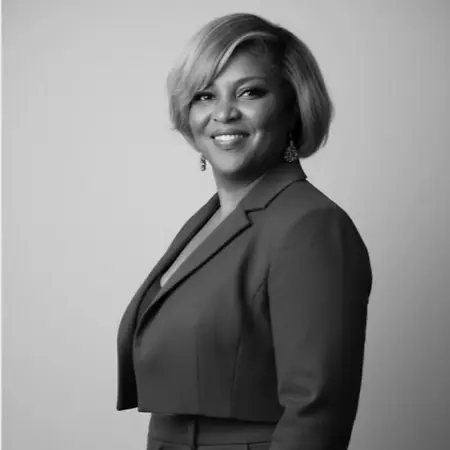
An examination of how Black women leaders navigate the tension between fundraising authentically and meeting funder expectations while advancing justice work in today's philanthropic landscape.
“
I stopped asking for permission to lead and started protecting time for my own growth by treating coaching, wellness, and learning as non-negotiable commitments.
Liz Frederick · In Her Own Words
Her Story
About Liz
Elizabeth "Liz" Frederick: Nonprofit leader and youth justice reform advocate, Liz Frederick became the Executive Director of Avenues for Justice (AFJ) in the summer of 2024, after 18 years of service to the historic organization. Starting her journey with AFJ in 2006 as a graduate student at John Jay College of Criminal Justice, Liz was initially curious about the gap between theory and lived experience. What began as a 30-minute meeting with Co-Founder Angel Rodriguez, quickly turned into a two-hour mission-defining moment, revealing not only a career path, but a purpose.
Nearly two decades later, Liz now leads the very movement that first inspired her.
Liz’s rise through AFJ, from operations staffer to Chief Operating Officer to unanimously appointed Executive Director in 2024, is not just a story of institutional knowledge or professional growth. It is a story of vision, of leadership shaped by experience, and of a woman who chose to define success in her own terms.
With unwavering commitment to advancing justice reform, especially within New York City, Liz has been a driving force and advocate for community-driven alternatives to incarceration. With a full grasp of the weight and responsibility of being a Black woman leading a justice-focused nonprofit, her leadership is rooted in clarity, empathy, and conviction. From Operations to Executive Leadership, Liz has touched nearly every part of the organization. From building operational infrastructure, to securing major grants and doubling the organization’s financial capacity, Liz has helped scale AFJ’s presence across all five boroughs of New York City while keeping its identity deeply local. Helping shape policy conversations, mentoring staff, or building cross-sector coalitions, Liz brings authenticity, courage, and a deep belief in the power of community to drive meaningful change.
Beyond her work at AFJ, Liz is a respected voice in the broader nonprofit and philanthropic landscape, recently joining the Board of IMPACT 100 NYC, a women-led collective supporting nonprofits through transformational grantmaking. She is also a Nation Swell Council Member – a community for leading senior thought leaders, change makers, and social impact amplifiers committed to scaling change through cross-sector collaboration, inspiration, and connection. In addition to being acknowledged as a 2024-2025 Robin Hood Foundation New ED/CEO Peer Leadership Group, Liz is also an alumna of Columbia Business School’s Social Enterprise Program for Nonprofit Professionals, and a Cause Effective Fellow for advancing Leaders of Color in Fundraising. In Spring 2025, Liz was selected for the Greater NY Partnership—a two-year leadership initiative —where she is part of the class of 2027. In celebration of Black History Month and in recognition of her leadership in the communities we represent, Liz was honored in February 2026 by Congressman Daniel Goldman (10) with a Congressional Proclamation.
A frequent guest on justice reform and nonprofit leadership podcasts like You’re In Black Women’s Business, Unshackled Leadership: A Lantern for Black Women, Pursuing Justice, Breaking the Bias and more, Liz Frederick has been a powerful voice for young people navigating the justice system and a relentless advocate for policy and change that shifts the narrative from incarceration to empowerment.
For Liz, justice work is personal, it’s generational, and is rooted in the belief that everyone deserves the chance not only to live, but to thrive.
Her Interview
Ten minutes with Liz
01What do you attribute your success to?
I take what I call negative experiences and I turn them into positive. That Wall Street interview where I was judged by how I looked compared to my name became the deciding factor for going into the nonprofit sector, particularly social justice and criminal justice work. I've learned that where a young person starts off in life does not and should not be the determining factor of where they end up. I've worked in every facet of this organization and earned my position - when people told me I had big shoes to fill after Angel, I looked down at my own shoes and said I like my shoes, and these are the only shoes that I have to fill because I've earned them. I believe in empowering my team and doing extensive professional development, living by the principle that bosses have titles and leaders have people. Even though leadership is lonely for any person, and even more isolating for a Black woman working in criminal justice which is very white male dominated, I'm always reminded that I do this work for our participants, for the young people who deserve not to be judged by the shoes they leave jails and detention centers with.
02What’s the best career advice you’ve ever received?
The best career advice I've ever received is that bosses have titles and leaders have people. As a leader you want to be authentic in how you show up and accountable to who you show up for.
I believe in mentoring your team so that they are able to leave and advance further professionally, but you want to treat them even better so that they stay. It's all about empowering my team and focusing on professional development so they can grow and succeed.
03What advice would you give to young women entering your industry?
In my monthly “Tea With the ED” blogs — which focus on balancing motherhood, justice reform, community, and executive leadership — I end with a “Sweetener in my Tea” section. It is an exercise for me, in the words of the Notorious B.I.G. (aka Biggie), to share a “negative to positive” recent experience.
20 years ago, as I walked out of the Manhattan Criminal Courthouse as a graduate student at John Jay College (CUNY), curious about the gap between theory and lived experience, I found purpose. After meeting Avenues for Justice, Inc. Co-Founder, Angel Rodriguez, I found a mission. I did not arrive at Avenues for Justice to take over. I arrived to learn.
My advice to young women entering this field is to find your passion and pursue it relentlessly. Do not allow anyone to define your limits or tell you that you are not capable of achieving your goals. Believe in your talents, work hard to develop your skills, and use any doubt or negativity as motivation to succeed. Stay confident in your abilities, remain resilient in the face of challenges, and prove through your dedication, excellence, and impact that you belong at every table you choose to sit at. "If they don't give you a seat at the table, bring a folding chair." ~ Shirley Chisholm
As a mother to my 14-year-old daughter, Bella, I’m mindful that how I lead shows her what’s possible for her. I want her to see that there’s space for women like us to lead boldly, to be heard, and to be supported. My identity doesn’t just shape my leadership; it fuels my commitment to building pathways for those too often left behind.
04What are the biggest challenges or opportunities in your field right now?
Funding is absolutely the biggest challenge right now. Last year, we lost $600,000 in funds, which was a combination of the political climate and the funding landscape - private and public sector scaling back on DEI initiatives, racial justice initiatives, and typically anything that has to do with Black and Brown people. Right now, 98% of my time is consumed with funding. The need for our services has increased - we served 691 participants last year - but the resources are being cut. However, we do have allies who are fighting with us. Congressman Dan Goldman and I have been fighting for federal funding through the Department of Justice for 3 years, and last week he announced that we received a $250,000 federal grant after it had been voted down multiple times. The opportunity is in showing people that organizations like Avenues for Justice are offering real public safety solutions - our recidivism rate is 94% of our young people are not re-convicted within 3 years of enrollment, and it only costs $8,900 to put a young person through our program for one year versus over half a million dollars to incarcerate that same young person.
Being a Black woman at the helm of a criminal justice nonprofit is no small weight to carry. It is isolating at times. It requires resolve. I’m aware of the unspoken expectations placed on Black women leaders to carry everything with strength and grace.
05What values are most important to you in your work and personal life?
The values that are most important in both my professional and personal life are service to others, passion, integrity, and honesty. I am driven by a commitment to positively impact the lives of those I serve, approaching my work with compassion and purpose. My passion fuels my dedication to advancing meaningful change, while integrity and honesty guide my decision-making, leadership, and relationships. I strive to lead with transparency, accountability, and a deep sense of responsibility to my community and the people I support. I do not need to fill someone else’s shoes. I wear my own. I like my shoes. I have earned them.
Her Content Hub
Articles by Liz
Raising Money While Silencing Truth: Leadership in Today’s Philanthropic Landscape
Navigating the Intersection of Mission, Fundraising, and Black Women's Leadership in Philanthropy
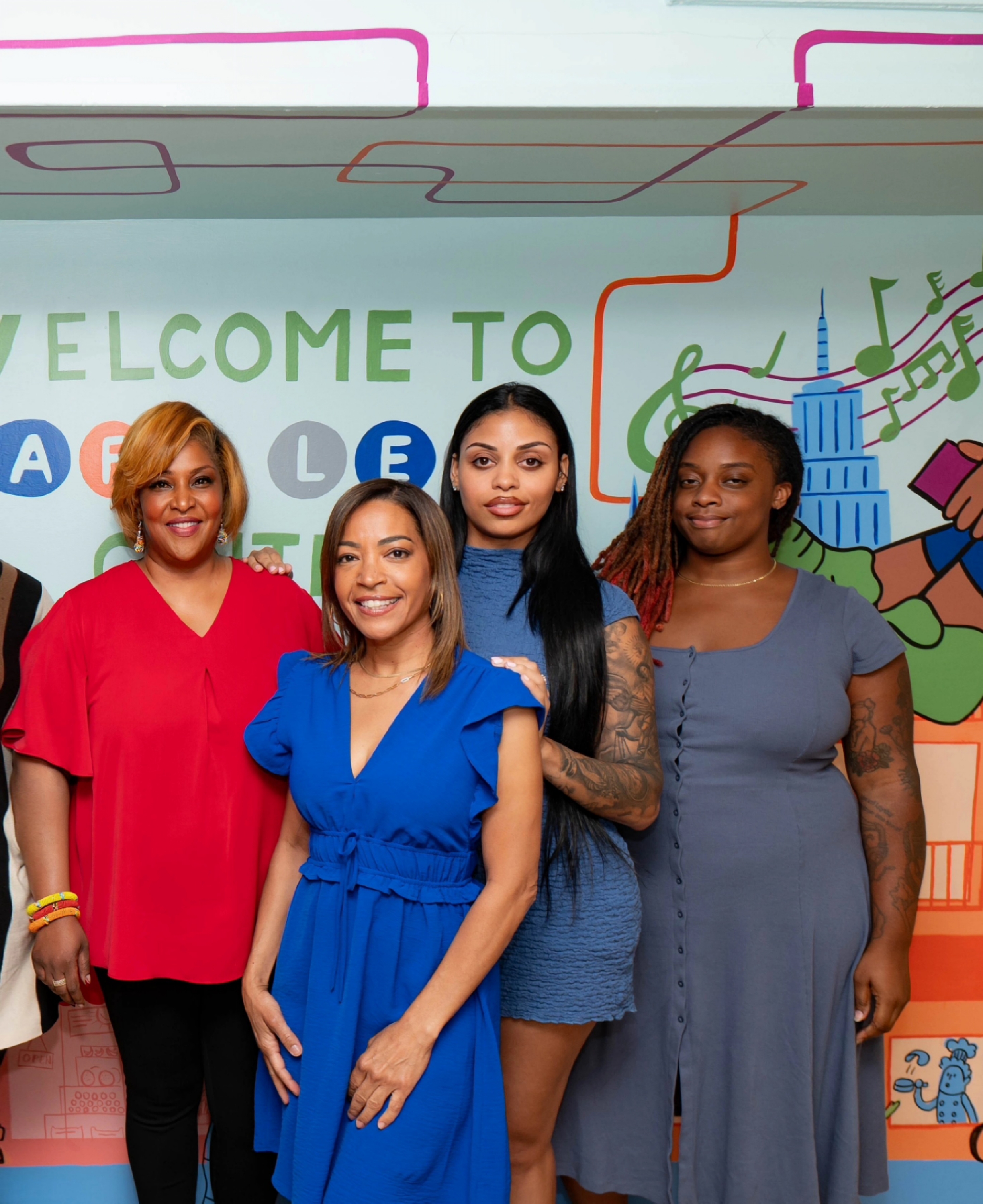
Raising Money While Silencing Truth: Leadership in Today’s Philanthropic Landscape
When I first joined Avenues for Justice (AFJ), I wore many hats, like so many people working in mission-driven organizations. I moved across roles supporting programs, communications, operations, and fundraising. From the very beginning, I was deeply committed to supporting young people navigating the criminal legal system and the structures surrounding it. I understood that resources were limited and our team was small, so I rolled up my sleeves and dove into learning as much as possible in order to be of service.
Along the way, I had the opportunity to participate in a cohort program—Preparing the Next Generation—led by Sonya Shields at Cause Effective. That program sharpened my understanding of fundraising, philanthropy, communications, and what it means to lead an organization. It reinforced that credibility in this work is not just about position. It is about values, integrity, and lived experience. It is also about the ability to translate that experience into vision, strategy, and a clear understanding of why this work matters now.
Fundraising became a central part of that journey as an extension of leadership itself. And yet, for many people—especially those coming from programmatic roles—fundraising remains one of the most misunderstood aspects of leadership.
Black Women and the Legacy of Fundraising
There is a long-standing narrative in the nonprofit sector about who fundraises and how leadership develops. Too often, it assumes that fundraising is a specialized skill set, disconnected from history, community, and lived experience. But that narrative does not hold when we look more closely, because Black women have always been fundraisers.
Long before development departments existed, Black women were mobilizing resources to sustain movements, build institutions, and support their communities. Ida B. Wells raised funds internationally to support anti-lynching campaigns. Madam C.J. Walker used her wealth to invest in Black communities and social causes. Mary McLeod Bethune built institutions through relentless fundraising and relationship-building. Septima Clark helped mobilize resources for civil rights education. These are just a few examples.
Across generations, Black women’s groups in churches created some of the earliest and most consistent philanthropic networks in the United States. This history matters because it reframes how we understand fundraising today. Fundraising is not simply about asking for money. It is about organizing resources in service of a shared vision. It is about trust, relationships, and the ability to move people toward collective action.
Black women have been doing this work for centuries, and too often without recognition. The reality is that Black women raise millions of dollars—often without access to the same institutional power structures that define leadership today. Therefore, when we talk about who is “ready” to lead or who is “equipped” to raise funds, we must be honest about what we are measuring and what we are overlooking.
The Reality of Fundraising Today
At the same time, the landscape of philanthropy is shifting in ways that introduce new complexities and contradictions. On one hand, organizations are being asked to demonstrate impact in increasingly specific ways. For example, funders want to see clear outcomes tied to workforce development, education, mental health, and long-term stability.
At Avenues for Justice, we partner with Black and Brown participants navigating real systemic barriers that we help them overcome. In order to raise awareness, deepen engagement, and secure funding, we must be able to share the lived experiences of those young people, because that is the reality of New York City and the country we are living in. Yet, there is increasing pressure to use language that feels “safe” and avoids directly naming race, identity, and the systemic factors that shape our participants’ experiences.
This creates a real tension. How do we accurately describe the work if we are asked to remove the identities of the young people we serve? How do we tell the truth about systemic inequities while navigating a funding environment that sometimes encourages us to soften or reframe that truth?
As leaders, we are asked to hold both. We are expected to raise resources while also navigating constraints around narrative. We are expected to remain grounded in our mission while adapting to shifting funding priorities. And we are expected to do this in a way that ensures long-term sustainability.
This is the reality of fundraising today. It is not transactional. It is deeply strategic. And it requires us to operate in a space where we are asked to raise resources for work grounded in systemic inequities while also being encouraged to soften or avoid naming them.
Leadership in This Moment
As the Executive Director of Avenues for Justice, leadership, at its core, is about responsibility. It is about ensuring that the organization remains strong, sustainable, and aligned with its purpose. It is about making decisions that balance immediate needs with long-term financial sustainability.
For Black women in leadership, there is an added layer. Decisions are questioned in ways that go beyond accountability. Expertise is challenged in ways that reflect deeper assumptions about who holds authority and whose leadership is trusted.
This is not new. But it is something that must be named. Black women leaders need partners who understand the weight of the responsibility they carry and who are willing to support that work in meaningful ways.
Leadership also requires adaptation. Funders are increasingly looking for organizations to demonstrate impact beyond traditional metrics. In our case, that means articulating impact that includes not only reducing recidivism, but also supporting stability, economic mobility, and the growth of participants as leaders and advocates in this work.
Leadership requires partnership and trust. It requires a shared understanding that the role of leadership is not to operate in isolation, but to guide, build, and move an organization forward.
Philanthropic Mobilization
In moments of uncertainty, there is also opportunity. As funding priorities shift and institutional expectations evolve, there is an opening to think more expansively about how this work is sustained. Philanthropy cannot rest solely on large institutions or a small group of funders. It must also be understood as a broader form of civic participation that invites individuals, communities, and networks to actively support the work they believe in.
For organizations like Avenues for Justice, this has always been true. Our work has been strengthened by people who understand its importance and choose to invest—financially, through advocacy, and through connection with our participants.
What feels different now is the urgency. There is a growing need to expand who sees themselves as part of this work. That means creating clearer pathways for engagement, helping people understand the direct impact of their support, and reinforcing the idea that philanthropy is not reserved for a select few. It is a shared responsibility.
Philanthropic mobilization, in this sense, is not just about raising more resources. It is about building a stronger and more resilient ecosystem of support that reflects the values of the work itself.
Calling In
The work of organizations like Avenues for Justice has always relied on partnership, and that has not changed. What has changed is the level of intention required to sustain and grow that partnership in a more complex and shifting environment.
This moment calls for deeper engagement from individuals, communities, and institutions. It calls for a willingness to move beyond surface-level support and to invest in the long-term success of organizations that are doing the work of creating opportunity, stability, and justice.
It also calls for a broader understanding of leadership. Fundraising is not a separate function that sits alongside leadership. It is a core responsibility of being an Executive Director. For those who have built their careers in programmatic roles, this is an important shift in perspective. Leadership is not only about delivering services or managing programs. It is also about ensuring that those programs have the resources they need to continue, evolve, and expand.
At the same time, there must be recognition of what it means to lead in this moment. Leadership should not require constant justification. It should not require navigating unnecessary barriers to trust or credibility. Strong leadership is strengthened by partnership.
There is a long history of Black women building and sustaining institutions under conditions that required both resilience and innovation. That history is directly connected to this moment we are experiencing in leadership and philanthropy. Understanding that history allows us to move forward with greater clarity about what leadership looks like, what it requires, and how it should be supported.
Ultimately, the path forward is not about returning to previous ways of operating. It is about continuing to build more intentionally, more inclusively, and with a clearer understanding of the role that leadership, fundraising, and partnership all play in this critical work.
Join Influential Women and start making an impact. Register now.