Her Story
About Liz
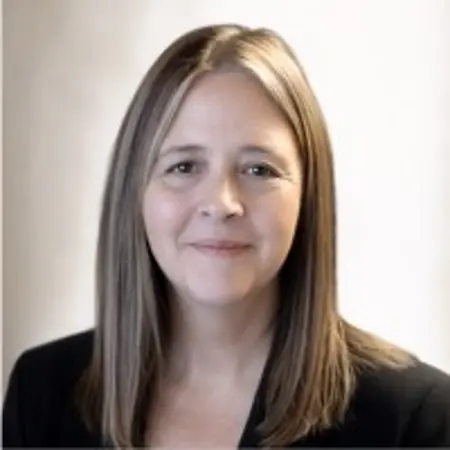
Elisabeth (Liz) Freys is a seasoned supply chain and procurement professional specializing in strategic sourcing, vendor management, and electrical instrumentation for the E&I and automation industries. Based in Colorado, Liz combines over a decade of procurement experience with a strong foundation in leadership and operational efficiency, ensuring that materials and services are sourced effectively while maintaining cost management and compliance oversight. She is recognized for her ability to align procurement strategies with broader business objectives and for fostering transparent, collaborative relationships across engineering, operations, and finance teams.
Liz began her professional journey in education, serving as a teacher and later as Director of Special Education at treatment centers. In 2013, she made a bold transition into the electrical field, initially providing administrative support for a friend’s company and quickly moving into procurement roles. Over the past decade, she has developed deep expertise in strategic sourcing, contract management, and supply chain risk, becoming a trusted leader in vendor relations and operational process improvement.
Currently, Liz serves as a Senior Procurement Specialist at NEI Electric Power Engineering, Inc., where she manages vendor relationships, sources critical materials for complex job sites, negotiates contracts, and oversees procurement operations with a focus on cost efficiency and cross-functional collaboration. She holds a Bachelor of Arts in Education from Colorado State University and a Master of Arts in Educational Leadership from the University of Northern Colorado. Liz emphasizes adaptability, continuous learning, and clear communication as the foundation of her professional philosophy, and she actively integrates modern tools, including AI, to enhance procurement practices and maintain industry relevance.
Her Interview
Ten minutes with Liz
01What do you attribute your success to?
When I fail, I don’t stop. That mindset has been one of the biggest forces in my life, through switching careers and rising to the level I’m at now. I don’t see anything as a failure. Whether I’ve been let go from a role or, like with PTW, worked there for years only for all U.S. operations to close, I choose to frame those moments as opportunities rather than endings.
Every experience is a next step, a door opening rather than closing. And having my family support me through that perspective makes all the difference. To me, no door is ever truly shut, it’s about navigating the landscape and finding the path that fits you.
02What’s the best career advice you’ve ever received?
Don’t hold back from applying just because you don’t think you’re qualified. A third‑grade teacher who later became a mentor to me at CSU once told me: It doesn’t matter—if you think you can do it, you apply. Period.
That advice stuck with me. I switched careers in my thirties, and it’s worked out better than I ever expected. Not many people make a major career change at that stage of life and find themselves doing even better than they were in a director‑level role—but here I am.
I don’t let doubt stop me. I don’t say no. If someone asks, Can you do this? my answer is always, I can figure out how.
03What advice would you give to young women entering your industry?
Building connections with other women early on, especially those in leadership, has been essential for me. I have learned the value of having multiple mentors, not just one. Every person brings a different perspective and different strengths. For example, one of my strengths is being very straightforward. What I am not great at is the warm, soft skills approach. So having mentors who excel in that area has been incredibly helpful. When I am facing a delicate situation, I can reach out and say, “How would you approach this?” Their responses are often very different from what I would hear from my male mentors.
And while I do have male mentors that I value, they tend to communicate as directly as I do. The reality is: we can say the exact same thing, and I might be seen as the "big B," while they are viewed as simply being professional. Women leaders understand that dynamic in a way men often cannot, which is why those relationships have meant so much to me.
That is why I intentionally reach out to women in executive roles or anyone above me to learn how they navigate situations, and I am never afraid to ask for guidance. Then I take what I have learned and share it with my team or anyone who has worked under me, so they can grow too. My goal is to help them step into leadership opportunities and not get stuck in that stereotypical admin box.
04What are the biggest challenges or opportunities in your field right now?
One of the biggest challenges in the electrical field is that it is still very much a male dominated industry. I do not want to come across as extreme in any way, but the reality is that some of the work is physically heavy, and there are tasks I simply cannot do. As I have grown in this field, especially in QA and QC, maintaining mutual respect and collaboration has sometimes been difficult. You never want to come across as if you think you know more than the people doing the work, yet there are physical limitations that can affect how people perceive your knowledge.
For example, if I tell someone in the field that their fittings are not tight or that something is not installed correctly, it can be received differently because I have not personally done that exact task in a field setting. In QA and QC, that can make my feedback feel less valid to the crew, even when it is accurate. So I have had to navigate how I communicate, how I approach situations, and how to make sure my intentions are clear. I focus on keeping conversations collaborative, not combative, and making sure people understand I am here to help, not to speak down to anyone.
05What values are most important to you in your work and personal life?
Transparency and communication are absolutely essential. With my husband and with the people I work with, I have learned that we cannot grow, whether it is our business or our relationship, unless we are open about what I am doing and honest about it. And we have to communicate. Without those two things, nothing else works. They are the foundation. And if you do not have a solid foundation, you are building houses on sand.
Join Influential Women and start making an impact. Register now.