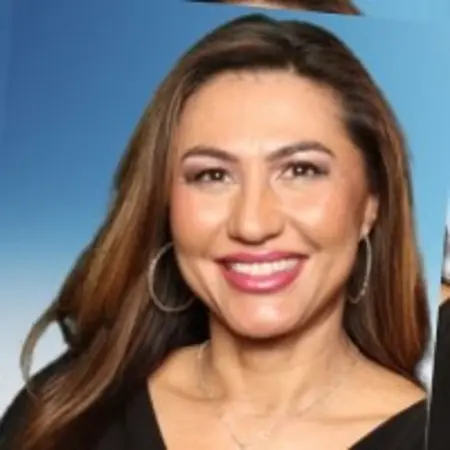
Her Story
About Lorena
I've been in journalism for almost 30 years, and I still consider myself a reporter and journalist at heart. I began my paid journalism career at the San Antonio Express News, though before that I worked at UTEP (University of Texas at El Paso) as a reporter and editor for the Spanish-speaking magazine, and I also wrote for The Prospector, the college newspaper. My journalism journey actually started even earlier when I was a teenager doing TV and radio work in Mexico, though unpaid. Throughout my career, I've worked for newspapers on both sides of the border, including El Diario in Juarez and the El Paso Times, which gave me deep experience reporting on this unique border region. I've covered all beats except sports and celebrity news, including government, health, education, crime, and general assignment. My biggest strength and focus has been border affairs and immigration issues. I began covering the infamous feminicides in Juarez back in the 1990s and reported extensively during the narco war when Juarez was the most dangerous city in the world around 2010. Currently, I'm a mass communication instructor at El Paso Community College since 2018, where I prepare future mass communicators to be ethical and effective professionals. I also continue my journalism work as a freelancer, translating news stories for EdSource since 2024 and reporting for The Guardian since 2023, particularly on migration and immigration issues. I previously did some work with the Washington Post as well. Living on the border almost all my life has shaped my understanding of this complex community that's divided by a line but operates as one, and I believe that perspective has deeply impacted my work through the years.
Her Interview
Ten minutes with Lorena
01What do you attribute your success to?
I guess I've been diligent in doing what I'm supposed to do, which is giving voice to the voiceless and reporting what's going on. The border is very complex, and even though I've lived all my life on the border and reported on both sides, I never really knew the border until I began reporting as a journalist. Through my work, I understood the complexities of this huge community where I live, which is divided by just a line or the border wall. I've always said that we should be a country apart from the U.S. and apart from Mexico, because every policy that both sides make impacts us here, whereas we as borderlanders operate differently from the rest because of the closeness. We can have very good things about both cultures and both countries, but also the very bad. Being from the border and understanding it, I think that has impacted the way of my work through the years, because I know the border, I'm from the border, and I understand it.
02What advice would you give to young women entering your industry?
That you can do it. We women reporters and journalists, I think we're tougher. Evidence of that was when the narco war was at its peak in Mexico, particularly Juarez, when Ciudad Juarez was the number one most dangerous city in the world for a few years. Around 2010 was the peak, it was just terrible. There were more women reporting about the narco war back then than men. Don't ask me why, I don't know, but I think we're tough and brave, and I'm not saying only myself, but all of my colleagues that I've worked with are tough journalists that I admire. My advice is to be honest, truthful, and ethical as much as you can. Just because you are a woman, it doesn't mean that you are less tough than a man in reporting on whatever field or whatever topic. Sometimes you have the macho stigma of women, but no, I think that women should lead the world. Women journalists have done tough, tough work, and especially in this field when you are required not only to be a good journalist and work 24 hours and be on call, but also for those of us that have families, you have to be a good mother and raise your children. You have a lot of expectations as women. So it can be done. If we find a balance, it can be done. I think that women will continue to lead in journalism.
03What are the biggest challenges or opportunities in your field right now?
I think we're in critical times where there's a lot of misinformation and a lot of fake news. Unfortunately, as journalists, male or female, we're being put down on our credibility just because someone doesn't like the truth. That's why I also teach, for those future mass communicators to not only be ethical, but to not get discouraged on what needs to be said or done. Unfortunately, there's also the factor of layoffs. What happened at the Washington Post a few weeks back, where 300 reporters were laid off, shows the challenges we face. But we shouldn't be disappointed in our job. Our job is not going to disappear. We have to stand on what we have to do. As I've said before, we need to give that voice to the voiceless and discover the facts. We're not activists, but we have to report on what is not reported and find the facts. Even if everything is against us, we can still do it.
Join Influential Women and start making an impact. Register now.