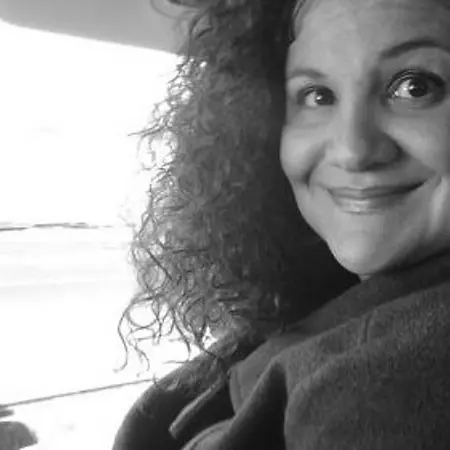
Her Story
About Loretta
I do what I call the best job in the world - I work in a teacher preparation program at the School of Education at the University of Pittsburgh. My journey to this position has been shaped by my experiences as an immigrant and educator across multiple countries. I was born in Venezuela, moved to Italy in 1990, and worked as a high school teacher there for 15 years, teaching English and Spanish. When I moved to the United States 14 years ago with my five children who didn't speak English, I wanted to continue teaching but was told I needed new certification and a master's degree. Having already taught for 15 years, I felt I could teach teachers, so I decided to pursue a PhD at the University of Pittsburgh instead. After completing my doctorate, I taught at Duquesne University before returning to Pitt, first as a visiting assistant professor and now as an Associate Professor of Practice. My work extends beyond the classroom - I'm currently leading a multi-year project with the Latino Community Center in Pittsburgh, providing professional development to tutors who help Latino children with homework, focusing on how to support bilingual students while respecting their home language. Last summer, this work allowed us to bring 70 kids to visit the University of Pittsburgh to show them they are welcome at the university and that higher education is possible for them. This is particularly important because Latinos are the population in the United States that get the least higher education, both at the undergraduate and graduate level. My experiences living around the world and navigating different cultures, especially the challenges of immigration, really shape the way I teach my students today.
Her Interview
Ten minutes with Loretta
01What do you attribute your success to?
I grew up with a single mom who is a physician, and she had a very influential impact in my life. I remember her telling me something that she read one day, where she was like, if you have a success, be happy. And if it fails, say, okay, next time. I always thought about the 'okay, next time.' Those are something that guide my life, because yes, you can be successful in many things, but you're never going to be successful in everything. And getting a grudge because you couldn't get the position that you wanted, or you couldn't do the things that you wanted, I think it's in all in all, a waste of time. So that has always guided my life.
02What advice would you give to young women entering your industry?
I feel like you need to follow your passion. Everybody was telling me, oh, education, you will never make money, and you will never do a great career. I did a fantastic career. But I really, really follow my passion for educating people, for being with other people. And maybe it will be educational, maybe it will be working in a museum, or working - there are so many jobs that have to do with education. The second thing is, you know, you always have an idea of yourself, and sometimes reality puts in front of you things that are different of what you expected. Don't worry and follow those things, because maybe in those things, you will find your passion. And particularly if you have a big family like mine, you know, if you have a lot of work at home, a lot of work with the kids, and work is just heavy, then where are you expressing yourself? Where are you having the possibility to actually enjoy things? Like, I enjoy sometimes when I read the papers of my students, and when I see the change in my students, for example, when they started with an idea, and then they moved to a new one because of the process of teaching and learning that you are enacting. It's such a rewarding job in that sense. You're really shaping the lives of people. And that's why it has to be a passion, because, you know, nothing worse than a bad teacher. You can really destroy a person if you're a bad teacher. So if you don't have that passion, don't do it!
03What are the biggest challenges or opportunities in your field right now?
Sometimes there is not enough society appreciation of teachers, because if you talk about, you know, physicians, or this or that, and then you're like, oh, yes, but they save lives. And you think education doesn't save lives? We really need to implement also this idea, the possibility for kids to access higher education, even if they come from different backgrounds. For example, Latinos are the population in the United States that get the least higher education, both at the undergrad and at the grad level. So we really need to work on making higher education accessible to students from diverse backgrounds and helping them see that there is a future for them in the university.
Join Influential Women and start making an impact. Register now.