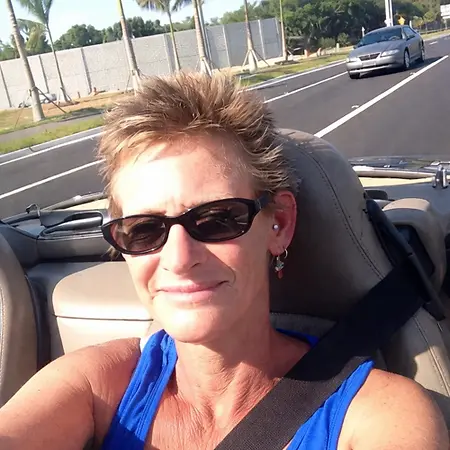
Her Story
About Lori
Reverend Lori Holstein is an experienced operations manager and ordained Presbyterian pastor with a career dedicated to service, leadership, and community engagement. She currently serves as Operations Manager at CVS Health in Fort Myers, Florida, where she oversees store operations, manages staff, and ensures exceptional customer service. Known for her strong interpersonal skills and collaborative leadership style, she brings a people-centered approach to management shaped by decades of guiding and supporting individuals in both ministry and professional settings.
Rev. Holstein earned her Bachelor of Business Administration (B.B.A.) from Geneva College before pursuing theological studies at Pittsburgh Theological Seminary, where she received her Master of Divinity (M.Div.) in 1992. She was ordained as a Presbyterian pastor in 1998 and went on to serve more than two decades in ministry. During that time, she focused on pastoral care and counseling, preaching, teaching, and church administration, while building strong relationships within her congregations and local communities.
Throughout her career, Rev. Holstein has demonstrated a deep commitment to helping others through both spiritual leadership and practical service. Her ministry included hospital and nursing-home visits, grief counseling, Bible study leadership, and active participation in community clergy initiatives that brought different denominations together in unity. In addition to her pastoral work, she has contributed to community outreach efforts such as the Elizabeth Boro Clergy Food Bank, reflecting her ongoing dedication to compassion, leadership, and service.
Her Interview
Ten minutes with Lori
01What do you attribute your success to?
I attribute my success to that calling I received when I was young. Even though I was so shy and backward as a kid, once I had my first opportunity to preach in front of a congregation, that was it. I was hooked. It just became natural because I was passionate about it. I fought with myself throughout the five years I was in seminary, questioning whether I was in the right place and whether I was truly called to do this. But once I was finally ordained, it all came together, and I absolutely have loved my career. That warmth I felt that first night when I accepted Christ set me on a quest to find out who God is, and that journey has guided everything I've done since.
02What’s the best career advice you’ve ever received?
The best career advice I ever received came from a counselor when I was going back to finish my Bible study degree. I was just going to complete a couple of courses, but the counselor said, 'Why don't you just go and get your master's and teach with it, or, you know, something.' That simple suggestion changed everything. I looked around at a couple of schools and nothing stuck out, but when I walked into Pittsburgh Theological Seminary and met with Dr. John White, I found my place. He was so welcoming and made me feel like I was already part of the family there. That advice to pursue my master's led me to where I truly belonged.
03What advice would you give to young women entering your industry?
My advice to young women entering this industry is to understand that ministry often requires a high level of commitment and availability. Be prepared to serve beyond traditional hours and to support people in a variety of settings. Most importantly, approach the work with compassion, authenticity, and a genuine willingness to be present for others.
04What values are most important to you in your work and personal life?
The most important value to me is building genuine personal relationships and showing people that we're all in this together. I believe in being present for people in their most difficult moments, whether that's spending nights overnight in hospitals, attending kids' basketball and baseball games, or serving at nursing homes. What really matters is breaking down the barriers that separate us. When I worked with the community clergy groups in Pennsylvania, bringing all different denominations together, that's what it was all about - showing everybody that we're all together in this, that there isn't that separation of Presbyterians being better than Methodists or any of that. It's about being a community as a whole and truly caring about what people have to say by showing them you care through your actions.
Join Influential Women and start making an impact. Register now.