Her Story
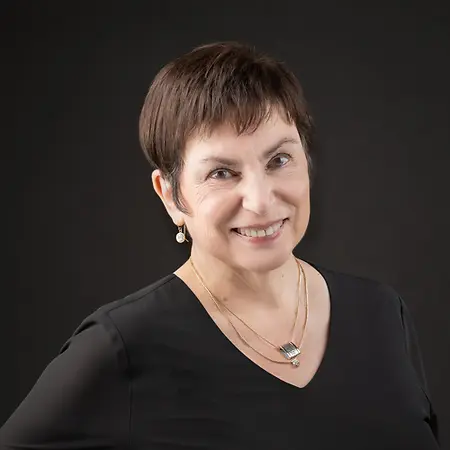
About Lori
Lori Krasnowsky is the Owner and Founder of Image Matters Promotions, LLC, a branded merchandise consultancy she launched in 2000 after beginning her career in the promotional products industry in 1995.
With a long-standing interest in marketing and advertising, Lori knew early on she wanted to pursue a more unconventional path rooted in tangible, useful brand experiences rather than traditional media. Before founding her company, she worked as a headhunter, where her largest client was one of the world’s leading promotional products firms. She later joined a national company as a regional representative and earned Rookie of the Year honors. Recognizing that the Pacific Northwest, particularly the high-tech corridor of Bellevue, Washington, required a more tailored and market-sensitive approach than her Midwest based employer could provide, Lori made the entrepreneurial decision to build a company that truly understood its audience. After the birth of her daughter in 1999, Lori took the leap and established Image Matters Promotions.
Entrepreneurship has brought both challenges and rewards, but the autonomy to serve clients her way has proven invaluable. Now based in Portland, Oregon, with a satellite office in Bellevue, Washington, she and her team continue to work extensively with clients throughout the Pacific Northwest and beyond, including major brands such as T-Mobile, Microsoft, and Google, as well as national and international organizations and international non-profits such as World Vision.
Over the years, she has witnessed the industry evolve dramatically, moving from trailing retail trends to operating in step with them. Today, her firm sources not only custom manufactured items but also premium retail brands such as Bose, Weber, Solo Stove, and Tumi, offering clients high quality, brand name merchandise customized with their brand.
At the heart of Lori’s business is relationship building. She believes that while many distributors may offer similar products, true differentiation comes from understanding what makes each client tick. By listening carefully and aligning merchandise strategies with brand goals, budgets, audiences, and timelines, she helps organizations present themselves with items that are beautiful, useful, and when used, the recipient recalls who they received their gift from. Though she proudly serves tech firms, Fortune 500 companies, small businesses, and clients in the European market, her heart remains deeply connected to nonprofit organizations and companies that do good for our world, where mission, meaning, and impact align closely with her own professional values.
Her Interview
Ten minutes with Lori
01What do you attribute your success to?
I think my success comes from building relationships and really understanding what makes my clients tick. Because we all sell basically the same stuff in this industry, it's about having conversations and understanding what works well for one client versus another. If you don't understand what makes your client tick, then you can't help them solve their challenges for getting their brand out beautifully, usefully, and appreciated. I also attribute my success to awareness of the industry and knowing what's out there. I go to trade shows with my vendors, like the big one in Las Vegas with 1,500 to 2,000 vendors, and I'm there basically all week long. I want to know what's out there, and I build relationships with my vendors and vendor reps so that when I have a request, they'll help me come up with solutions. I'm only as good as the vendors that I represent, and I only work with vendors that guarantee their products 100%. I also try to pad my timing so that if there's an issue, there's time to take care of it. And if there isn't, then we come up with other solutions.
02What’s the best career advice you’ve ever received?
Looking back, I think the best advice I would give myself is to work with advisors who really know their stuff. When I started my business, I worked with a woman who was my mentor and bookkeeper who helped me set up my books. But I think as a woman entrepreneur, I would have also sat down with a financial advisor who could really advise me on working with cash flow that can be inconsistent at times, making sure my retirement is covered, making sure my taxes are covered regularly, and how to save when money comes in inconsistently. I think that's imperative because you don't know what you don't know. Working with advisors is great. I've also worked with business coaches over the years who have opened my eyes into different possibilities of looking at sales and approaching the sales market perhaps differently than what I would have thought of. I think after 26 years, you also kind of get into a rut of doing the same thing the same way. A year ago, I hired a new AE who's brand new to the industry, and I'm grateful for him because he's opened my eyes to new things and looking at things in a different way. You also have to learn how to run a business and have to get that business mind and understand how to look at P&L statements and balance sheets so that you really understand how your business is running. And you have to be true to yourself. The part of the work I don't like is the operations part. I love the sales part, and that's why I have a bookkeeper and a CPA who keep an eye on things.
03What advice would you give to young women entering your industry?
I think for somebody who wants to start their own business, they need to start it in something that they're really excited about. A lot of well-known businesswomen and influential women have talked about doing what you're passionate about, and the money will follow, and I think that's really true. You have to be true to yourself and understand what part of the business you like and what you don't like, because a business has many different facets. Looking back, had I known then what I know now, I think I would have approached starting my business with better advisors in place. I would have worked with a financial advisor who could advise me on working with cash flow that can be inconsistent, making sure retirement is covered, making sure taxes are covered regularly, and how to save when money comes in inconsistently. I would also recommend working with business coaches who can open your eyes to different possibilities. And I think it's important to start with a mentor, like I did with a woman who was my bookkeeper and helped me set up my books. You need to learn how to run a business and understand how to look at P&L statements and balance sheets so you really understand how your business is running.
04What are the biggest challenges or opportunities in your field right now?
The competition is challenging because sometimes you're going against another distributor, or you're also going against people buying online. There's something to be said about working with a human being who's got your back, who can pay attention to ship dates, pay attention to quality, and make sure everything was received on time. But because we all sell basically the same stuff, my business is all about building relationships. The tariffs that are happening these days overseas have really hit the industry hard. When I talk to my clients about it, they understand, but they're frustrated because it affects their bottom line. I've had to pivot numerous times because a product would be coming from overseas and the pricing had increased tremendously. They've got a particular budget that they have to stay within, and they really want something, but because of the tariffs, they can't afford it, so then I have to find a suitable, perfect solution for them that works within their budget. The tariffs have really, really messed things up tremendously. That's been very frustrating. The tricky part these days is overcoming comments about how much more expensive things are than what they paid last year, and I'm trying to lower the prices if I can, or work with the client, or work with the vendor, and do my best on behalf of my client. That's probably the biggest challenge. And just getting in front of new clients that I want to get in front of, getting appointments with them, and listening to them, and understanding who they are. But the biggest thing is getting in front of them, especially when you've got gatekeepers.
05What values are most important to you in your work and personal life?
In my work, building relationships is the most important value to me. My business is all about understanding what makes my clients tick and helping them solve their challenges for getting their brand out beautifully, usefully, and appreciated. My heart is always with working with nonprofits, so I work with a number of nonprofits because I like working with clients who do good for the world. In my personal life, giving back is incredibly important. I'm on the board and staff of Camp Rosenbaum, which is a camp that my father started 56 years ago as an overnight camp for kids from low-income housing. We bring in kids aged 8 to 14, and the kids go for free. We partner with Home Forward, the housing authority throughout the state, different housing authorities, the Oregon National Guard, and the Portland Police Bureau. Everybody volunteers their time. Some people in the military have been deployed and will come back to the States to take their vacation at camp because it just helps them feel good. I'm there for the whole week at camp, and it's quite an amazing week. I'm also on two Dragon Boat teams that are both nonprofits. Pink Phoenix is the oldest breast cancer dragon boat team in the country, celebrating our 30th anniversary, and the Rose City Rockets is an all-cancer mixed team. I practice three to four days a week, and we race nationally and internationally. I also practiced martial arts for over 20 years, which I loved.
Join Influential Women and start making an impact. Register now.