Her Story
About Lori
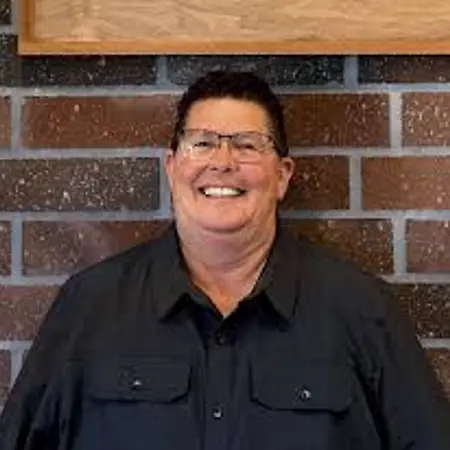
Lori Norton, SMP, CHST, CIT, CRIS, is a seasoned safety professional with more than 21 years of experience in the electrical construction industry. She currently serves as Director of Safety at Neal/Select Electric in California, where she leads comprehensive safety programs focused on compliance, risk reduction, employee training, and fostering a strong culture of accountability across field operations. Over the course of her career, she has become widely respected for her practical leadership, technical expertise, and ability to build trust with both field crews and executive leadership teams.
Lori’s career began in San Diego with the IBEW Union Local 569, where she started as a control person despite entering the field with a GED. She went on to join an electrical contractor, where she was initially laid off after a short period, only to be quickly recalled to help organize the warehouse until the next project began. Her strong work ethic and leadership qualities were quickly recognized, leading to her promotion from warehouse support to warehouse manager for the control division, and eventually full warehouse manager a role she held for 17 years. During this time, she also became responsible for purchasing tools and managing fleet operations, which naturally expanded into safety responsibilities and hands-on training for field personnel.
As her responsibilities grew, Lori transitioned into formal safety leadership when the company brought safety in-house, building on years of practical training experience in areas such as fall protection, equipment use, and OSHA compliance. She later expanded her career by moving into broader roles across multiple organizations, including work with smaller electrical contractors under a larger corporate structure, Murillo, which oversees six construction companies. Today, she continues to apply her expertise while preparing for retirement in the next 15 months. Her most notable professional achievement, in her own words, is earning deep respect within the construction and safety community being recognized not by title, but by credibility, consistency, and the relationships she has built on job sites, in meetings, and throughout her career.
Her Interview
Ten minutes with Lori
01What do you attribute your success to?
I attribute my success to hard work and persistence, and making sure that I knew my job. I've accomplished a lot for somebody that just had a GED. The company I was at for 17 years actually paid me to take all kinds of classes, which gave me a great amount of trainer certifications. I went through the UCSD extension and got my trainer certification and my certification for construction. I just kind of grew up the line. I didn't get my associate's degree until 2024, and I'm gonna be 64 in about a week. All of the headhunters that used to offer me jobs used to say I don't need an associate's degree, that what I have is way over what that associate's degree is, but it was just a matter of me getting the associate's degree. It was something I wanted to do. I wanted to finish college. Took me quite a few years to do it, with working full-time, plus I drive probably 4 to 6 hours a day, depending on traffic, just getting to and from work, or driving around for work. I didn't have a whole lot of time on my hands, but I took the time, and I got my associate's degree in 2024. That was my big accomplishment - I didn't need it, I wanted it.
02What’s the best career advice you’ve ever received?
My mentor who really got me heavy into safety said, get as much education as you possibly can, so that you have the most to get. Know the regulations, know the job, and that's really been everything in my life - whatever you do, do it like you would do it for your mother. Do it the best you can and be as good at it as you can. In my field, being good at safety and knowing the regulations is critical, because there's a lot of regulations - it's not just California OSHA, it's FedOSHA, DOT regulations, military bases, so that 385, it's just everything. You have to know everything, because you're always working in different jurisdictions with your companies. So, education - for me, education, taking the time, whether that's a college education or whether that's private classes that are going to advance your knowledge base, that's really the most important. Like I said, I only had my GED when I started in this. I didn't have anything. So, it was getting the classes, becoming a trainer, and when I retire, that's what I'm doing - I took the time to become a trainer in every topic that there is. So, I can do fall protection, confined space, trenching excavation, forklifts, aerialists, everything. I'm a trainer in everything. So I can just move my career into working part-time, and educating people, instead of having to deal with the harder side of construction, which is the injuries and stuff like that.
03What advice would you give to young women entering your industry?
I would say make sure you love what you do, and just get as much education in that field as you can. I'm big on the education thing, because it doesn't take a college degree, obviously. I just didn't have that until I was 63, 64. And that college degree didn't define my career - it only, for me, gave me something that I wanted to have, but it didn't define my career. So, for me, it's just work the hardest at the job that you're in, no matter what it is. You gotta work harder as a woman in this field, that's for sure.
04What are the biggest challenges or opportunities in your field right now?
At 63, I don't really have a lot of challenges now, because I've really built a lot of respect in my career because of my knowledge base. But I think that in the beginning, I had a lot of challenges, because men didn't want to work with women, and there wasn't a lot of respect there. There was a lot of challenging. And you know what? Maybe that's it, because no matter what I do, even if I change jobs today, I would have to prove myself to whoever I worked for. And that's the hardest part - proving that I have knowledge in my job. Because that's always something I have to do. When I start out, I've only been working for Neal and Select for the last 6 years. So, even there, I started out having to - if I would say, okay, we have to do this, well, why? Why do we have to do it? And I would always have to say, well, this is the regulation, and this is why. And that's what I like so much about safety - it's not me deciding that this is what we need to do. It's based on the law. No matter what it is, there's legal ramifications if you don't do what you're supposed to do. It's black and white. It's not gray.
05What values are most important to you in your work and personal life?
That's gotta be family and loyalty. Two things. You've got to be loyal to the work that you do and your family. For me, I spent a lot of time starting out my career where I was working 7 days a week, 10 hours a day, 12 hours a day. And I got breast cancer. And that was about, I don't know, 13 years ago, 15 years ago, something like that. And that one thing showed me that you have to spend more time with your family. Because really, at the end of the day, your family's gonna be sitting there next to you in the bed. You know, it's not gonna be your job. The loyalty doesn't come both ways from there. So you can be loyal to your job, and to the companies that you work for to do the best that you can, but like I said, at the end of the day, it's family. That's everything.
Join Influential Women and start making an impact. Register now.