Her Story
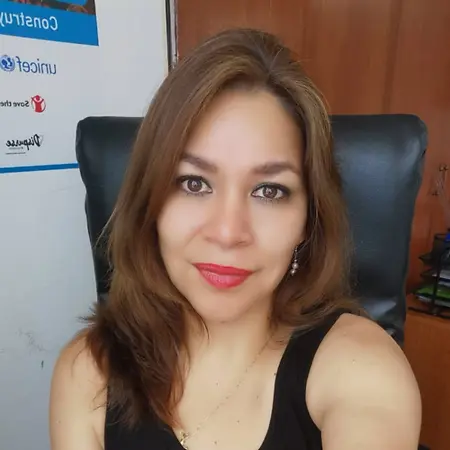
About Lourdes
Lourdes Herencia Carrasco is a social development and strategic communication professional with extensive experience in microenterprise development, community empowerment, and sustainability-focused programs across Latin America and the United States. She currently serves as the Director of Microenterprise Programs at Adelante Mujeres in Oregon, where she leads initiatives in regenerative agriculture, farmers markets, and small business development. Her work focuses on creating inclusive economic pathways for immigrant and underserved entrepreneurs, with a strong emphasis on community-centered strategies and long-term social impact.
Originally from Peru, she has built a career spanning public, private, and nonprofit sectors, including work with government ministries, international development initiatives, and social enterprises. Her experience includes consulting on communication and project design for organizations such as the Food and Agriculture Organization and co-founding a communications firm focused on sustainable development. She has also contributed to programs addressing microcredit access, rural entrepreneurship, and agricultural innovation, including the development of a farm incubator aimed at supporting Latino farmers and improving land access.
Lourdes holds advanced degrees in international relations from the University of Maryland Global Campus, an MBA from Universidad Carlos III de Madrid, and a Master’s degree in Social Innovation and Solidarity Economy from Universidad de Salamanca. Her leadership style is rooted in transparency, collaboration, and inclusivity, shaped by a lifelong exposure to global development work through her family background. She is widely recognized for her commitment to equitable economic development and her ability to bridge strategic communication with impactful community programs.
Her Interview
Ten minutes with Lourdes
01What do you attribute your success to?
I attribute my success to persistence—though I often describe it more bluntly as stubbornness. I’m not a quitter, and I tend to keep pushing forward until things work out. If something doesn’t succeed, it’s not for lack of effort on my part. I continue working at challenges until I find a way through or a solution that works.
02What’s the best career advice you’ve ever received?
The best piece of advice I received was when I was starting out in my career at Pathfinder International, a nonprofit for women and sexual rights in Peru. The director there told me that no matter what you want to do in life, whether it's nonprofit, business, or personal, an MBA will allow you to create that strategic path, because you need to know how to manage your time, you need to know how to manage your finances, you need to know how to manage a household, an organization, a family. That's what got me my push to apply to Carlos Tercero. I got a partial scholarship to go there, and next thing I know, I'm in Madrid for about a year and a half. I never thought I'd study business, because I was always kind of rejectful of business, because it was like, no, I want to do social development, and I want to save the animals, and save the trees, and, you know, I was young. And then when she said it, it made so much sense, and it completely paid off, because when we went into the business and we established a nonprofit, it was basically up to me to figure out how are we going to manage this, how are we going to finance this, how are we going to push this forward, how are we going to import products and pay taxes and do the sale. It was definitely, besides my parents, the most important piece of advice I've received.
03What advice would you give to young women entering your industry?
I would say push forward and not give up, because I've taken a number of courses of women in business, women in leadership roles, and it's always trying to fight that stereotype of being underestimated, and also thinking that you can't push forward. I think it's just, besides being confident on your capacity, it's breaking all the stereotypes, and not being afraid to stand your ground, whether it's to another group of women, to a group of men, to already set standards or set institutional frameworks. I mean, if it's innovative, if it's something that you can help change the world and put that little grain of rice to make things better, keep pushing for it. It's not gonna be an easy path, it's not gonna be sometimes financially sane, you know, for you or for the organization, but if it's worth it, it does bear fruit eventually. Helping that 1 or 10 people and making a sustainable difference for that 1 or 10 people is more gratifying and more long-term than trying to do massive programs that support for that one particular event. I mean, it might feel like you're not reaching that many people, but you are making a difference, especially when it comes to Latino communities, where when you're talking about 10 enterprises, you're not talking about 10 enterprises, because almost 100% of them are family businesses. So you're talking about households of 4, 5, 6 people that you are directly affecting and improving and creating a circular local economy and a community.
04What are the biggest challenges or opportunities in your field right now?
The biggest challenge currently is that a lot of nonprofits, including ours, are going through a bit of a redesign because of budget issues. A lot of changes in the requirements for government funding are affecting and limiting the amounts that nonprofits can access. So a lot of organizations are turning to private companies and foundations, which are more than happy and open to support, but they also have a limited amount of money that they can support with. The programs that are being cut on health and rural and education are very concerning. The biggest opportunity is that we definitely have to be very creative, innovative, and see how we can do more with less. We need to figure out how we can rely on our participants that have already been part of the programs before that could help with the mentorship, maybe help with support, help us to advocate, and be as active as we can with our different government representatives so they can prioritize the different issues regarding health, education, business development, in order to support our community, not only the Latino community, but all of the underserved community.
05What values are most important to you in your work and personal life?
I think definitely integrity and honesty, because I think that any relationship, whether it's personal, work, friendship, relationship, if there is no trust, and if there is no shared responsibility, it falls apart. If you don't trust a person, there is no way a relationship exists. Once that trust is gone, you can be friendly and diplomatic and respectful, but unfortunately the relationship is broken. If you cannot trust a person, you cannot really establish anything moving forward. It kind of breaks. So, definitely, keeping up the honesty, the trust, and the ethical behavior, because I think it's pretty clear of what we can and cannot do or say, and how you affect people, and you just need to be always treating a person with respect, no matter who they are, or where they come from.
Join Influential Women and start making an impact. Register now.