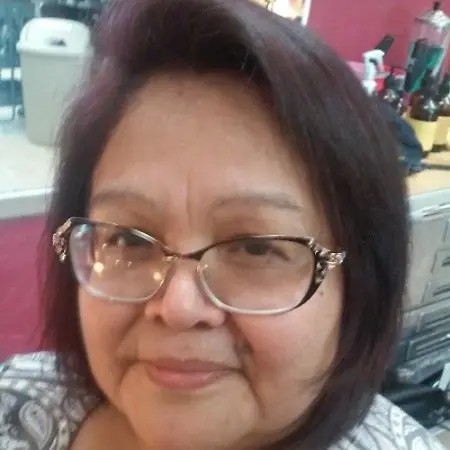
As a 4'9" indigenous woman in a male-dominated field, I met a traditional healer who taught me how to breathe, center, and focus.
Lydia Heyward · In Her Own Words
Her Story
About Lydia
Lydia H. is a Special Investigator, State of California (Retired) and dedicated justice professional with extensive experience in abuse, neglect, and death investigations. Her career began as a probation and parole officer, where she was assigned a sex offender caseload—an assignment that few wanted. That experience profoundly shaped her understanding of the interconnectedness of abuse and victimization and highlighted critical gaps in prevention and treatment. Lydia spent close to four years as a Special Investigator with the State of California before returning to Alaska to work for the Attorney General’s office, focusing primarily on Medicaid fraud cases with a specialty in abuse, neglect, and death. Managing caseloads of over 100 clients, she spent most of her time in the field, often working long hours and even keeping a couch in her office to rest briefly before returning to work, demonstrating her deep commitment to justice and client-centered investigations.
Over the course of her career, Lydia expanded her focus to systemic issues affecting vulnerable populations, particularly Indigenous communities in Alaska. She served on the Governor’s Council on Missing and Murdered Indigenous People and as a Board Member for the Alaska Council on Domestic Violence and Sexual Assault, both non-paid appointments that allowed her to work on policy development, program implementation, and education at the government level. Early in her career, she also contributed to Anchorage’s Women’s Commission. These leadership roles, combined with her frontline investigative experience, have given Lydia a unique perspective on the cycle of abuse, especially in remote villages where resources are limited and family networks are tightly interwoven. She emphasizes that lasting change requires direct engagement with both victims and perpetrators, as the nuances of abuse cannot be fully understood from textbooks alone.
Lydia holds a Master of Legal Studies in Indigenous Peoples Law from the University of Oklahoma and a Bachelor’s degree in Justice from the University of Alaska Anchorage. Her professional mission is grounded in promoting justice, safety, and equitable access to services for vulnerable populations. Passionate about breaking cycles of abuse and strengthening community resilience, she continues to leverage her experience in investigations, policy, and advocacy to create systemic solutions that make a tangible difference for individuals, families, and communities across Alaska and beyond.
Her Interview
Ten minutes with Lydia
01What do you attribute your success to?
I attribute my success to my dedication to working directly in the field with the people I serve. While training and books are great, I gathered most of my knowledge from working hands-on with both victims and perpetrators. You start to see patterns and nuances that you just can't learn in a classroom setting or sitting in an office. I've always made sure to stay in the public sector where I'm working directly with clients, doing interviews and home visits, because that's where you learn everything. It's not easy work, it's physically and emotionally taxing, but you have to remember that the folks you're talking with and working with are the victims, and also the predators. They're people, and working with people is a lot more intuitive than any book can teach you. I've been working since high school and that's where I get my energy from. I couldn't just sit in an office eight hours a day because when you do that, you can get pretty cynical. Being out in the field, being personally connected with the folks you're working with, that's what kept me going for so many years.
02What advice would you give to young women entering your industry?
Get into the field: direct, practical experience reveals important patterns and nuances that classroom training cannot replicate.
Stay engaged in service and consider mentoring to scale your impact.
03What are the biggest challenges or opportunities in your field right now?
The biggest challenge is breaking the cycle of abuse and victimization, especially in remote Alaska villages where resources are extremely limited. Many offenders were victims themselves at one point, so it's a never-ending cycle that's been going on for generations. The level of services available in Anchorage or Fairbanks just isn't available in smaller villages, and when people are sent to larger cities for treatment, they don't have anywhere to live or a support system. Everything is remote in Alaska, and you'll have three or four different families from the same family group living in a small two or three bedroom house that's just slapped together with plywood. There's just not enough prevention or treatment available. The one thing that has improved is that a lot of the tribes are stepping up with their own programs, which is important because they're sovereign and they need to address their own communities. But there's no right answer for how to break the cycle. It's going to take collective hard work and it's generational. This isn't a one or two year fix, it's a 10, 20, 30, 40 year commitment. You can't just do your 10 or 20 years if you want to see something work. The need in Alaska is so high right now, and the rates of victimization are much higher than in places like Georgia where protocols have already been established.
04What values are most important to you in your work and personal life?
Engagement, dedication to service and victims, long-term commitment, and mentoring the next generation.
Join Influential Women and start making an impact. Register now.