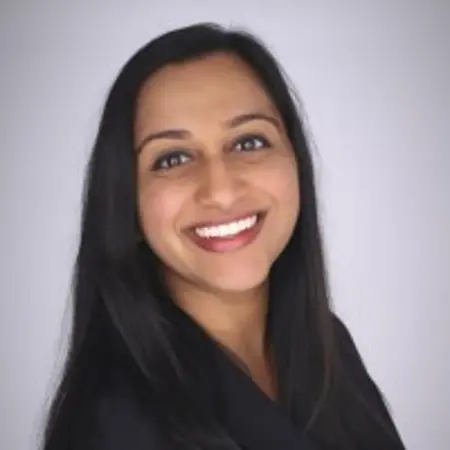
Her Story
About Lydia
Lydia Manchery is an educator, researcher, and doctoral candidate in Education Leadership and Policy Studies at NYU Steinhardt. With nearly a decade of experience as an elementary educator in New York, her work is grounded in culturally responsive teaching, critical inquiry, and a deep commitment to student and community empowerment. She began her professional journey in accounting before choosing to pursue her longstanding passion for education, earning her master’s degree in elementary education and later a post-master’s certificate in special education.
In addition to her classroom teaching, Lydia is actively engaged in research and professional learning communities that center educational equity and leadership. She serves as a consulting instructor with The Asian American Education Project, a research mentor with Polygence, and holds a leadership role within the Comparative and International Education Society. Her doctoral research focuses on the experiences of South Asian parent leaders and their role in advocating for systemic change in schools. Lydia has presented her work at national conferences and has been recognized as both a David L. Clark Scholar and a UCEA Barbara L. Jackson Scholar.
Beyond her professional and academic roles, Lydia is a dedicated community organizer and faith-based leader, committed to youth development and community engagement. She identifies as a mother-scholar, balancing her work in education and research with raising her two children. Across all aspects of her work, Lydia is driven by a commitment to advancing equity, amplifying underrepresented voices, and fostering meaningful change in education systems.
Her Interview
Ten minutes with Lydia
01What’s the best career advice you’ve ever received?
The best career advice I've received relates to imposter syndrome and that feeling of not belonging. I was really drawn to a piece by Jillian Maselli about imposter syndrome. As a teacher of color, I've felt that a lot amongst my peers, as somebody who doesn't have any connections to the education field and is just coming in. I've felt maybe not overt messaging, but definitely subliminal messaging of like, you don't belong, or you don't seem familiar in these spaces. A piece of advice that I've gotten from my faculty, especially over the past couple of years, is that these spaces need you. They need your perspective, they need your experiences, because it's something that they don't have. There was one line from Jillian's piece that I printed out and highlighted: 'The funny thing about imposter syndrome is you don't feel it at the beginning, you feel it when you've actually gotten somewhere, when the stakes are higher, when the room matters, so the fact that you feel it means that you've already come farther than you think.' That spirit captured in her piece, especially through my work as a doctoral student, when I don't feel like I have anything to write or maybe I don't feel like I have anything to contribute, or does my presence matter, it's like, yes, it does. They need you.
02What advice would you give to young women entering your industry?
The advice I would give is the advice that I needed to hear: that there is not a cookie-cutter way to be a woman. To just be authentically yourself, because those spaces are better because of it. When you show up as yourself, that's when you can really be influential, because you can offer something that no one else can. For example, I used to always feel a little out of place being the only teacher of color in my district, and I used to feel kind of nervous and things like that, but then I feel like, especially recently, I've taken this approach of, you know what, because I'm different, I get to offer a perspective that no one else can offer. And so that actually makes me influential. It actually makes me able to contribute something that no one else can. And it's not just me. Every woman is this. Every woman has something about them, whether it's their story, or their experiences, or their background, that makes them invaluable, and so to really lean into that, not to shy away from that. I think a lot of the times as women, we want to conform, or we're kind of pressured into conforming. But I think that when women are really unapologetically themselves, and they show up, that's when those spaces really benefit, because they get that version, they get the best version of them.
03What are the biggest challenges or opportunities in your field right now?
I think in the field of teaching in general, our world has become so politically divided, and so many things are divisive concepts right now. Education really does feel sometimes under attack. As an elementary school teacher, we just have state testing, and it's like, okay, we just need to get the scores for state testing, or as a faculty, you just have to get the tenure. But a challenge is to try to always make sure we're centering the student, making sure that they're centered, and that I'm honoring the experiences of my kiddos. In terms of opportunities, I think opportunities of just creativity. I was presenting my work on South Asian parent leaders, and one of the faculty members was like, we've never heard of a study done on South Asian parents like the way that you're describing it. And he was saying, that's amazing, we need that kind of research. So I think I'm really excited about getting to contribute to the field in that way, of doing research that is not done, and getting to fill a gap and really contribute meaningfully. So a challenge of centering the student experience, but then also an opportunity of getting to center the stories of my own community.
04What values are most important to you in your work and personal life?
I start my day a little bit early. I like to get up before the kids get up, just to take some time to center myself and my purpose. I really try to honor those blocks of time, because I don't like to do things haphazardly. When I'm focused on one task, I really do try to give it my all. When I'm with my kids, I'm home with my kids. I love reading with them, I love building blocks, and now that the weather's getting nicer, we love going outside to the park, playing and laughing and joking. And then when they go to bed is when I do most of my grad school work. I very rarely feel overwhelmed. I really do just try to chip away at each thing bit by bit. I really do feel like having support as a teacher, whether it's my admin, I love my principal, I love the school I'm at, whether that's as a mom with my husband or my family, or as a grad student with my faculty and my program directors, they really do offer so much support, which allows me to feel very seen, and that I'm not alone in the work. I'm Indian, and we typically have very patriarchal centered feelings around family and things, but I just feel so grateful that I was raised in a family, and I have a husband who is so empowering of women and the work that we do. I wouldn't be able to do it without this strong community that's backing me, that helps along each step of the way.
Join Influential Women and start making an impact. Register now.