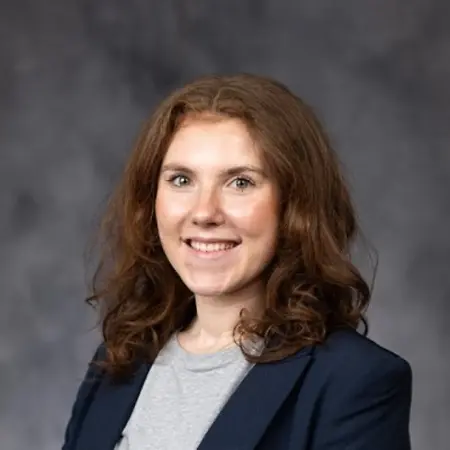
Her Story
About Lydia
I kind of got into my field during my undergraduate work at the University of Michigan. I actually transferred in my junior year, and they had a specific program for undergraduate researchers geared towards transfer students. I hadn't had any experience with research prior to that, and I joined the program where they helped me create my resume and cover letter and apply to research jobs at the university. That's how I found my first research job doing qualitative research, which involves interviews, survey data, focus groups, and things like that. I worked part-time as an undergraduate student, and when I graduated during COVID, it was a really tricky time and I wasn't sure what I wanted to do or if I wanted to go to grad school. But I got really lucky where my position in undergrad opened up a full-time position that they needed, so I applied for the job and got it. That's where I've been working since, so it worked out as a really good continuation of what I had already done. Now I do bioethics research specifically, working on different projects that are qualitative in nature. I work every step of the research process, from putting in grant applications to get funding for new projects, to data collection, all the way through disseminating results with manuscripts or one-pagers with information from the studies we do. Every day is different and not really typical - I get a ton of different tasks and just try to contribute to the research process however I can.
Her Interview
Ten minutes with Lydia
01What advice would you give to young women entering your industry?
I definitely think people underestimate networking and making connections, and where you might find your interests at. I didn't really know a lot about qualitative research or bioethics in general, and I didn't really imagine myself ever being in this position - I truly didn't really know it existed. But when I applied to the job and things like that, I learned more about it and was really interested. If I wasn't kind of open to finding new opportunities or finding new interest areas that align with what I was already kind of doing, I don't think I would have found it. So I think if you corner yourself in a little bit too much and focus too specifically on what you want to do, sometimes you miss out on things that actually might be better for you or might fit with what you want to do. I was really lucky where pretty much everybody that I've worked with in research has been a woman, actually, and I think that's really shaped how I see research. A lot of people think it's very male-focused, but for me, I've always seen myself in the people that I work for, and they're all doctors and medical doctors or they have their PhDs, and I think that really helped me see myself in the field a bit more.
02What are the biggest challenges or opportunities in your field right now?
Overall research funding's a bit tricky right now. It trickles down a little bit to me. I've been lucky where both my projects haven't had funding taken away, so it's always a concern when applying to new projects. There are more unknowns recently, like where's funding coming from, how much will there actually be, and where will those opportunities be in the future.
03What values are most important to you in your work and personal life?
In my research, I get to do a lot of community-based participatory research. The aim is really to bring in people from outside of the academic community who are facing bioethical issues in the medical field as patients or dealing with social determinants of health in their communities, and giving them a voice. A lot of times, physicians or researchers sort of speak on behalf of people and don't always take into consideration their thoughts. I'm personally from a very small town where a lot of people are low income, and so I see those problems in what the community is voicing back - I relate a lot. In my specific position, I've been able to really help bridge that connection between the community outside of the academic world and the academic world, and I don't think they communicate a lot or always see eye to eye on things. So I've really gotten to bridge that process.
Join Influential Women and start making an impact. Register now.