Her Story
About Lynn
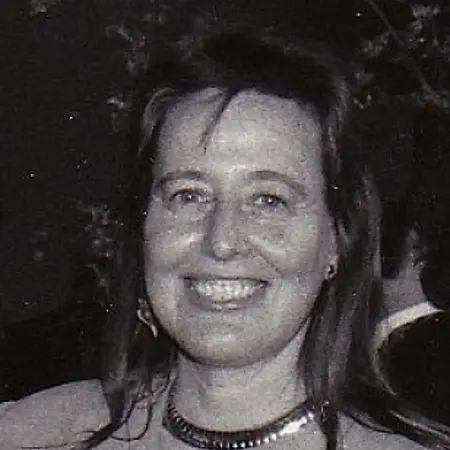
Lynn Caporale is a consultant and strategic scientific advisor based in New York City with more than two decades of experience spanning the pharmaceutical and biotechnology industries. She spent 10 years at Merck, where she rose to Senior Director, responsible for identifying, evaluating, and tracking breakthrough drug candidates across multiple therapeutic areas. In that role, she also helped establish and negotiate major scientific collaborations with international pharmaceutical companies, biotechnology firms, and leading research institutions. Following her industry leadership career, Dr. Caporale has served as a strategic advisor to pharmaceutical and biotech organizations, contributing to interdisciplinary scientific reviews, drug discovery strategy, and global research initiatives. She is a founding team member of the Institute for Life Sciences Entrepreneurship and has been involved in shaping early-stage biotechnology ventures, venture collaborations, and translational research programs. Alongside her advisory work, she has maintained an active academic presence, including teaching genetics and emerging biomedical topics at institutions such as Columbia University, St. John’s University, and CUNY. Dr. Caporale is also an established author, editor, and conference organizer with a long-standing research focus on molecular evolution, genomics, and the effect of natural selection on the biochemical mechanisms that generate genome variation. She continues to contribute to scientific discourse through publications, lectures, and the organization of continuing medical education programs, including Harvard Medical School–affiliated course examining the broader biological effects of non-oncology drugs on cancer progression and patient outcomes. Her work bridges industry, academia, and clinical research, with an emphasis on translating complex biological insights into practical medical understanding.
Her Interview
Ten minutes with Lynn
01What do you attribute your success to?
Hard work, studying, and supportive parents whose shared joy at each accomplishment instilled self-confidence to overcome barriers! Two of my chemistry teachers at Brooklyn College, who believed in me and encouraged me
Also: I read widely, for creative ideas and inspiration often come from the overlap of different disciplines.
For example, my 1984 publication proposing that the degeneracy of the genetic code would enable additional messages to be encoded within a protein coding sequence of DNA came after reading about Shannon. Similarly, interdisciplinary reading led me to think about genome evolution in terms of a Bayesian Belief Network.
And being fortunate to find others who valued ideas and good exploration, rather than judging me based upon my title. For example, one reviewer turned down the plan for my first (intimately very successful!) international interdisciplinary conference, but when I, a young stranger, walked up to Nobel laureate Werner Arber at a meeting and described my idea to him, he agreed to co-chair the meeting (so then the organization that turned it down changed their mind!)
02What are the biggest challenges or opportunities in your field right now?
For medical discovery, there is a tremendous amount of so-far un-captured information building up in medical records databases, to be discovered as both the size of the data resource and our computational power expand, Initial work has been focused on identifying early signs that warn of a high risk of developing a disease.
However, additional important questions can be addressed to these databases, including to what extent morbidity of aging results from to genetic variants that in homozygous form cause known early-onset diseases. Or, for cancer, what are the characteristics of patients found in the long survival tails on Kaplan-Meier curves-- is it their genetics, the genetics of their tumor or perhaps "non-oncology" drugs they have been prescribed for co-morbidities unrelated to their tumor, such as hypertension.
Another challenge for medical scientists is the expense of clinical trials, holding back a significant amount of potentially important work that requires a controlled study. A major challenge for our field right now are the dramatic government budget cuts that are causing us to lose time on potentially life saving research projects and, even worse, handicap or even lose the careers of young scientists, who were just starting to use their years of hard work to contribute to medical discovery
03What values are most important to you in your work and personal life?
Intellectual honesty and kindness.
Join Influential Women and start making an impact. Register now.