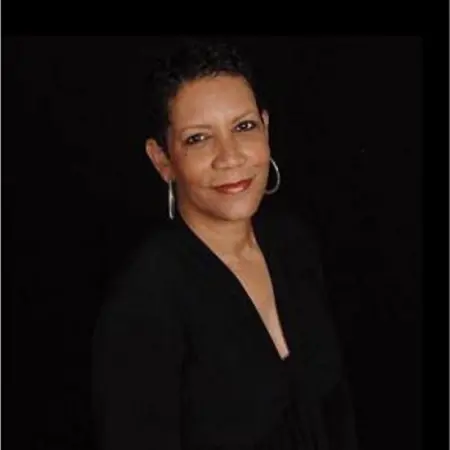
Her Story
About Lynne
I became a professor at a young age, recruited by the University of Delaware in the fashion department as a professor of apparel construction. I taught high-level construction courses, though I had always wanted to be an apparel designer. Growing up in Nashville, Tennessee, there was no design department in the city or surrounding area, so I studied interior design and architectural planning, then got my master's degree in textiles and clothing because that was the closest thing I could find to my passion. My strong construction abilities in sewing and tailoring, which I learned from my grandmother Edessa, allowed me to teach in the apparel design department. I grew up in a completely medical family where my father was a physician, his brother was a dentist, his other brother was a biochemist, and his sister was a nurse. They didn't understand the field of design and thought it was art, that it was floppy, and that nobody would ever make money in it, so they discouraged me at every point. But I wasn't interested in medicine. My designs have been featured in fashion shows on the steps of City Hall in New York City and in many national magazine articles. One of my most notable achievements was having a garment accepted and curated by the Smithsonian Museum of African American History and Culture - a raincoat made out of condoms called 'Don't Go in the Rain Without a Raincoat,' made during the AIDS crisis in the early 90s using condoms from the only condom company in the United States owned by an African American. Now my main area of expertise, along with apparel design, is higher education administration. My husband and I founded Edessa School of Fashion, named after my grandmother who graduated college in 1920 with a degree in home economics and taught me how to sew at the level that helped me accomplish all of these things. The college was founded on June 21st, 2017, and we've been open for exactly 4 years. We handle everything from recruitment, admissions, setting up classrooms and schedules, determining who gets in, doing registration with students, determining their course curriculum, developing different legs and areas of concentration and majors for the college, and advising students on what they need to take next.
Her Interview
Ten minutes with Lynne
01What do you attribute your success to?
I attribute some of my success to my family of origin and their pursuit of higher education when it was extremely difficult, which paved the way for me to do so when it was not so difficult. My grandmother went to college in 1916, and so did her husband, my grandfather. They educated 5 children to postgraduate education, doctorates and such, and then all of those children passed that down to their children, which made it easier and easier. I look at it as though she took the hit at the beginning when it was extremely difficult. Secondarily, I would attribute my success to the supportive family I have surrounding me now. It's difficult when you think of people who don't have supportive families or background of success or higher education, how difficult people have at trying to break that glass ceiling. I never had to break the glass ceiling, and my husband, my sons, I've always had 100% of their support and buy-in for whatever I was doing. I've been involved with so many organizations where I was involved in their events, and my kids would come and help with the event or be a part of the event. My husband is there at every turn. I've been married 44 years this year. He's there at every turn. My sons and my husband - I live in a male-dominated family, all testosterone, but they're pointed in the right direction and are very supportive and helpful.
02What’s the best career advice you’ve ever received?
The best career advice I received probably came from my father-in-law when he was alive. As I became a college professor, he encouraged me to do so because he said it was the best career for someone who was a parent, a mother, and that it allowed a lot of time for you to stay at home with your children. I've always, the entire time I was raising my sons, made sure that summertime I was available for them. Anytime that they weren't in school, I wasn't in school, and it worked out beautifully. So it was a matter of maintaining family time during the trajectory of my career while they were young. He was a college professor, so he advised me that it was a perfect profession for someone with small children.
03What advice would you give to young women entering your industry?
This is something that I've had to do myself. Everything I do, I try to do it at the very highest level I can achieve, because you don't know where it's going to end up. I have to admit, the majority of the accolades I've achieved were because of work I did in the middle of the night while I was tired and sleepy, and I just still stuck to the highest level of quality, and then it ended up in the Smithsonian. So you don't know when you're working on something whose hands it'll fall in. Do your absolute best at everything you do. The ladder climbs itself. At the end of the day, you'll be happy putting your head on the pillow, knowing that you gave it your all, your absolute best.
04What are the biggest challenges or opportunities in your field right now?
Small colleges are not accepted as having the educational quality of the larger schools, but actually, I feel it's a higher level of quality because we are more intimate with the students. We know their names, we know their ID numbers, we know their phone numbers. I can call a student and ask if they're okay, but at a large school with 20,000 students, that's not going to happen for you. So we're looked at through a lens of, oh, it's small, it can't be that much, but actually, ultimately, it's better. Our faculty work harder to support the mission of the school. They're also more highly involved with their students and our projects and what we do as an institution. They show up, they don't require payment for these things, for extracurriculars, and they're heavily involved with all of our activities and the students. I believe now I would prefer, had I gone to an even smaller school and gotten more personal attention. So people don't realize that, and that's been a barrier, but we're fighting it on a daily basis. We show up big. We do a lot with a little. Our hearts are in it, and that's the difference. There's not a lot of budget, there's not a lot of professionals around us at the highest level, but they volunteer their time and do whatever they can for the sake of the institution, as opposed to a contract and payment. And that also brings a different level of commitment, so it makes who we are different in a lot of ways.
05What values are most important to you in your work and personal life?
In my personal life, my values center around my family first. Secondly, character and integrity. Honesty. Those are values that create human beings that can be trusted and worked with, and I want to always present as someone who can be trusted and worked with. I would take honesty over intelligence any day when it comes to people who work with me, people I'm surrounded around. We can fill in the gap for your lack of intelligence, but we can't help you be honest. My attitude is, if you'll lie, you'll do anything. If you're embarrassed about something that happened, admit it, acknowledge it, move on, rather than lie about it for 5 years and then have it discovered. I mean, that's worse. So that's basically my value system.
Join Influential Women and start making an impact. Register now.