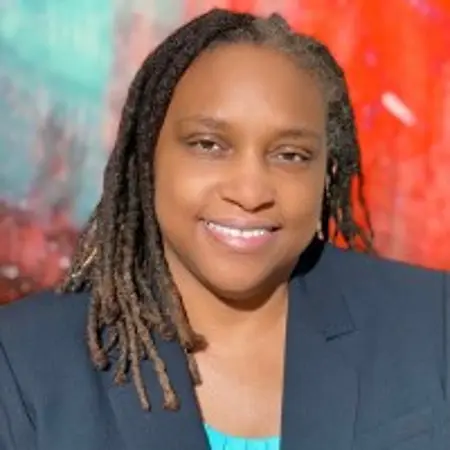
Her Story
About Lynnette
I've been with the Wayne County Sheriff's Office for 29 years, starting as an officer at age 23 in 1997 and working my way through every rank to become Deputy Chief of Police for Court Services in 2021. I'm responsible for the safety and security of over 60 judges and thousands of civilians and staff who visit the four Third Circuit Court buildings in downtown Detroit daily, including our new Criminal Justice Center, Lincoln Hall of Justice for juvenile court, and the Coleman Young Municipal Center for civil courts. What I'm most proud of is that I've risen through the ranks on my own merit, based on hard work and integrity, without owing anyone anything or compromising my values. I'm the first Black female deputy chief to rise through the ranks in the history of the Wayne County Sheriff's Office. Before becoming deputy chief, I served as a commander for about 12 years. I lead with honesty, integrity, and compassion, always remembering that we in law enforcement are human beings with the same stressors as everyone else, and I work to keep myself and my team accountable to the communities we serve.
Her Interview
Ten minutes with Lynnette
01What do you attribute your success to?
I attribute my success to my family - my mom, my grandparents who were the matriarch and patriarch, and the village that has surrounded me since I was born. They've been at everything, whether I was playing basketball, doing my paid food events, or being inducted into the National Honor Society. Even today, they're supportive of everything I do. Having that village of good people keeps me in check and keeps me humble. They don't let me get away with anything, even at the deputy chief level - I still have to do what my mom and my aunt tell me to do. They're like, 'You're who? Who are you again?' Without their support, I wouldn't be here. That's the easy answer - having support that keeps you humble and doesn't let you forget who you are.
02What’s the best career advice you’ve ever received?
The best advice I've received, or really something I recently read that resonated with me as I get closer to retirement and figure out what's next, is that what people perceive as a weakness is really just a strength in another area. I think that's a profound statement because it helps you reflect on what people say you're weak in and realize it's not really a weakness - it's just that you're better in a different area, something that maybe everybody else doesn't do as well but you can navigate well. In jobs, people often talk about strengths and weaknesses, but I don't like the negativity around the word 'weakness' because I'm an optimist. Everybody brings something to the table. Maybe some improvement is needed on certain things, but in general, people are coming from a good place.
03What advice would you give to young women entering your industry?
My advice to young women entering law enforcement is to be yourself. Hold your honesty, integrity, values, and morals close and stick with them. The minute that you allow somebody to compromise your values is the minute that you're going to go down. I'll be very honest - it's a male-dominated profession and it's difficult to thrive in. But if you stick with your guns, even during the hard times, you will be okay. That's it. Don't compromise who you are, no matter what.
04What are the biggest challenges or opportunities in your field right now?
The biggest challenge in law enforcement right now is the staffing shortages across the country. Over the past decade, some terrible things that some police officers have done - killings and things that should not have occurred - have wreaked havoc on all of us. There are about 800,000 police officers in the country, and the actions of some have made it bad for everyone. The result is that people don't want to be police anymore. They don't really like the police, and it's not considered as honorable a profession as it once was. It's hard to find people who want to be police and who can pass the tests we have to become police. I'm a Black woman, so I get it - when you see people of color being killed on the streets by police officers, you're going to have a different reaction. It's up to us as law enforcement to work harder to get back on par with how we were looked at before. We have to reach out to different communities and strive for a more diverse law enforcement agency. That's how we get back into the good graces of the community.
05What values are most important to you in your work and personal life?
The values most important to me in work and personal life are honesty and integrity, without a doubt. In this field, we run across hard things, but what I've learned in my 29 years is to just tell people straight, tell it how it is. I don't need to sugarcoat it, but I'm not coming from a malicious place. If I have to give somebody corrective criticism, I can do it in a respectful manner, and I'm good at it. Honesty is always the best policy. There's also always a splash of compassion - that's important in law enforcement because people forget we're human beings. We're in a busy profession, and someone might be going through a divorce or not feeling well. You have to be able to put yourself in people's shoes. I have a pretty good way of being able to talk to people and get them to bring their level up to where I need them to be without being rude or malicious, because that's just not who I am. I try to lead with a little bit of compassion while still getting the job done.
Join Influential Women and start making an impact. Register now.