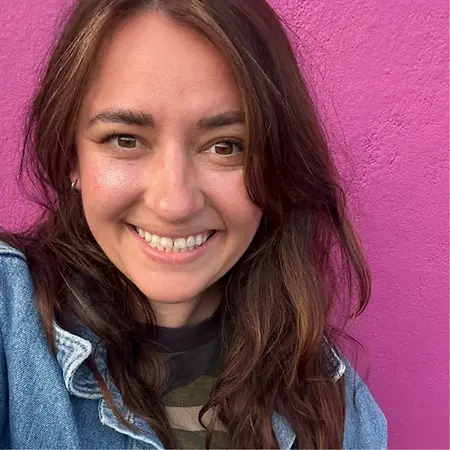
Her Story
About Lynsey
Lynsey Kamine is the Head of School at Aurora School, a progressive independent school in Oakland, California. Since entering education in 2012 through the Memphis Teaching Fellows program, she has served in a variety of teaching and leadership roles, including special education teacher, middle school humanities teacher, director of special populations, assistant principal, and now Head of School. Throughout her career, Lynsey has been passionate about building schools where curiosity, belonging, and academic excellence coexist. As Aurora's inaugural middle school humanities teacher, she helped design and grow the school's middle school program through project-based learning and student-centered practices. Today, her leadership focuses on organizational strategy, cultivating healthy school culture, and creating psychologically safe environments where students and adults can thrive. Lynsey is particularly interested in the future of progressive education: exploring how schools can remain innovative, financially sustainable, and deeply human in an era of rapid technological change. She believes great schools are built not only through strong academics, but through wonder, challenge, and a deep sense of belonging.
Her Interview
Ten minutes with Lynsey
01What do you attribute your success to?
I attribute my success to a genuine drive to keep growing. I'm motivated by becoming a better educator and leader each year so I can better serve students, families, and my team. I genuinely enjoy learning, taking on new challenges, and figuring out how to improve things. I know about myself that if everything stays the same for too long, I start to feel stagnant, so I'm always asking, "What's the next challenge?" or "How can I have a bigger impact?"
I'm also deeply committed to building strong systems, creating clarity, and fostering psychologically safe environments where people feel supported, trusted, and empowered to do their best work. I believe that when people have both clear expectations and the freedom to grow, they're able to accomplish remarkable things.
02What’s the best career advice you’ve ever received?
Two pieces of advice have stayed with me throughout my career. First: "Don't take it personally—it's not personal." That reminder has helped me approach leadership with perspective, especially during difficult conversations and challenging moments. Second: Make your default answer "yes." Before saying no, ask yourself, "How could this work?" That mindset has pushed me to embrace opportunities, take thoughtful risks, and continue growing in ways I never expected.
03What advice would you give to young women entering your industry?
I would tell young women that doubting and doing can coexist. You don't have to feel completely confident before taking on a new opportunity or leadership role. Some of my biggest moments of growth came when I wasn't entirely sure I was ready, but I chose to move forward anyway.
Don't underestimate your own potential or count yourself out before someone else has the chance to believe in you. Take opportunities that stretch you, trust yourself to learn along the way, and remember that mistakes are part of becoming a better leader.
You won't make every decision perfectly, and you won't make everyone happy. Make the best decision you can with the information you have, learn from the outcome, and keep growing.
04What are the biggest challenges or opportunities in your field right now?
One of the biggest challenges facing independent schools is long-term sustainability. As costs continue to rise, we have to ask how we remain financially healthy while also ensuring that our schools are accessible to students from a wide range of socioeconomic backgrounds and reflect the diversity of the communities we serve.
I also think we have a responsibility to look beyond our own campuses. Rather than seeing independent and public education as separate systems, I believe there's an opportunity to share ideas, partner more intentionally, and contribute to strengthening education as a whole.
Finally, we're navigating a fascinating tension with technology. We have extraordinary tools at our fingertips, but we also have a responsibility to ensure they strengthen, not replace, the development of critical thinking, creativity, curiosity, and human connection.
05What values are most important to you in your work and personal life?
Psychological safety is the value that anchors both my work and my personal life. I believe people do their best thinking, learning, and growing when they feel safe enough to ask questions, make mistakes, and challenge ideas without fear of being diminished.
For me, psychological safety creates the conditions for almost everything else I value: belonging, kindness, curiosity, accountability, and growth. It's not about making things easy; it's about creating an environment where people have the confidence to take on hard things together.
Join Influential Women and start making an impact. Register now.