Her Story
About Madelyn
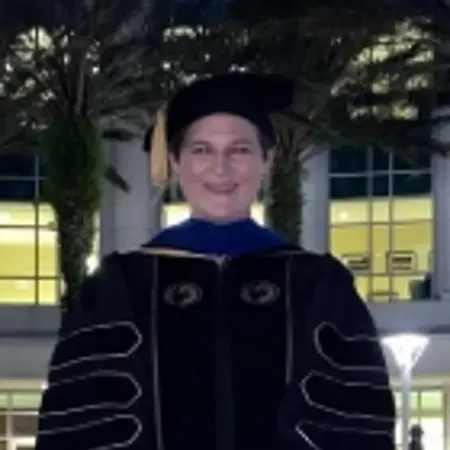
Dr. Madelyn Miller, Ph.D., is a Research Advisor in immunology and fibrosis at Eli Lilly and Company in Indianapolis. In her current role within Lilly Research Laboratories, she works in early discovery and development, designing and analyzing preclinical experiments aimed at advancing therapies for complex inflammatory and fibrotic diseases. Her work contributes to drug discovery efforts focused on conditions such as asthma, allergy, atopic dermatitis, and pulmonary fibrosis, with an emphasis on translating laboratory findings into potential patient treatments.
Dr. Miller earned her Ph.D. in Biomedical Sciences from the University of Central Florida, where her doctoral research focused on innate immunity, cell signaling, and inflammatory disease pathways. During her graduate and postdoctoral training, she investigated mechanisms underlying allergic and fibrotic disease, including identifying and validating novel immune receptors involved in allergen response. She also completed postdoctoral research at Eli Lilly, where she continued to expand her expertise in immunology, fibrosis biology, and translational drug discovery.
Across her career, Dr. Miller has combined scientific innovation with mentorship and collaboration, contributing to both research advancement and the development of early-career scientists. She is known for her interdisciplinary approach to immunology and her commitment to improving outcomes for patients with chronic inflammatory diseases. Beyond her scientific work, she is engaged in community initiatives, including leadership involvement with Indy Dog Park Co, reflecting her broader interest in service, community improvement, and animal welfare.
Her Interview
Ten minutes with Madelyn
01What do you attribute your success to?
I attribute my success to staying connected to my why, which really helps me stay resilient during difficult times. Connecting to the purpose of making a difference in patients' lives keeps me focused when challenges arise. I've always been passion-driven, and from a young age I showed a strong interest in medicine and biology. I was between a PhD and med school and got into both, but when I interviewed for my PhD program, I really loved it a lot more than I thought I would. I had done some research previously through a program called Project SEED, which helps minorities and underprivileged groups get connected to working in science earlier, and I started being interested in it. I think I took a microbiology class in high school, and that's what really got me interested in research potentially as a career. I really enjoyed that, and when I interviewed for my PhD, I really loved it there and kind of just stuck with it after that. Everyone at Lilly is reminded every day of how important it is to make a difference in patients' lives, and connecting to that why really helps you stay resilient in something that's not an easy field.
02What’s the best career advice you’ve ever received?
The best career advice I've received is to use my voice and recognize the value I bring. My PhD advisor was a woman, and it was nice to be advised by a woman who - we really haven't been represented in science like, going back across 20, 15 years even. Learning from her and learning to use my voice has been really helpful. At Lilly, I have a lot of colleagues that have been really helpful in keeping me interested in the science and always reminding me of how important it is to make a difference in patients' lives. Connecting to that why really helps you stay resilient in something that's not an easy field.
03What advice would you give to young women entering your industry?
I think there are three things that are really important. One is to make connections with people who help coach you and mentor you to be able to use your voice. I think that's always important, and that's been really useful at Lilly to kind of develop myself too. Having a team of people who are trying to look out for you and help you develop is crucial. Two would be to stay connected to your why, and that really helps you stay resilient during times that are a little more difficult. If you remember that you're interested in making a difference in science, like you're trying to connect to a patient, or you're trying to make improvements to something in people's lives - all sorts of careers have their own why, and I think connecting to that can really help when you're questioning yourself or going through some more challenges. Three, I would just say don't be afraid to use your voice and try to always make sure you're heard if you have something important to say to the conversation. Women are often told - isn't it true that they're more likely to under-represent themselves, and men are more likely to over-represent themselves? As a woman, I think you probably are smarter than you think you are, and if you think there's something important and valuable to say, it probably is important, and to not be afraid to put it out there. Generally, you will be recognized for it.
04What are the biggest challenges or opportunities in your field right now?
The Pharma Biomedical field always faces challenges, with regulatory complexity, rising research and development costs, and pressure to accelerate drug development timelines. At the same time, there are major opportunities driven by advances in AI, genomics, and precision medicine, which are transforming how treatments are discovered and developed.
05What values are most important to you in your work and personal life?
Making a difference in my community has always been something that's been instilled with me. My mom is really big in nonprofits, so I always kind of had that sense of wanting to give back to my community. I think making a difference in whatever ways you can with your skill set is one of the greatest things you can do for society, so that's something I've always valued. I really value mentorship and training younger people. I think that I've gotten a lot of training that's been useful, but I think it's also a way to extend the good you do in the world, because you're training the next generation of scientists after you, and you want them to be prepared and do the best they can too, so I really value that. And then I think just also being resilient is something that I've always kind of valued and has helped me throughout my career. I've had the opportunity to mentor and teach for years - I taught for a year before I went to my postdoc after my PhD. I trained and taught a lot of pre-nursing majors and also taught an intro to Biology for non-majors, and I thought it was just really fun to get people interested in science that may not be interested. Even at Lilly, I've mentored a young PhD female scientist who works at Lilly now - she was doing an internship with me for the summer. I also train a contract research scientist as well, who's a woman too. In grad school, I mentored a lot of undergrad students who now have careers in science too.
Join Influential Women and start making an impact. Register now.