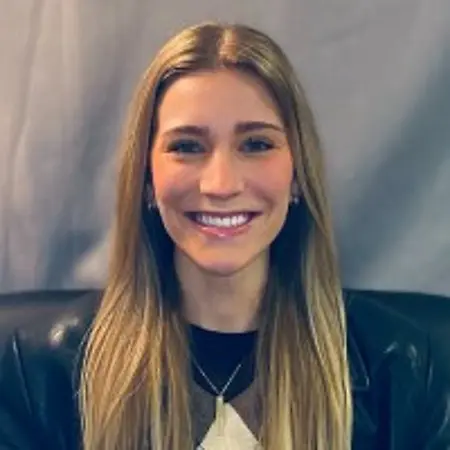
Her Story
About Madicyn
Madicyn Schnipke is a Licensed Professional Counselor who began her career with a strong academic and clinical foundation, earning her master’s degree in Clinical Mental Health Counseling in May 2024 after a year of intensive internship experience. A graduate of Kent State University, Madicyn has spent approximately three years in the field when including her practicum and internship work, developing a deep commitment to trauma-informed, client-centered care and continuous professional growth. She currently works as a residential counselor at Signature Health, Inc., where she transitioned from outpatient therapy to a higher level of care in early 2025. In this role, Madicyn collaborates daily with a multidisciplinary treatment team, co-facilitates morning group programming focused on varied topics including communication, diagnosis, and boundaries, and provides individual therapy to a caseload of residential clients. She further specializes in trauma work with a certificate in Eye Movement Desensitization and Reprocessing therapy, facilitating her own weekly trauma group. Her work includes trauma processing, treatment planning, skill-building, and care coordination with case managers, community resources, medical providers, and legal teams when needed. Driven by a passion for helping people heal and grow, Madicyn finds her work deeply rewarding despite the significant challenges of residential care, including mental health stigma, limited access to healthcare, and the complexity of high-acuity cases. She is known for her empathy, professionalism, and ability to hold space for clients while advocating for ethical self-care among clinicians. Through her practice, Madicyn remains committed to meaningful impact, collaboration, personableness, and long-term service within the mental health field.
Her Interview
Ten minutes with Madicyn
01What do you attribute your success to?
I attribute my success first to strong mentorship from a professor, Joan Steidl, who helped guide me in my next steps for graduate school, my own persistence, and the validation and support I’ve received from supervisors and coworkers along the way.
It is crucial for me to include all the empowered women I see who have made me feel like I can continue to set my bar higher, and especially women in healthcare. You make such a difference. This inspiration reinforces to me that women will always have a voice in my office. There is a lot of pain and adversity in this world and I always make sure I look for the helpers as I am grateful to also be apart of that category.
02What’s the best career advice you’ve ever received?
I've had wonderful support from two clinicians at my previous job who have been extremely supportive. Whenever I feel like I'm not doing enough for my clients, they were always there to be helpful and remind me that I am doing enough. They were able to give me some of their personal experience and insights, reminding me that I'm doing the best that I can, and that this field comes with challenges. They've been very validating for me. Additionally, my current colleague that has inspired me as a clinician and always gives support. She continues to acknowledge my impact and create space for me. That would be my previous supervisor, Crystal Aleshire LPCC-S, my previous colleague, Marina Miceli LPCC-S and my current colleague, Brianna Pennypacker LPC, CDCA.
03What advice would you give to young women entering your industry?
I would tell young women entering this field that there will be difficult moments, but the work is deeply worth it—meet yourself where you are, give yourself grace, and trust that growth comes with time. Women have various complexities to work through but please know you are smarter than you think and stronger than you know.
04What are the biggest challenges or opportunities in your field right now?
It's a very rewarding job, and I think it's wonderful that I get to do work that's very purposeful and fulfill my passion in helping people. But there are many challenges due to lack of healthcare and resources, the mental health stigma, and a lot of people not having awareness about mental health symptoms and how severe it can really get. Since I started working residential, which is a higher level of care than my previous site, I work with more severe cases of mental health, which was a new challenge because they don't place heavy focus on this in grad school. I definitely had to build my scope and be open to learning new interventions and psychoeducation so I could give the best care to this population.
The biggest challenge overall in this field can be avoiding burnout. Often, counselors may be the only ear for people, and a lot of people turn to treatment because their adversity has become so severe and impairing. It can be very challenging to be as supportive as you can and wanting to help, while also prioritizing yourself when you get home. To my fellow counselors, please remember that your position is so impactful, don’t forget to take care of YOU too!
Mental health is still just now being acknowledged and accepted as a part of healthcare, which is something I hope I can advocate to change. Being effectively educated in various diagnoses and symptoms while being culturally competent is essential. We never truly know what someone’s experience is therefore we must hold space for that and help the healing begin.
05What values are most important to you in your work and personal life?
The values most important to me in both my work and personal life are purpose, passion, empowerment, compassion, equality, and strong advocacy for the people I serve. I do my best to advocate for action as not only this field evolves, but myself as well. It is important to always know that anyone can begin again, and that we are never too complicated to become who we want to be. —The world gives us so much pain, but we can always make gold out of it.
Join Influential Women and start making an impact. Register now.