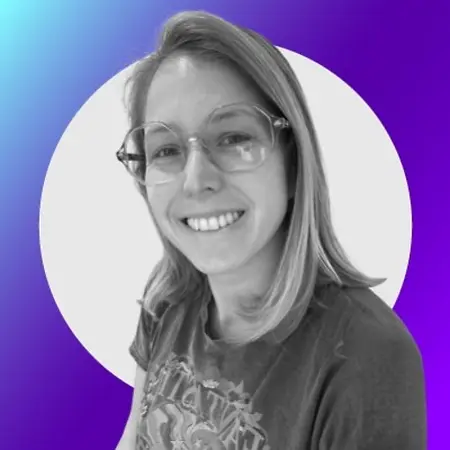
Her Story
About María
As head of product, I work with my team to define what to build and when to build it, because we have to understand why we're doing it. We're like translators between business and the end users and the builders - the engineers on the development team. We make everything possible by deciding how to prioritize among thousands of ideas when you only have limited engineering resources and time. We ask the right questions like: Will this bring revenue? Will this enhance relationships with our most important clients? Will this allow us to go further into a new market? We're constantly struggling between having no information, making the correct questions and hypotheses about what we'll be able to know for sure in the short term, and with that new information, being able to change our original statements. I really believe it's the best job ever. You're creating experiences and functionalities that you can actually test and see the impact of what you're doing. You have the whole life cycle of an idea from conception to application, and you can feel it. Right now, everything tech-related is going through a profound transformation due to AI, so besides the usual challenges, I have the challenge to transform my team and be able to work with and use AI as an enabler, as a trampoline - not fight it, but learn how our jobs are being redefined.
Her Interview
Ten minutes with María
01What advice would you give to young women entering your industry?
What's amazing about product management is that you are creating experiences, functionalities, and capabilities that you can actually test. You've been working maybe one or two months, and you can actually see and feel and understand the impact of what you're doing. I find it really rewarding. Imagine if you start working for biotech or agtech - you could be helping crop efficiency for small farmers and small farming businesses, and you can actually see that. You have the whole life cycle of an idea from conception to the design of how we're going to tackle these problems, then you test it and you actually see it and feel it. I feel like it's so rewarding. On the other side, there are so many things we have to be thinking about at the same time - this real 360 overview of everything. You start in the morning talking to stakeholders and clients, and you have to position yourself and your storytelling in a certain way, then you end up talking to engineers and you have to change completely. You have to talk in another language, be more specific. You really have to have a broad image and patience and handle lots of data types and information at the same time. I love it, but I know it's not for everyone. It's quite a high frequency rhythm of work. I think we're always at the brink of burnout. But it's high risk, high reward. You never have the complete picture - maybe luckily you have 80% of what you need to know, and you have to decide which 20% you're going to leave out and why, and change that constantly. It's a very demanding job.
02What are the biggest challenges or opportunities in your field right now?
Right now, everything that is tech-related is going through a very profound transformation due to AI and the advancement of AI. Besides the usual challenges of my job, I have the challenge to transform my team and be able to work with and use AI as an enabler, as a trampoline - not fight it, just learning how our jobs are being redefined. It's not just my team, but all of the companies. We are all builders, and it's important to understand what and why we are building what we're doing, and how do we make it safe, how do we make it transparent. From now or five years from now, I would love to have this tackled and have some kind of redefinition about the product management role. Everything is so crazy - you have legacy tech companies like us, and then you have all of these new companies in between that started using AI and selling AI products, but the base AI is OpenAI or Anthropic. As OpenAI and all of the other AI providers and AI engines started growing, they absorbed all of these other companies. I would love to maybe be able to talk about this with other companies. Yesterday I went to a tech summit here in St. Louis, and there was this guy leading an AI lab at Washington University teaching at every level - faculty members, alumni, and all the research labs - how to use AI to improve their everyday life or everyday work. I would love to be in something like that.
Join Influential Women and start making an impact. Register now.