Her Story
About Margaret
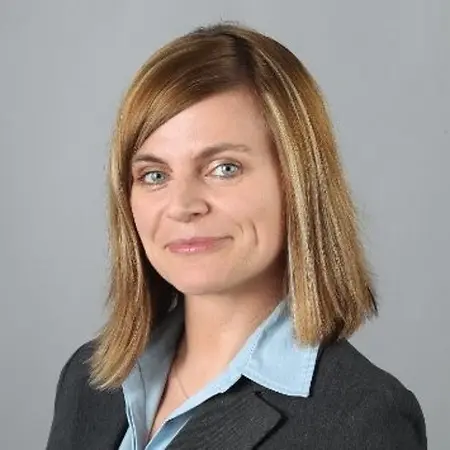
Margaret Ochocinska is a distinguished research scientist and program director at the National Institutes of Health, with over 15 years of experience in molecular biology and neuroscience. Born in Poland, she moved to the United States at age nine during the Solidarity movement, settling in Grand Rapids, Michigan. Her early passions for both music and science led her to study piano performance at Interlochen Arts Camp and pursue honors biology at the University of Michigan, where she earned her PhD in neuroscience in 2007. Her unique interdisciplinary background fostered a career dedicated to translational research and bridging scientific discovery with practical therapeutic applications.
Since joining the NIH in 2008, Margaret has built a career focused on connecting diverse scientific disciplines and sectors. She worked in the Office of Translational Research at the Neuroscience Institute, evaluating compounds for potential therapies in collaboration with industry and academia. Later, at the National Heart, Lung, and Blood Institute, she helped develop the Blood-Brain Interface Program, a trans-agency initiative in coordination with the Department of Defense’s Combat Casualty Care Research Program. Her work emphasizes creating frameworks for public-private partnerships, program management, and interagency collaboration to accelerate the translation of research from bench to bedside.
Currently, Margaret leads initiatives at the NIH Common Fund, directing interagency translational programs and building cross-sector partnerships to advance therapeutic validation and qualification networks. Her research expertise spans neuroscience, molecular biology, biochemistry, genetic engineering, and bioinformatics, and she has been recognized with multiple NIH Director’s Awards for her strategic leadership. Beyond research, she values mentorship, public speaking, and process improvement, championing multidisciplinary teamwork to ensure scientific discoveries effectively reach patients.
Her Interview
Ten minutes with Margaret
01What do you attribute your success to?
I attribute my success to persistence. Many people try something once, and if it doesn’t work, they become discouraged and move on—but I’ve learned to see obstacles as opportunities. One of my favorite books, The Obstacle is the Way, has shaped this mindset; it emphasizes that obstacles aren’t roadblocks but rather pathways to growth and innovation. I also live by the quote: “Someone who says it cannot be done should not interrupt the person doing it.” When challenges arise, I focus on finding alternative paths and keep moving forward toward my goals, never letting setbacks deter my progress.
02What’s the best career advice you’ve ever received?
The best career advice came from the late Rajesh Ranganatha, who was the Director of the Office of Translational Research at the Neuroscience Institute. When I first made the shift from academic track as a postdoc to doing health administration, I attended his course at NCATS Translational Bootcamp and had an informational interview with him. He told me I could just apply because we had a good connection and I had many skill sets they were looking for. When I asked 'why me?', he illustrated the bigger picture vision that anyone can contribute, even if you're starting out in the field. He was always available for mentoring, always asking what do you want to do next, what's your next step, what courses do you want to take. He was an amazing individual who was always thinking about the pipeline from bench to bedside, and that stuck with me. I always think about him when I create these programs - I know he would be proud of me. He unfortunately passed away a few years ago during the COVID period, but he's definitely here in spirit. His last text to me on LinkedIn when I got my current Common Fund position was 'onwards and upwards.'
03What advice would you give to young women entering your industry?
I think it's really important to see the bigger picture and to talk to people about their experiences. That's been very helpful for me. When I was going through the academic process, anything outside of academia was considered alternative career paths, but now they're all just career paths. The sound advice I received is not to keep blinders on focused on one area - keep your options open and think about the bigger picture, because opportunities aren't necessarily just in one area. You can do a lot depending on the sector you end up joining for the biomedical field. That includes multiple stakeholders - you could be in industry, you could be in a nonprofit, you could be in academic, you could be in government. There's a lot of opportunities everywhere. So just keep the options open and think broadly. One key thing is to talk to people - if you're thinking about having a position in a particular area, talk to them about their career trajectory to see how it looked for them.
04What are the biggest challenges or opportunities in your field right now?
The biggest gap right now in development of therapeutics is validation - specifically reproducibility, replication, and qualification of test candidates through the FDA or through the EPA. That's why I'm most proud of the public-private partnership we've put together through the Foundation for NIH. We are building a validation and qualification network to bridge this gap and translate the requirements for each kind of technology being developed. This network will help ensure that therapeutic development can move forward with proper validation standards, which is critical for getting treatments from the bench to the bedside and ultimately helping patients.
05What values are most important to you in your work and personal life?
For me, it's the feeling of family. We even call it the federal family - when we're working with our federal collaborators, we're all a team. Everyone's on the same team, and we have this motto that teamwork makes the dream work. I think it's about team building and supporting each other, because it really does take multiple individuals to make things happen - it's not any one individual, it's really the team effort. In my personal life, family is everything. I met my husband ballroom dancing when we were both competitive ballroom dancers at the University of Michigan Ballroom Dance Team, and we danced competitively in the amateur circuit. Now we have two kids, a 9-year-old and a 7-year-old daughter, and we spend lots of time with them. I'm living vicariously through them now as they're taking piano and violin, and maybe getting into dance in the future as well.
Join Influential Women and start making an impact. Register now.