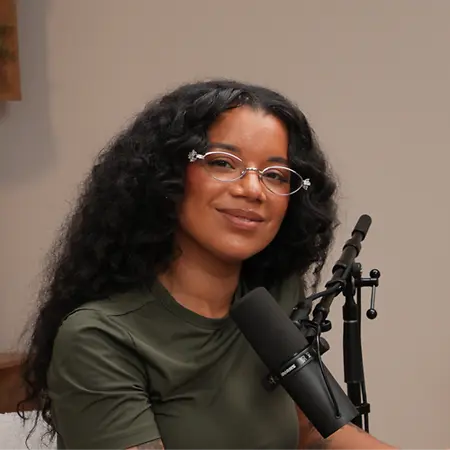
Influential Woman · Higher Education, Academia, History
Margarita Rosa
Visiting Assistant Professor, Brown University
Providence, RI 02909
Her Story
About Margarita
Dr. Margarita Rosa is a historian, scholar, and public speaker specializing in Afro-Latin American, Black Atlantic, and Black and Indigenous histories across the Americas. Currently serving as a Visiting Assistant Professor of Latin American and Caribbean Studies at Brown University, she is recognized for her interdisciplinary research on histories of rebellion, gender, and the role of Black and Indigenous women in shaping resistance movements. She earned her Ph.D. in Comparative Literature from Princeton University, where she also completed a certificate in African American Studies, and has established herself as a leading voice in both academic scholarship and public history.
Throughout her career, Dr. Rosa has combined rigorous scholarship with a passion for making history accessible to broader audiences. She has taught at institutions including Stanford University and Baruch College before joining Brown University, designing courses that explore Black and Latino cultures, African American history, Caribbean history, and the African diaspora. Beyond academia, she has expanded her work into the art world as a critic and lecturer, presenting at renowned institutions such as the Metropolitan Museum of Art and the Museum of Modern Art. Her scholarship has been published in leading academic journals, and her contributions have earned numerous distinctions, including the 2024 Letitia Woods Article of the Year Award from the Association of Black Women Historians, the 2024 Arts Leadership Praxis Access Fellowship from the Studio Museum in Harlem, and the 2025 A. and L. Berg ESAP Fellowship.
Dr. Rosa attributes her success to the humility, perseverance, and resilience instilled by her upbringing as the daughter of countryside parents from the Dominican Republic. She is committed to creating inclusive, collaborative learning environments that encourage critical thinking and make historical scholarship accessible through engaging storytelling. As a member of the Association of Black Women Historians and a supporter of Latinas Líderes, an organization that provides education and entrepreneurial training for young girls in the Dominican Republic, Dr. Rosa continues to inspire students, scholars, and communities by amplifying underrepresented histories and demonstrating the enduring relevance of the past to contemporary society.
Her Interview
Ten minutes with Margarita
01What do you attribute your success to?
I would attribute my success to being the daughter of countryside people. Countryside people are led by humility, they're led by simplicity. And that combination of humility and grit allows you to put your head down, but do the work with pride.
02What’s the best career advice you’ve ever received?
The best career advice I have received is to look towards your end goal and work backwards from that as opposed to following exactly to the T the traditional vanguard of your field says that you should be following.
03What advice would you give to young women entering your industry?
Rather than looking at what someone else is doing and trying to replicate that, try to figure out first what are the areas that you want to impact in your life and in your community. And how can I learn a world of information that can help me impact that world in particular. Sometimes academia isn't the way to impact your community. Sometimes getting a PhD is not the way to impact.
04What are the biggest challenges or opportunities in your field right now?
The academic job market has been really tough over the past couple of years. The biggest challenge is that a lot of the language we are asked to move forward with requires producing new work that has never been seen before, new theories, new ideas, whereas my goal is to achieve a level of fluency with what I know and communicate that through storytelling to make it accessible to the public.
05What values are most important to you in your work and personal life?
Horizontality is a value, so creating horizontal spaces for people to learn in both at the university level and at the public level. That means I don't assume that they know more than me or I know more than them. Allowing the conversations to be out of a place of storytelling and reciprocal sharing and reciprocal insight.
Join Influential Women and start making an impact. Register now.