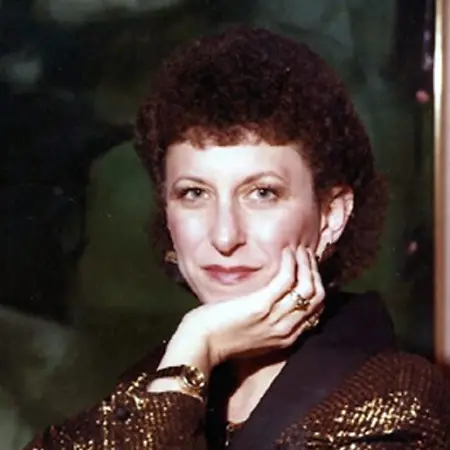
Influential Woman · Arts and Gallery Management
Margery Goldberg
Owner / Director, Zenith Gallery
Washington, DC 20012
Her Story
About Margery
Margery Goldberg is an accomplished artist, gallery owner, and arts advocate based in the Washington, D.C.–Baltimore area. She is the founder and director of Zenith Gallery, one of Washington’s longest-running contemporary art galleries, which she has operated for more than four decades. Through her leadership, Zenith Gallery has become a prominent destination for contemporary art, representing a wide range of media including painting, sculpture, photography, mixed media, and neon works, while also providing consulting, commissioning, and appraisal services for private, corporate, and museum collections.
In addition to her work as a gallerist, Goldberg is an established artist known for her sculptural furniture, wood sculpture, and neon art, with more than 350 works held in private and public collections across the United States, Canada, and Europe. Her creative practice is deeply connected to her belief in the transformative power of art, both as personal expression and as a tool for community development. She has been recognized for her contributions to the arts, including receiving the Mayor’s Arts Award for Excellence in Service to the Arts in Washington, D.C.
In 2000, she founded the Zenith Community Arts Foundation, a nonprofit dedicated to arts education, public art, and community engagement. One of its signature initiatives is the Mobile Woodshop, an innovative program that provides hands-on carpentry training to help individuals develop job skills and long-term economic stability. Across her career, Goldberg has combined artistic innovation with civic impact, consistently working to expand access to the arts while fostering creative opportunity, education, and community empowerment.
Her Interview
Ten minutes with Margery
01What do you attribute your success to?
I attribute my success to just doing things without overthinking how difficult they might be. You know, if you knew how hard things were before you started them, you probably wouldn't do it - that's my attitude. Whether it was opening a wood shop, starting an art center with 50,000 square feet of space, opening an art gallery, managing 50 artist studios, or starting a nonprofit, I just dove in. Everything I've ever done, I've sort of done not knowing how difficult it was going to be. I learned business from my dad, who owned a big printing and advertising company in Rochester. He taught me everything about business, advertising, and printing. I had my own checking account at 14 and ran my own finances. I'm also what my friends tell me is the most right-brain, left-brain person they've ever met - I function on both sides of the brain. I have a motto: if I can think it up, I can build it. And I do. Coming up with ideas is not a hard thing to do for me. I've been very active and engaged throughout my life - even in high school I wrote papers on anti-apartheid, and as a freshman at GW I took a Black History course, did a paper on the Black Panthers, went to their headquarters and got to know them. A couple years later when students took the student center over, I helped them get rooms there and was very much a radical on campus. I got my nickname in college where I was called 'the phone Margie' because you could always hear me in a crowd. I'm also very much an environmentalist - I compost, I have no grass on my property (as I always say, the only kind of grass I like is the kind you smoke), I have solar panels, and I use mulch and really exotic leafy plants.
02What’s the best career advice you’ve ever received?
Throughout my career, I’ve been inspired by fellow artists, community leaders, educators, and advocates who have encouraged me to think creatively and stay actively engaged with my community. I also credit the many artists I’ve had the privilege to work with over the years, as they continue to inspire my work, shape my perspective, and expand my vision.
03What advice would you give to young women entering your industry?
I would encourage young women entering my industry to trust their creativity, remain persistent, and never be afraid to pursue bold ideas. I believe success comes from staying true to your vision, building strong relationships, and using your talents to create meaningful, positive change in your community.
04What are the biggest challenges or opportunities in your field right now?
I believe one of the biggest challenges facing the arts community today is ensuring sustainable support and meaningful opportunities for artists. At the same time, I see tremendous opportunities to use art as a tool for education, workforce development, community revitalization, and social connection, especially through innovative programs that bring art directly into communities.
05What values are most important to you in your work and personal life?
The values most important to me are creativity, environmental responsibility, and helping others succeed. I'm very much an environmentalist - I compost, I have no grass on my property (as I always say, the only kind of grass I like is the kind you smoke), I just had solar put on my house, and I love exotic leafy plants. I believe in taking action and not being afraid to tackle difficult projects. My motto is: if I can think it up, I can build it. I've always been socially conscious too - even in high school I wrote papers on anti-apartheid, and as a freshman at GW I took a Black History course, did a paper on the Black Panthers, and went to their headquarters to get to know them. When students took over the student center a couple years later, I helped them get rooms there and was very much a radical on campus. I got my nickname 'the phone Margie' because you could always hear me in a crowd. I believe in persistence and just doing things, even when you don't know how difficult they'll be. I've spent my career supporting artists, training the next generation through our mobile wood shop, and now I'm working on building a senior artist community because artists are the one group of people who don't retire - everybody else retires, but artists don't.
Join Influential Women and start making an impact. Register now.