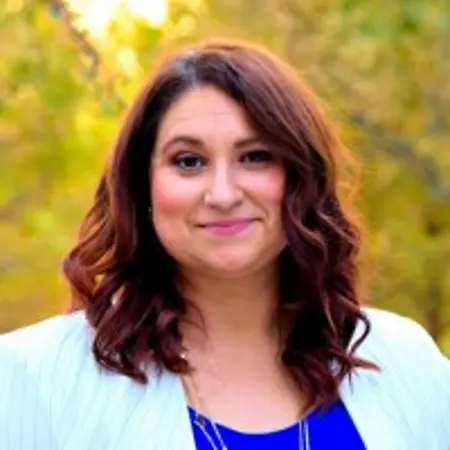
Her Story
About Maria
I am a project management and client delivery professional with over a decade of experience across healthcare, finance, and technology. My career began in a hospital administrative role; while pursuing my teaching certification, an opportunity was presented to transition into IT training for a major healthcare system’s service desk. It was in that role I gained an ITIL certification and gained early exposure into major incident management and change management best practices. This laid the foundation for my focus on building operational frameworks, managing complex initiatives, and developing strong client relationships.
Over time, I progressed into senior project and delivery leadership roles, including positions with Texas Capital Bank and GuideIT. I have led high-visibility, enterprise-level initiatives, delivered critical treasury and IT programs, and helped implement structured PMO governance to improve delivery consistency and transparency. My approach to leadership emphasizes dependable service delivery, collaboration, and creating meaningful value for both clients and teams.
Currently, as a Client Delivery Manager at GuideIT, I oversee managed services delivery of a host of functions across a variety of industries. I leverage my PMP certification, training background, and leadership experience to strengthen governance, drive process improvements, and mentor teams toward operational excellence. I lead with empathy, clear communication, and resilience, believing that when you support people and foster strong relationships, successful business outcomes naturally follow.
Her Interview
Ten minutes with Maria
01What do you attribute your success to?
I attribute much of my career growth to a “do it scared” mentality, embracing opportunities even when I didn’t feel fully prepared. When doors have opened, I’ve chosen to walk through them, trusting that growth often happens outside of one’s comfort zone.
There have been moments where I questioned whether I had enough experience or whether the timing was right for change. However, I’ve consistently leaned into those uncertainties, recognizing that stretching beyond familiar territory is essential for development. By taking on new challenges, even in the face of self-doubt, I’ve been able to build new skills, expand my perspective, and accelerate my professional growth.
This mindset has shaped my approach to leadership and career development: be open to opportunity, embrace discomfort as part of the learning process, and trust that capability grows through experience.
02What’s the best career advice you’ve ever received?
I’ve received several pieces of advice throughout my career that have had a lasting impact on how I lead and show up professionally.
First, “if you take care of your people, they will take care of the business.” This has shaped my people-first mindset and guided how I build relationships, support teams, and deliver for stakeholders.
Second, I was encouraged early on to pursue my Project Management Professional (PMP) certification. That decision was pivotal, it not only validated my skill set but also significantly changed the trajectory of my career by opening doors to larger, more strategic opportunities.
Finally, I had a leader who challenged me to use my voice, to advocate for myself and recognize my own value. That guidance gave me the confidence to navigate difficult conversations, negotiate effectively, and show up in high-pressure situations with clarity and poise.
Together, these lessons have shaped my approach to leadership: prioritize people, invest in your growth, and never underestimate the power of your voice.
03What advice would you give to young women entering your industry?
Technology is generally a male-dominated field, and as a woman, you may often find yourself in the minority. There can be dynamics that feel unfamiliar, and at times, you may feel challenged, underestimated, or even perceived as a threat. In those moments, let your work speak for itself. You don’t have to be the loudest voice in the room or prove that you’re the smartest. Consistency, preparation, and results will set you apart.
Just as importantly, don’t feel like you need to change who you are to succeed. Traits that are often labeled as weaknesses, like being emotional, can actually be some of your greatest strengths. Empathy, emotional intelligence, and authenticity build trust, strengthen teams, and create lasting impact. These qualities reflect care, resilience, and a genuine investment in both people and outcomes.
There may be moments when you feel self-conscious for showing emotion or passion, but those moments also demonstrate that you’re engaged, that you care deeply, and that you’re committed to doing meaningful work. Over time, you’ll realize that these qualities are not something to suppress, they’re part of what makes you a strong and effective leader.
So don’t be afraid to be yourself. Lean into what makes you unique, trust in your abilities, and let the quality of your work and your character define your presence.
04What are the biggest challenges or opportunities in your field right now?
The biggest challenges in my field center around keeping pace with rapidly evolving technology, particularly as we navigate the current surge in artificial intelligence. There is significant demand from organizations to understand how to effectively leverage and integrate AI into their operations, often while the technology itself is still maturing.
At the same time, there is constant pressure to optimize and reduce technology costs. Balancing innovation with cost efficiency can be difficult, especially when new AI tools and capabilities are emerging at such a rapid rate. Staying informed, evaluating what is truly valuable versus what is simply trending, and making strategic decisions in that environment is both critical and challenging.
05What values are most important to you in your work and personal life?
Mentorship and advocacy are core values in both my professional and personal life. Having benefited from leaders who invested in my growth and championed my potential, I’ve made it a priority to pay that forward to other young professionals and peers. Also, having benefited from the vast number of women always in my corner cheering me on have made me braver and more aspirational in so many aspects of my life both professionally and personally.
My experiences have only reinforced my belief that through empowerment we can create environments where people feel confident to contribute, grow, and step into new opportunities.
Join Influential Women and start making an impact. Register now.